As stated in prior posts: Low lying areas are the first to receive any moisture that falls when the rain shower is large enough to run any water. If there was no runoff and the established plants on higher ground are dense enough for the small rains to allow that limited water to be absorbed through the soil and fractured rock, it too can make its way to the lower areas of deep-rooted grass and healthy soil. This advanced ‘Water Cycle’ can provide excellent grazing despite a low rainfall period. Prior to initiating a planned graze-rest program those low areas under a continuous grazing program are the ones that seem to suffer the most, as livestock are continually going back to the green area that has even a very slight amount of green and grass growth. Many times, this overgrazing results in the Buffalo Wallow erosion areas discussed in a previous post.
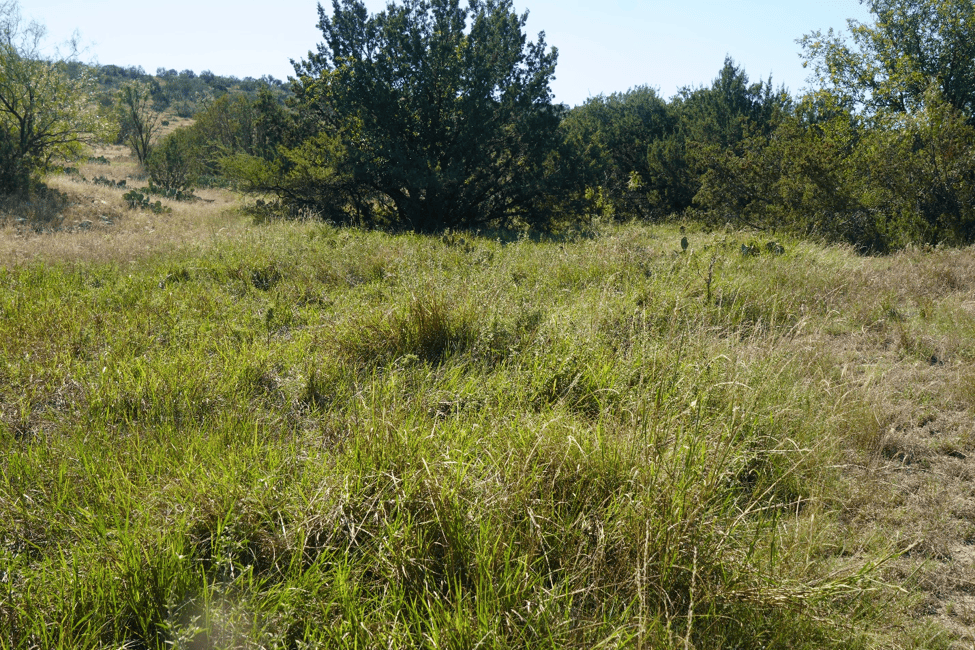
It is exciting to see areas like this photo that tells an amazing story of what nature can do if given the chance. The dry tan areas on either side of the rain catchment area express how limited the rainfall has been for the past 60 days. Yes, the dry area and the plants on it are ready to jump when adequate rain does fall, as relatively good cover of healthy grass’ are established just waiting on that proverbial good rain. The green area is moving forward nicely, ready to provide excellent grazing when the rotation places livestock within this portion of the grazing unit.
If the rain does not come to the area before grazing, great care must be used not to abuse the green area. One of two things must happen, probably both in unison: Livestock numbers must be at a reduced level, and the graze period must be very short. (Drought planning) It has been found that the green area will be quickly and severely grazed regardless of the technique used and well over 50% of that area will be utilized. Many times, 90% or more will be grazed and while this is not preferred, the area can recover nicely if the graze period is not long enough to encourage a second bite by the livestock and the recovery period is long enough for adequate regrowth of leaf surface and roots.
The size of the green area is increasing and getting wider with each passing season.
Love it when a plan comes together, but it is just that: Planning and careful observation is essential with intensive grazing.
THE BETTER IT GETS, THE FASTER IT GETS BETTER