Grass Growth and Rangeland Recovery: Scientific Insights and Management Practices

Understanding how a grass plant grows and reproduces can be a very complex (scientific) learning process. The below link will offer interesting, yet tedious reading (For us simple ranchmen) that some grass managers might find productive in their understanding of ‘why’ some grazing-management programs are more effective than others.

One of the highlights from the article is: “Perennial grasses can produce by both buds and seed, although more than 99 percent of new tiller growth comes from the bud bank. Seed life spans are short-lived and do not extend beyond 1 year. However, buds are long-lived and have a potential life that may exceed 5 years. Since bud life varies among grass species, current research efforts are focused on determining which species have the longer living buds. Vegetative buds respond quickly to environmental changes like rain, fire, and grazing.” It should be added that disturbance of the grass plant, including grazing, trampling, mechanical, fire and even the destruction of moribund grass plants caused by desert termites’ can all effect the simulation of new growth nodes. (Nature has developed numerous recovery process over millennia)

While I disagree with the statement that the seed life span is only one-year. It has been my experience that given the opportunity, seed can survive for an extremely long time and when given the opportunity (an effective graze-rest program) dormmate seed can provide excellent rangeland recovery. Albeit over an extended period. (Numerous years of application of that effective management program.)

A second highlight emphasized by the article is: “Current research has shown that perennial grasses reproduce by vegetative processes through asexual reproduction. Seed contribution to maintain an established grassland is less than 1 percent of the total reproductive effort.”

What can be gleaned form this article is that grazing-management programs should be designed to enhance bud simulation of the grass plant, seeding will take care of itself over time. (Patience is key here)

 It is all about stimulating growth buds to promote rangeland recovery and after stimulation giving the plant the opportunity (REST) to reach its genetic potential.

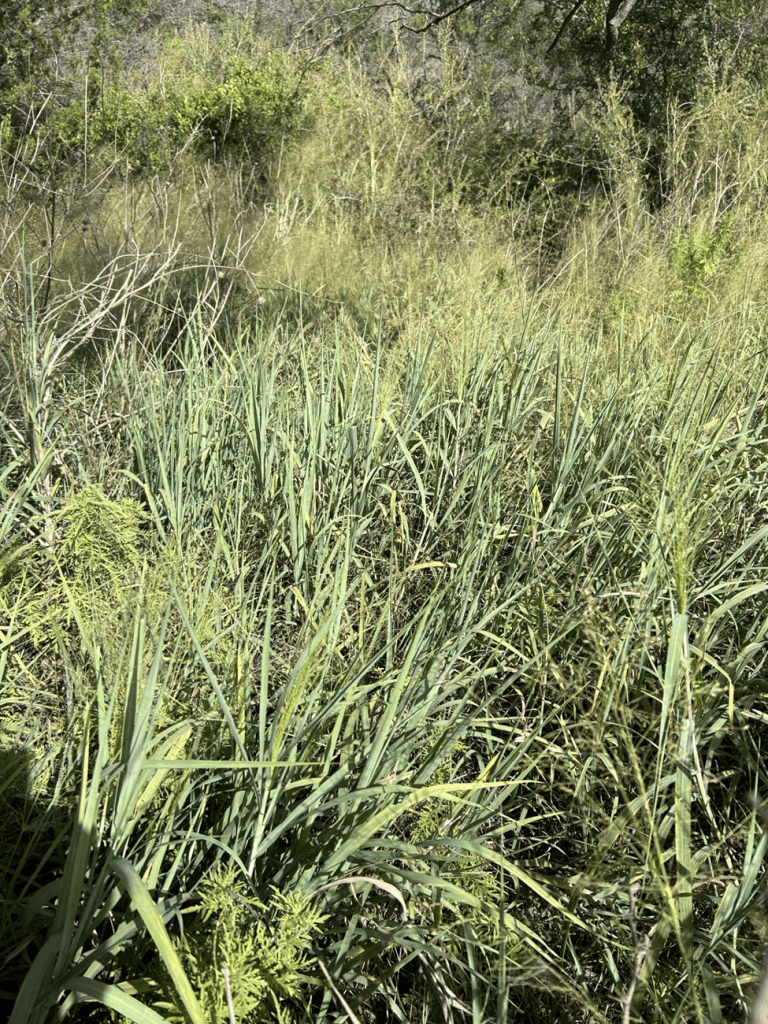
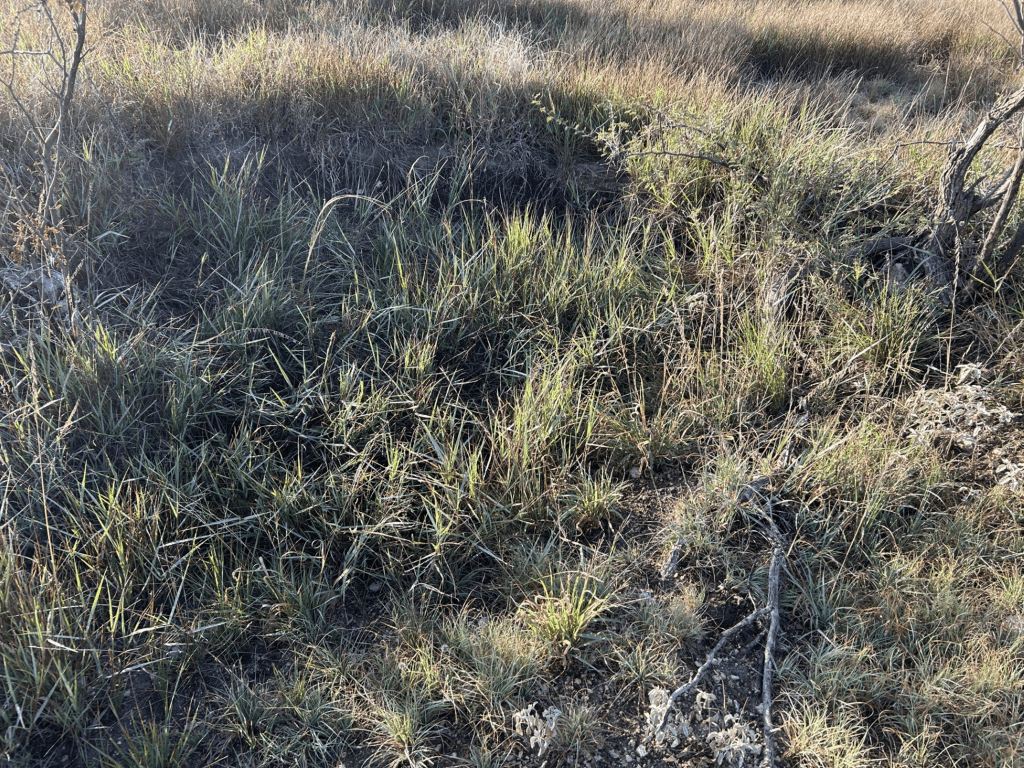
Photo shows a formerly erosive site that has almost total recovery form loss of soil. Vine Mesquite Grass is an excellent plant to quickly cover bare areas, especially when extra rain water is provided from runoff. After it is established, runoff is slowed to the point of putting the water into the ground. Greatly enhancing soil health.

THE BETTER IT GETS, THE FASTER IT GETS BETTER
The Way or A Way: Understanding Grazing Management

There is no fixed way of reaching effective grazing management “The Way”. The grazing manager must find “A Way” of reaching his goals.

Effective grazing management is not a fixed process that is always the same. Certain broad principles will aways be applied, but there are innumerable ways of achieving the results wanted by the individual producer or manager. Many times, other producers looking across the fence condemn what his neighbor is doing just because it is different than his own and he does not understand what the goals are. (Perhaps we need to find a way of communicating with the neighbor, then the opportunity of learning from each other will move them both forward.)

Reaching the goal of what is best for our rangeland health and the health of the ranching operation should be the priority of all rangeland-ranch managers.  Applying grazing principles that attempt to get our rangelands back to pre-European health with healthy soils, little erosion and an effective water cycle. When that goal is moving toward successful conclusion the profitability and health of the ranching operation are virtually exponential. In effect, what’s good for the health of the rangeland is good for the health of the pocketbook.

False Switch Grass, Canada Wildrye, Sideoats and Texas Winter Grass in an overflow area. Formerly a highly erodible area that did not utilize the neighbor’s rainwater that they were sharing with us. Now that ‘shared’ water is providing excellent results.

THE BETTER IT GETS THE FASTER IT GETS BETTER

The Importance of Patience in Grazing Program Development

Patience is an essential virtue when creating and adapting to an effective grazing program. Achieving meaningful results requires time and consistent effort, especially when implementing a dedicated graze-rest strategy designed to enhance the health of rangelands and the soils that sustain these ecosystems.

Transitioning from Continuous Grazing Practices

It is important to acknowledge that moving away from the continuous grazing practices of the past and into a planned-adaptive graze-rest program will not yield immediate results. The journey toward improved rangeland health and soil recovery is a long-term process, often taking years to reach the intended goals. This gradual approach allows the land to recover and thrive under the guidance of a well-structured grazing plan.

Continuous Improvement and Realistic Goals

As progress is made, the process can become more challenging when initial goals are met and new, higher objectives emerge. The question arises: Where is the ultimate point of ranchland recovery? It is becoming clear that there may not be a definitive endpoint. Instead, reaching a level of recovery and productivity that the producer can justify for themselves and their family’s needs and desires is a worthy and sufficient accomplishment. In a self-determining society, having the freedom to set and pursue individual goals is a valuable aspect of managing rangeland resources.

This enhanced grazing area features Indian grass, Little Blue, Side Oats, and KR Bluestem, with Big Blue nearby. The turf is dense and free of bare spots. After a severe four-year drought that almost led to livestock removal, rains in April reversed the situation. Though rain totals were modest, recovery in six months exceeded pre-drought conditions—an outcome not seen under traditional continuous grazing.

The Better it gets, the faster it gets better

Recovery after an extended dry spell is an exciting event.

After approaching four years of extended drought and having exhausted all drought management options, total liquidation of the livestock was imminent. Thankfully the rains began to fall in mid-April, not large amounts .87” the largest rain event, but consistent small rains continuing from April to the current date. Along with relatively cool spring temperature’s, excellent growth and recovery of the rangeland has been achieved. (Seldom does this combination of rains and cool temps occur even during high rainfall times.) Past graze-rest adaptive grazing is paying excellent benefits as the photo below shows.

Big Blue (Center of picture) and Indian Grass (Upper center, just above Big Blue) are showing excellent recovery even though grazed to the ground during the dry spell. Some would say to never graze that short and I would concur, but under extended drought conditions that seems to occur often. Obviously, the root systems of both plants were healthy enough to recover quickly under those extenuating circumstances. Perhaps the rocky terrain helped, as the livestock could not graze so close as to ‘grub’ the roots below the surface. Of important note Sideoats, Texas Cup, Green Sprangle Top and Silver Bluestem are doing well, but they were not grazed to the ground as the highly palatable Indian and Big Blue were.

The Better It Gets, The Fast It Gets Better

Rangeland Drought Comparison: 1950s vs Current Situation

A veteran producer recently asked me: Is the current drought worse than the one in the 1950’s? My quick response was that we hadn’t seen anything yet. As in the early ‘50s drought, the rain gauge at the Bobs Creek headquarters (My home) had an average rainfall of just under 6” per year for a four-year period and the drought lasted from 6 to 7 years depending on the area.

Then it occurred to me that the rangeland was in much better condition prior to the ‘50s drought than it is today. Remember the story of a long-time rancher telling me when I was in my 20’s (late 1970’s) that: “With each passing dry spell one can never run as many livestock as he could prior to that dry spell.” Loss of grazing capacity has dwindled from documented grazing of 100 plus animal units per section in 1880 to 15 -10 and even less animals per section today on the same rangeland. With that loss of grass density, root structure in the soil (sod if you will) loss of topsoil due to erosion, soil health decline and density of brush cover increase. The limited moisture that has fallen during this dry period has considerably less opportunity to produce new growth providing all of the benefits healthy growing plants provide. (5.49” for the year at his point in 2024 at my house)

So perhaps on rangelands that are not under an effective grazing management program this drought is possibly worse than the 1950’s event. Many to the north and east of my area have had a tremendous rainfall year and recovered well, but even in those areas I suspect it is noticeable which operations have practiced a good grazing management program prior to and during the dry conditions before the rains came.

Just a few miles to the west of me it is obvious that the desert is steadily encroaching to the east and without a dramatic change in grazing technique this trend will continue. The knowledge is out there, and the time is here to do something about it.

The photo below is of some native-unseeded Switch grass that has survived from many years of abuse (heavy brush and very forbidding-rough terrain has protected these surviving plants) and under the current Graze-Rest-Graze-Rest program is making a strong recovery even without a direct water source. (Most consider Switch grass to be dependent on a close source of water, springs-sub irrigated-intermittent standing water.) Think back to the beginning of the cattle industry in West Texas when Switch grass and other tall grasses were healthy and numerous, this ‘little’ dry spell would have a much different affect and would have little consequence to the long-range health of the plants with a healthy rangeland in place before the droughts beginning.

The Better it Gets the Faster it gets Better

Rainfall and Grazing Management are Both Essential

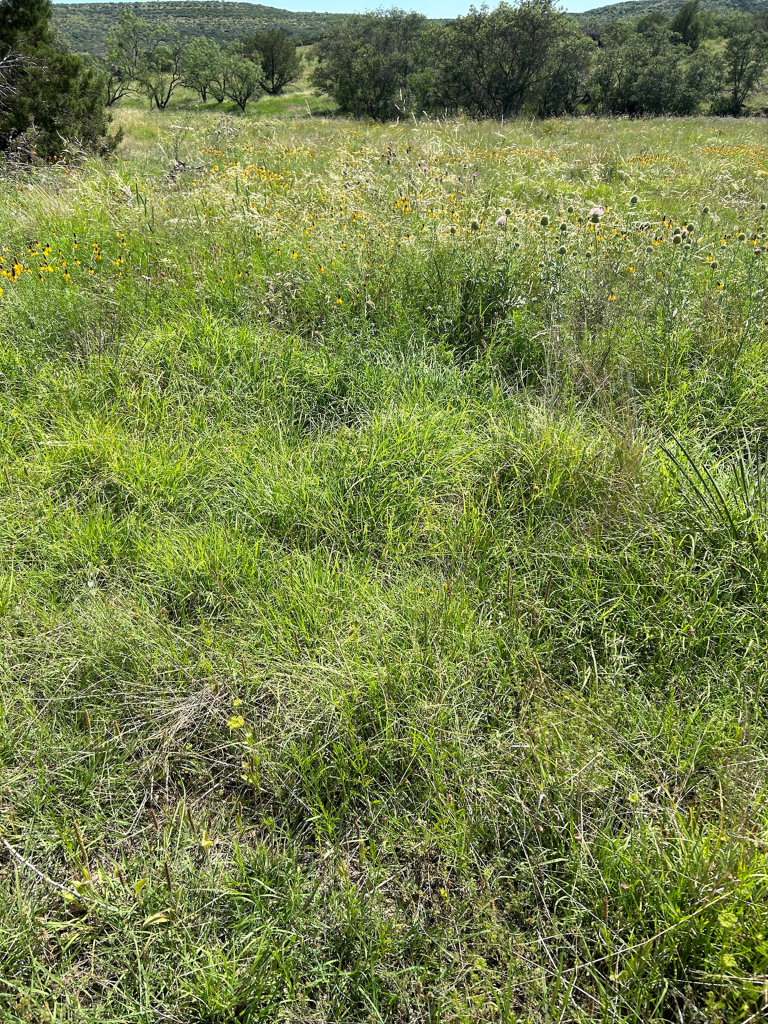
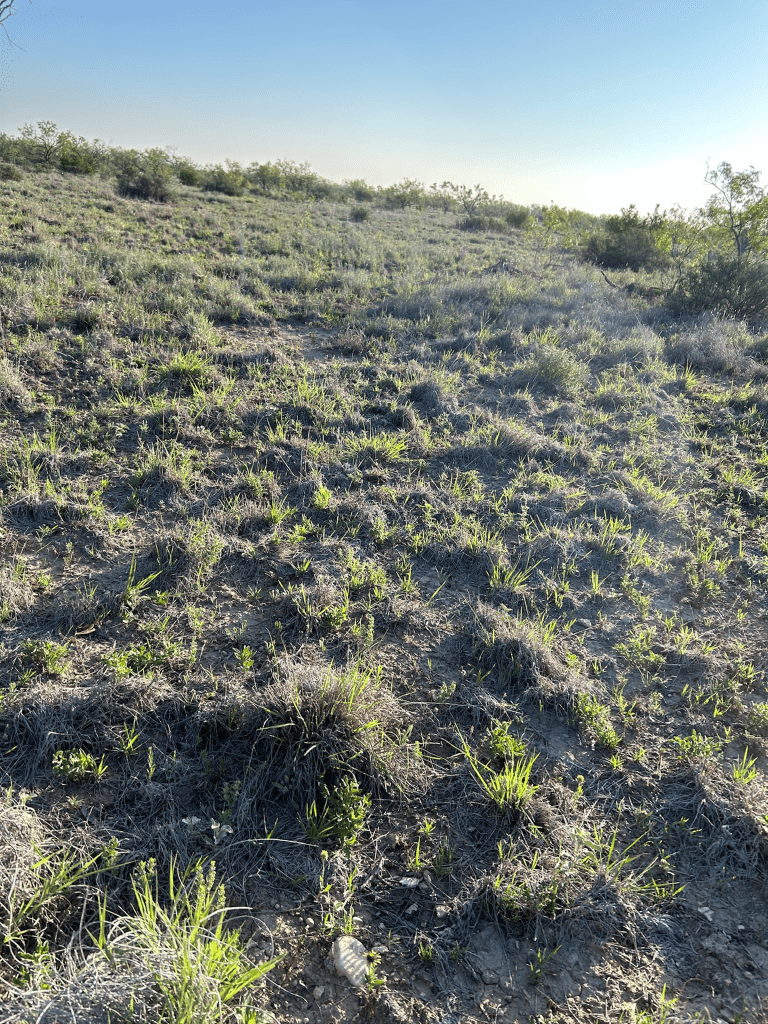
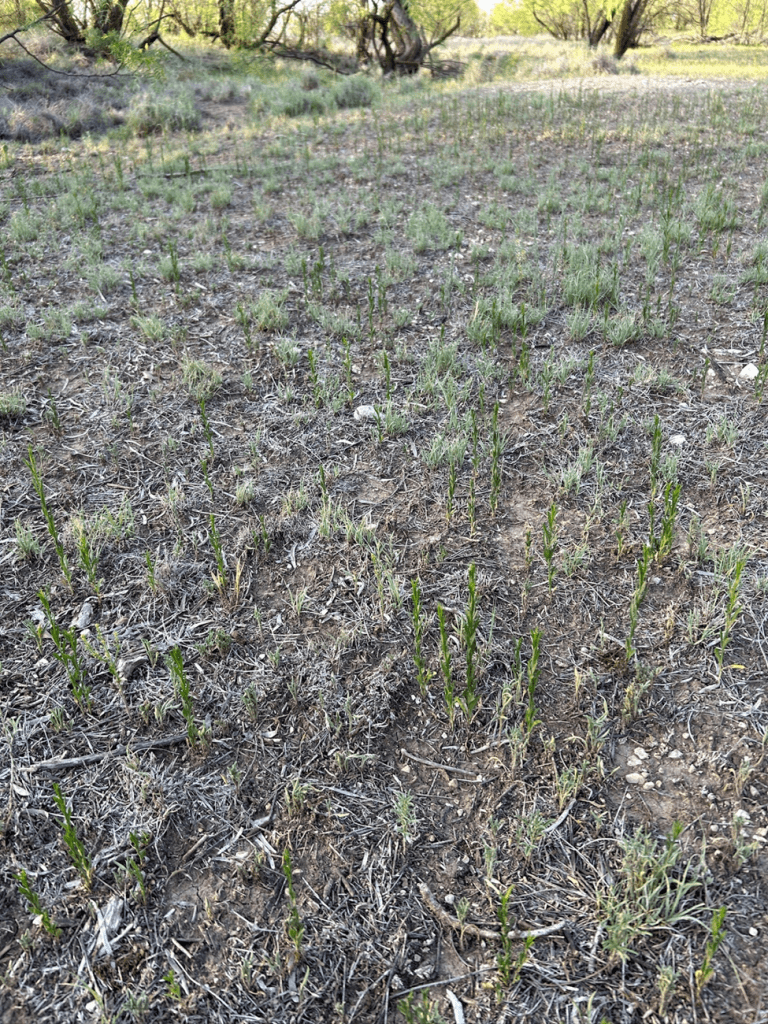
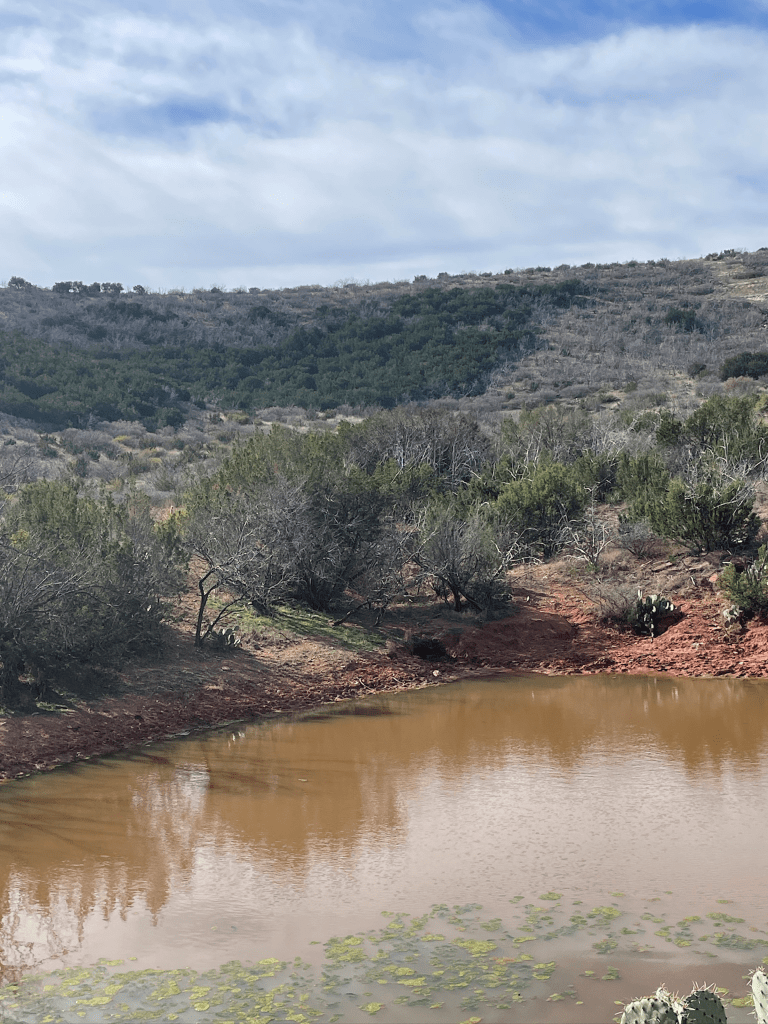
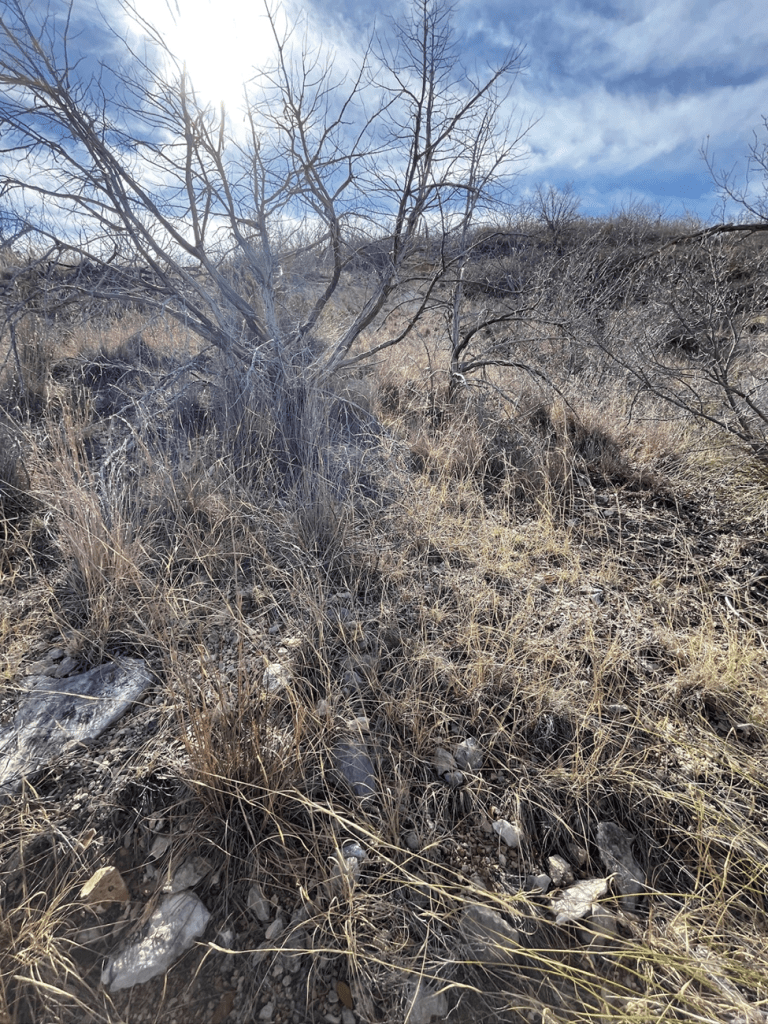
Adequate rainfall is critical to any grazing program. The following photos depict this with great emphasis. All taken within a few days of each other, spanning some 30 miles east to west. All three places have essentially the same grazing program, long rest (250 to 300 days) short graze period determined by number of pastures within the grazing unit from 23 in the latter picture to 12 pastures in the first picture. Certainly not mob grazing, but a single herd grazing program adapted to the managers goals and overall management plan. The only difference in the grazing units is primarily the annual rainfall, which within the 30 miles is dramatic. The extended drought of three years going into the fourth, has delt the management team many serious decisions, that at many times have felt very wrong, but essential within the long-term plan of both the rangeland health and economic health of the ranching operation.

It is obvious that the first place pictured has recovered very well from the drought conditions that were prevalent just a couple of months ago. That rapid recovery is, no doubt, the result of the dedicated-on-going grazing management program. When looking at the second picture the limited rainfall this year is showing great promise, as the fresh growth shows numerous surviving grass plants that with ‘a little’ more rainfall can quickly move the rangeland condition forward to a fully recovered state. Going a bit further west, the third picture shows a struggling rangeland. Yes, it is probably grazed too short for most managers eyes but still has good litter cover and remaining plants that will recover quickly once the rains come in larger volume. An old-time rancher once told me that “With each passing dry spell (drought) one can never run as much livestock as he could prior to that dry spell. He was correct until it was figured out that grazing management, utilizing a well-planned and initiated graze-rest-graze-rest program was essential. Now recovery after drought does not have to be so devastating.

Sure, hope the predictions of the upcoming La Nina event aren’t as severe as predicted, otherwise the grazing units of the last two pictures will be temporarily abandoned until adequate rains do come. Of course, here is proof that El Nino doesn’t always produce rain. As I like to say, “It depends on where you are standing.”

THE BETTER IT GETS, THE FASTER IT GETS BETTER
Rebuilding After Wildfire

The 2011 fire season in our area had profound effects on our ranching operation. We had to step back after each fire (Seven separate fires encroached on ranches that we were operating) and accept that the damage was done and ask; What can we do to move forward and adapt to the conditions that the fires left us with? Fifty-Seven plus miles of fencing needed to be replaced and we took this ‘opportunity’ to move some of them to new locations thus improving the ability to make our grazing programs more efficient. Loss of grazable forage was extensive, the 2011 Wildcat Mountain fire in Coke County made its first big run-on April 15 of that year. No moisture fell on the burned area until mid to late August, more than 120 days after the fire. To add to that lack of moisture there were 100 consecutive days of 100+ degree heat prior to that rain event in August. This produced a soil temperature one foot below the surface of the ground of 147 degrees and some took temps of 153 degrees. The cover of the soil and the shade-protection it provides is essential to effective use of rainfall. Recovery under those conditions takes patience and the utilization of the already established graze-rest program has made our recovery a much faster and productive experience.

Our hearts go out to the folks in the Panhandle that have suffered such horrific losses. As the rebuilding process begins for those folks that lost so much, it is important to accept what has happened and think through how to make this tragedy a positive process. (Easy to say, hard to do!!) Numerous ranchers have become much too familiar with wildfire and what it entails to rebuild. Thinking through the what’s and why’s is aways good and may provide knowledge-wisdom as to how to prepare for the next fire and make it a bit more positive and less stressful. Accepting it as ‘That’s the way it is” is not acceptable. Planning for the next wildfire is a valuable tool. (How to control it, what management practices will lessen the effect of the fire, how to financially prepare for the next one, the list can become quite extensive.) Instead of working to put things back as they were, finding new paradigms that will enhance the ranching operation and preparing for the next fire event might be a better long-term solution.

The following pictures show rangeland that burned in the 2011 Dos Amigos fire. Heavy cedar on hillsides (Mostly Blueberry). The first picture shows the mosaic aftermath of the fire and the remnant heavy cedar that was the dominant feature of the hillsides prior to the fire. The second and third photos are what was heavy cedar prior to fire and the grass response that has occurred with the ‘death’ of the blueberry cedar. Looking closely at the remnants (skeletons) of the cedars, riding through this area was an impossible task (Even for a veteran ‘cedar popper’) The grasses including side oats, curly mesquite, slim tridents, tall dropseed, Texas winter grass, little bluestem and green sprangle top have been released and are flourishing with the help of the previously established graze-rest program.

THE BETTER IT GETS, THE FASTER IT GETS BETTER

Brush Management and Increase in Grazable Forage

A short time ago a research scientist asked what percentage increase in grass production I expected after completing a brush management program. My response was that I wasn’t qualified to respond with a percentage increase (Not a research scientist), but that the amount of increase in production seemed to be directly related to the length of time an effective graze-rest program had been in place PRIOR to the brush management program.

To understand this thought, one must consider what a healthy plant with a strong root system is capable of. A healthy root system recovers quickly with just about anything you can ‘throw’ at it. Trample it severely, either with animals, heavy equipment, fire and even extended drought conditions and it is amazing what that healthy plant can do to quickly recover. However, if it is in poor condition lacking the energy reserves stored below ground, lacking the extensive-massive root system that is capable of drawing nutrients and water from limited sources, that plant may die from the brush management process that was initiated to increase the grazable production of the rangeland.  Resulting in a negative connotation, making recovery and the hoped for increase in production a slow and many times disastrous result of only creating more denuded bare ground creating a perfect place for the brush to germinate and become thicker than when the original ‘brush management’ program was initiated. Once again, how do you create those healthy plants prior to the brush management program? Graze-Rest-Graze-Rest it is essential.

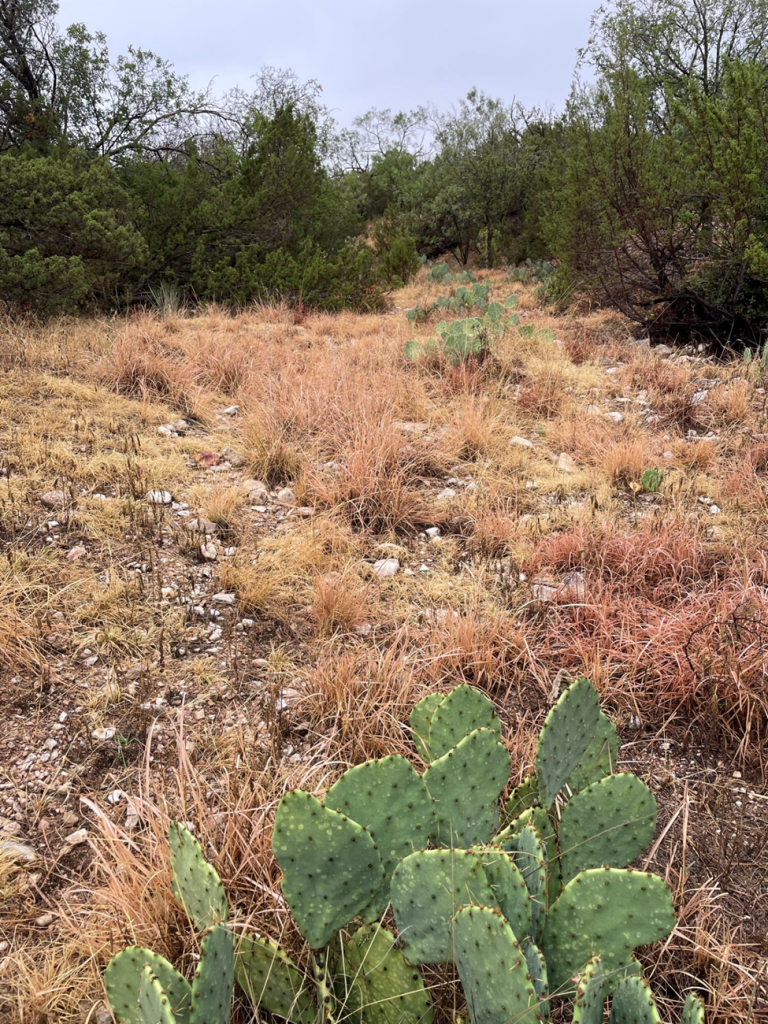
The photo below tells several stories.

  1. Preparing for brush management establishing healthy grassland prior to it.
  2. The beginnings of rocks disappearing
  3. The starting effects of prickly pear control with the use of the ‘native’ prickly pear beetle. (Yellow dots on the prickly pear pads.)

THE BETTER IT GETS THE FASTER IT GETS BETTER

Brush Management and Grazing

For many grassland managers brush management is the costliest of all the management options. Those operators that have a substantial outside income are, as a rule, the only ones that can afford to ‘Control the Brush’, without the help of various government ‘help’ programs. Regardless of the source of money, understanding why the brush is an ever-increasing problem, despite the long-term efforts of ‘controlling’ it, is essential to developing a viable program of brush management. Long term continuous-sometimes heavy grazing, loss of the fire regime and perhaps the ever-changing climate are all factors in creating the brush issues many face on rangeland. Perhaps the combination of these ‘causes’ creates a multiplying factor to the brush issue.

The first thing a rangeland manager can do to change this paradigm is to be certain he has adapted an effective graze-rest program so the plants can survive and flourish after the brush management plan is initiated. The importance of creating this grazing management process PRIOR to the brush management practice cannot be over emphasized. The results of such a program have been shown to be dramatic.

Stay tuned as in the following weeks we will discuss several brush management issues both good and perhaps not so good.

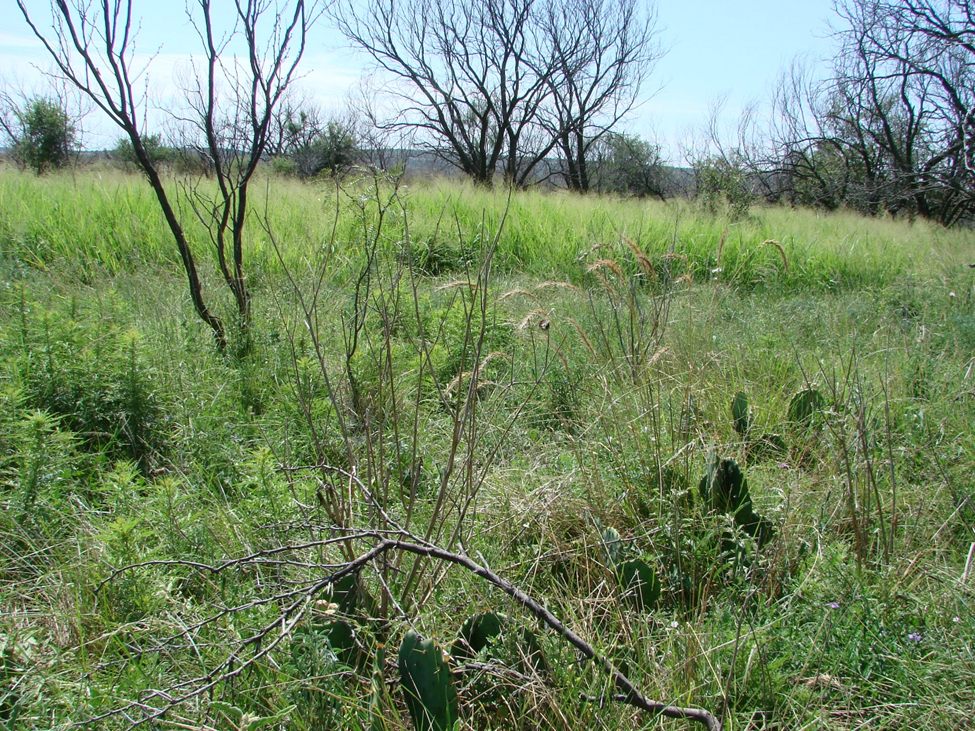
The photo below shows even with heavy cover of brush, some grass plants are established. When a good grazing program is established prior to removing brush those grass plants are given the opportunity to flourish. Making the brush removal effort effective in grassland improvement.

THE BETTER IT GETS THE FASTER IT GETS BETTER

Managing Thru Drought

Texas Cup Grass

It is interesting to note the different plants and how they are reacting to the awesome rainfall received this past week. (3” in two different rains 6 days apart)

The prickly pear, which was shriveled to the point that one rancher commented that he thought if we had a wildfire it would burn like grass, has ‘fluffed out’ and greened up amazingly in just a few days, as its shallow roots quickly absorbed the moisture. The amazing pear apple crop was the result of the last rain event in May. Pear is certainly well adapted to drought conditions.

Black Walnuts, which appeared to be drought killed have already begun putting on new leaf growth, even at this late date in the growing season. Many dead limbs and stems are evidence of the lack of moisture through the exceptionally hot-dry summer. The Lords plan with natures resiliency is awesome, and only needs the help of man to move the process forward.

Grasses are very slow to show any green up as the moisture conditions were strikingly poor, being the result of a long drought period only offset by the May rain event that provided excellent recovery from prior drought conditions, however that rain event did not provide any deep moisture for long term recovery. (Take note that this rainfall event does not mean the end of the drought, but it is an excellent start.) Thus, the grass was in a dormant condition, and it takes time for the growth process to begin again. Even the deeper-rooted dense stands of grasses that traditionally fare much better than the sparsely spaced grass plants of heavy-continuous grazed programs, are dormant from this current dry spell. Yet having said all this, some grass plants recover much more quickly from extended drought-heat than others.

The picture below is of a Texas Cupgrass plant, while every other grass in the pasture is struggling to show any green at all even at the base of the plant, the Texas Cup is already making very positive new growth of leaf structure. For a review of past discussions, Texas Cup under continuous grazing is a rare find and will almost always be found growing within a protected area from grazing like a bush. Being one of the first to green up in spring, the last of the summer grasses to brown out in fall and in many years will retain some green in the stems through the winter much like Black Grama. With the timely initiation of a dedicated graze-rest program utilizing an extended rest period the Texas Cup will increase at a dramatic rate as the seed source is allowed to expand. While not known as one of the ‘tall’ grasses this mid grass is one of the better indicators of rangeland improvement and is a key plant in putting the grazing manager in a position of profitable ranching on a consistent basis.

                            THE BETTER IT GETS THE FASTER IT GETS BETTER