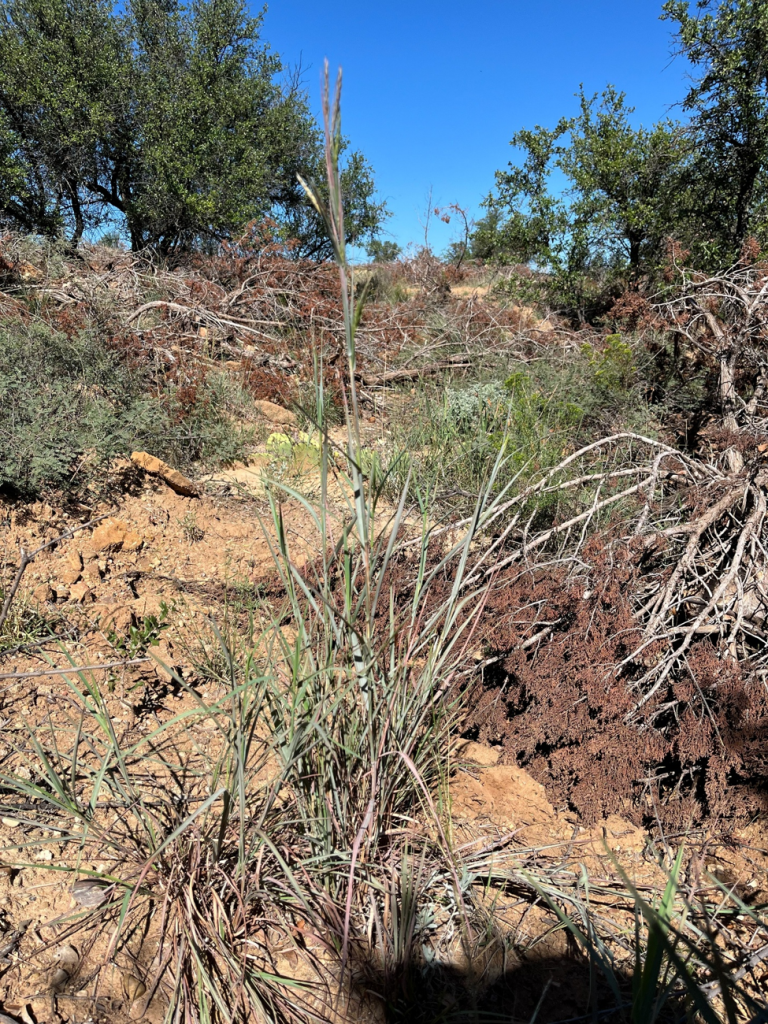
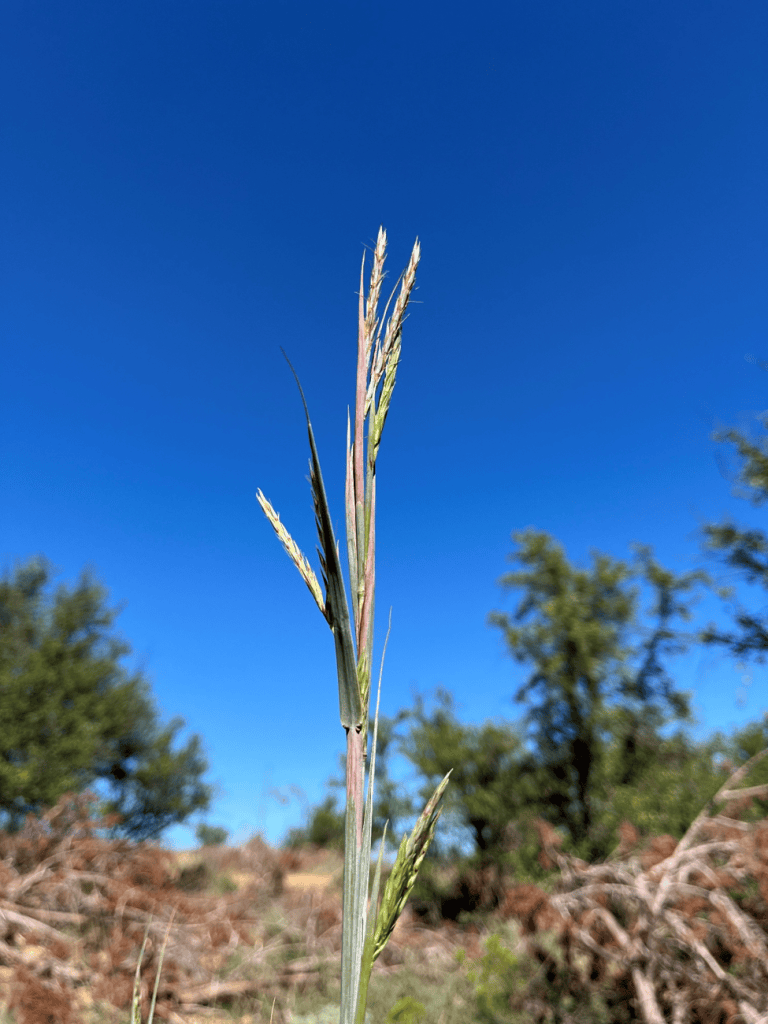
A lonesome survivor from the past has shown itself after a grubbing program focused on a dense cedar area. The Big Bluestem plant has most likely been ‘hiding’ within the heavy cover of cedar for a very long time, as the continuous grazing program had been in place for perhaps 150 years and no sign of Big Blue could be found on the open areas that cattle could get too. Within the past 3 years this grazing program has been abandoned, and a long rest-recovery short graze regime has been put in place.
There is little doubt, if the continuous graze program was still in place, even with the one-time 90-day deferment as prescribed with an EQIP brush management program. This lonesome Big Blue would soon perish because of grazing pressure and lack of continuing recovery on a planned basis. Being the highly preferred grazing plant that it is, even under light grazing cattle would continuously return to the area and graze it off after very little growth, preventing the root system from recovering after sending stored energy to promote new leaf growth, thus resulting in yet another dead-lost highly preferred plant.
Since Big Blue is a rhizomatous plant, new plants will soon show themselves to join ‘lonesome’ in nature’s planned recovery program. Yes, seedlings will also appear, but the process of Big Blue growing new plants from seed is a slow process that can take a few years to make a strong showing. Alternatively, those new plants coming from the rhizomes of ‘lonesome’ will quickly show promising results, provided that the focused graze-rest program is adhered to. Look closely at the base of the Big Blue in the first picture, rhizomes are already producing new growth that should increase the size of the plant rapidly.
Way to go Mother Nature and thanks to the Lord for providing ‘Nature’ with the tools to provide healthy robust grazing lands.
THE BETTER IT GETS, THE FASTER IT GETS BETTER