Soil Erosion is Unacceptable

Soil erosion is a large player in degraded rangelands. The loss of soil results in loss of fertility as the topsoil is the heart of the stored carbon and active growth of the perhaps millions or trillions of microorganisms, earthworms, protozoa, nematodes, the list goes on, that build and maintain the rangeland. Once that soil is lost, nature must start its process over and that can take a very long time to get back to its original state, perhaps it never will. The next net destruction of erosion is the lost soil goes downstream and fills the lakes and reservoirs with silt, reducing the amount of water available for human use and the shallow water storage of the reservoir makes evaporation an even greater loss of water.

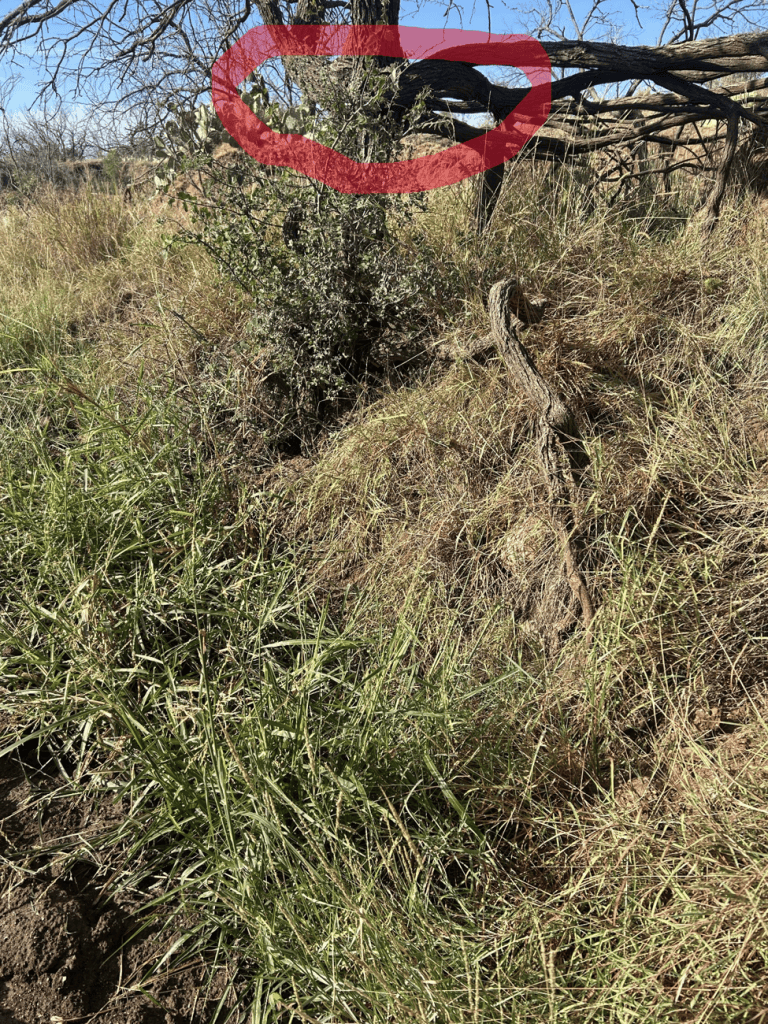
The photo below shows how far erosion can go. The circled area is where soil around the mesquite tree was when the seed germinated. To the right of the circle are what some would call limbs but are only bare roots that were exposed by erosion, some five feet of lost soil. (Observe the roots as they turn down going into the remaining soil)

With the advent of an effective grazing program, when the grasses have been allowed to reestablish providing soil stability, the process has been reversed. No expensive terraces-diversions have been put in place, only an effective grazing program and a secondary utilization of a brush management program. Keep in mind that the brush management should always follow the continuing-effective grazing program, as without proper grazing the erosion issue will not be resolved. No reseeding has taken place, only the native seed bank has been utilized.

Isn’t Nature an awesome process that can rebuild what we humans have destroyed. All she asks of us is to figure out what we did wrong to disrupt her amazing work. When we correct the cause (Poor grazing practices-management) she will do the rest. This natural recovery of rangelands requires patience; This site has been under a structured grazing program for more than 30 years. Yes, the techniques have changed as the managers’ knowledge of grazing is a continual learning process, but worth every moment of time and effort.

                                     THE BETTER IT GETS, THE FASTER IT GETS BETTER
A close-up view of a grassy area with a bush and some dry branches in a natural landscape.

Rainfall and Grazing Management are Both Essential

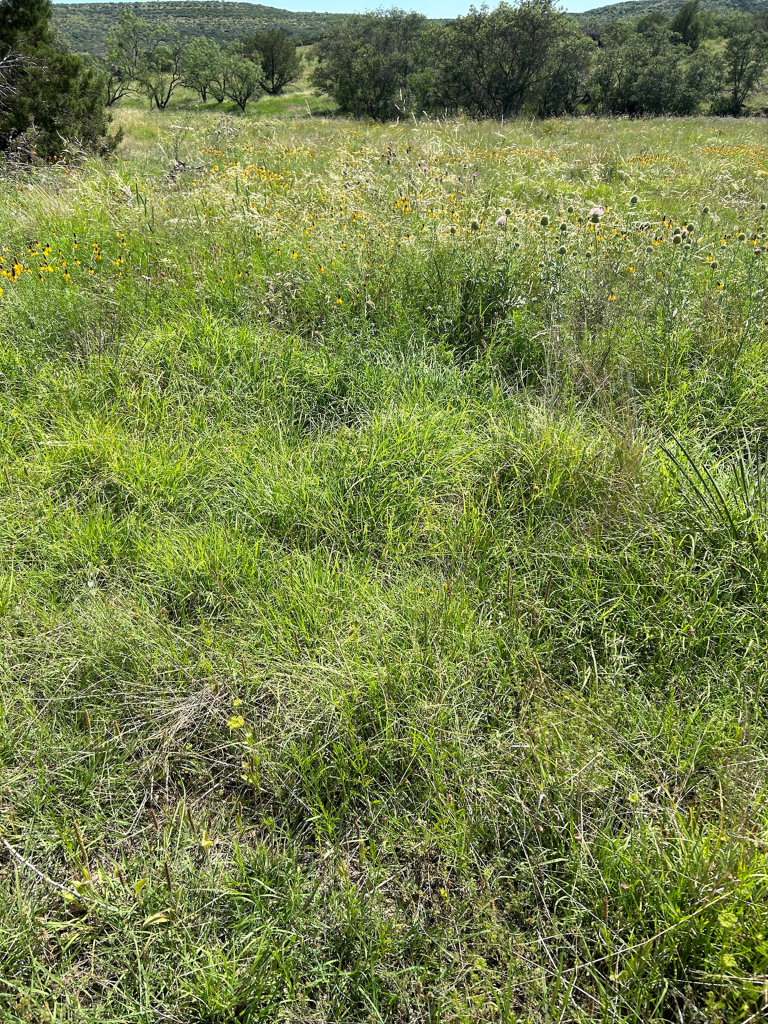
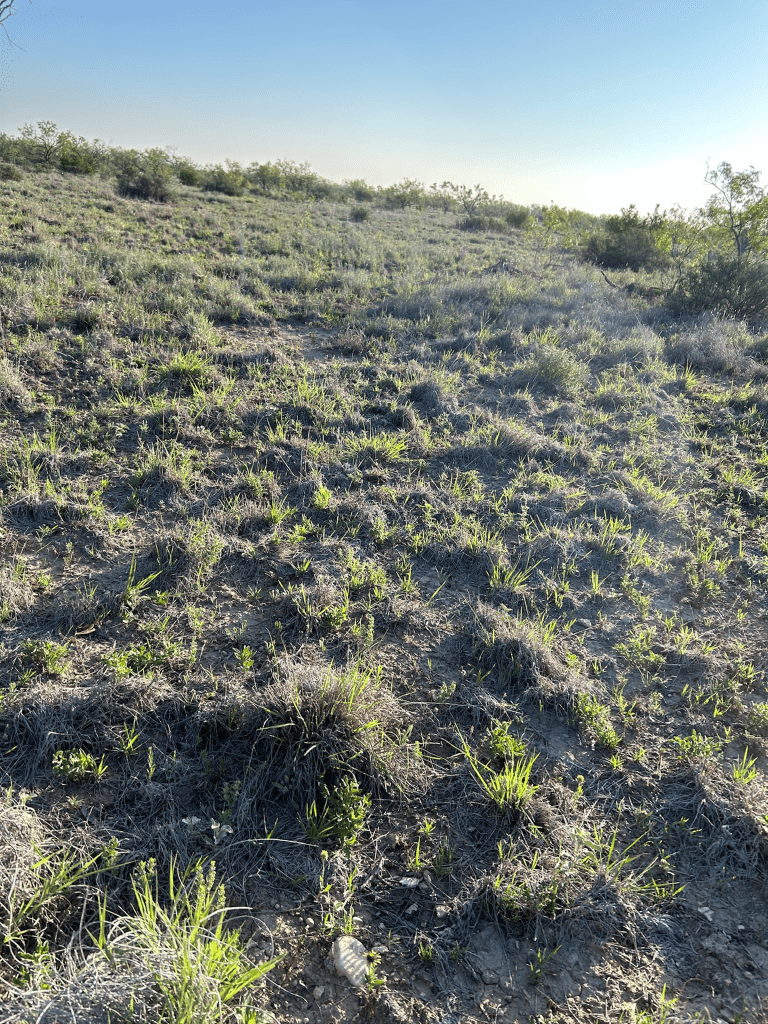
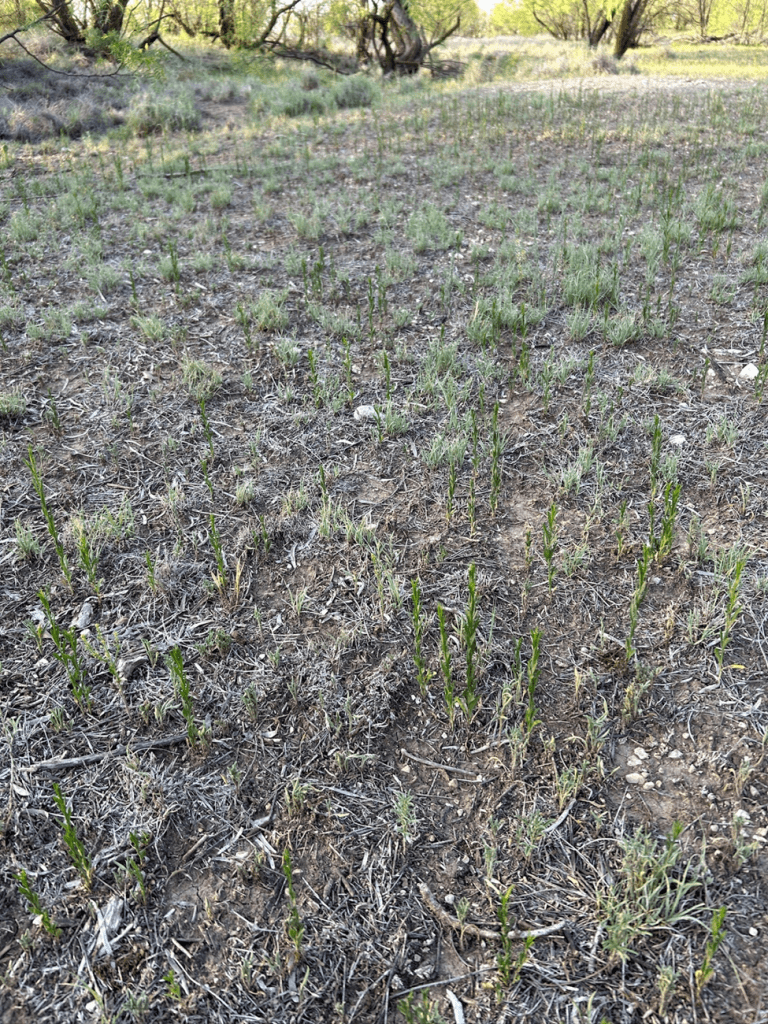
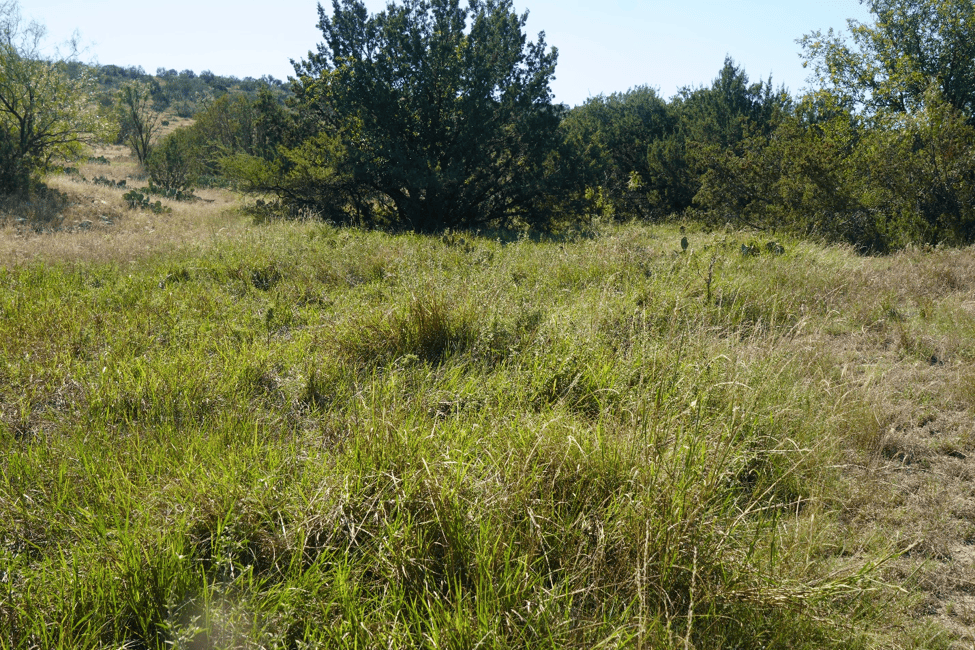
Adequate rainfall is critical to any grazing program. The following photos depict this with great emphasis. All taken within a few days of each other, spanning some 30 miles east to west. All three places have essentially the same grazing program, long rest (250 to 300 days) short graze period determined by number of pastures within the grazing unit from 23 in the latter picture to 12 pastures in the first picture. Certainly not mob grazing, but a single herd grazing program adapted to the managers goals and overall management plan. The only difference in the grazing units is primarily the annual rainfall, which within the 30 miles is dramatic. The extended drought of three years going into the fourth, has delt the management team many serious decisions, that at many times have felt very wrong, but essential within the long-term plan of both the rangeland health and economic health of the ranching operation.

It is obvious that the first place pictured has recovered very well from the drought conditions that were prevalent just a couple of months ago. That rapid recovery is, no doubt, the result of the dedicated-on-going grazing management program. When looking at the second picture the limited rainfall this year is showing great promise, as the fresh growth shows numerous surviving grass plants that with ‘a little’ more rainfall can quickly move the rangeland condition forward to a fully recovered state. Going a bit further west, the third picture shows a struggling rangeland. Yes, it is probably grazed too short for most managers eyes but still has good litter cover and remaining plants that will recover quickly once the rains come in larger volume. An old-time rancher once told me that “With each passing dry spell (drought) one can never run as much livestock as he could prior to that dry spell. He was correct until it was figured out that grazing management, utilizing a well-planned and initiated graze-rest-graze-rest program was essential. Now recovery after drought does not have to be so devastating.

Sure, hope the predictions of the upcoming La Nina event aren’t as severe as predicted, otherwise the grazing units of the last two pictures will be temporarily abandoned until adequate rains do come. Of course, here is proof that El Nino doesn’t always produce rain. As I like to say, “It depends on where you are standing.”

THE BETTER IT GETS, THE FASTER IT GETS BETTER