Give Nature the Chance and She Will Seize the Opportunity

As stated in prior posts: Low lying areas are the first to receive any moisture that falls when the rain shower is large enough to run any water. If there was no runoff and the established plants on higher ground are dense enough for the small rains to allow that limited water to be absorbed through the soil and fractured rock, it too can make its way to the lower areas of deep-rooted grass and healthy soil. This advanced ‘Water Cycle’ can provide excellent grazing despite a low rainfall period. Prior to initiating a planned graze-rest program those low areas under a continuous grazing program are the ones that seem to suffer the most, as livestock are continually going back to the green area that has even a very slight amount of green and grass growth. Many times, this overgrazing results in the Buffalo Wallow erosion areas discussed in a previous post.

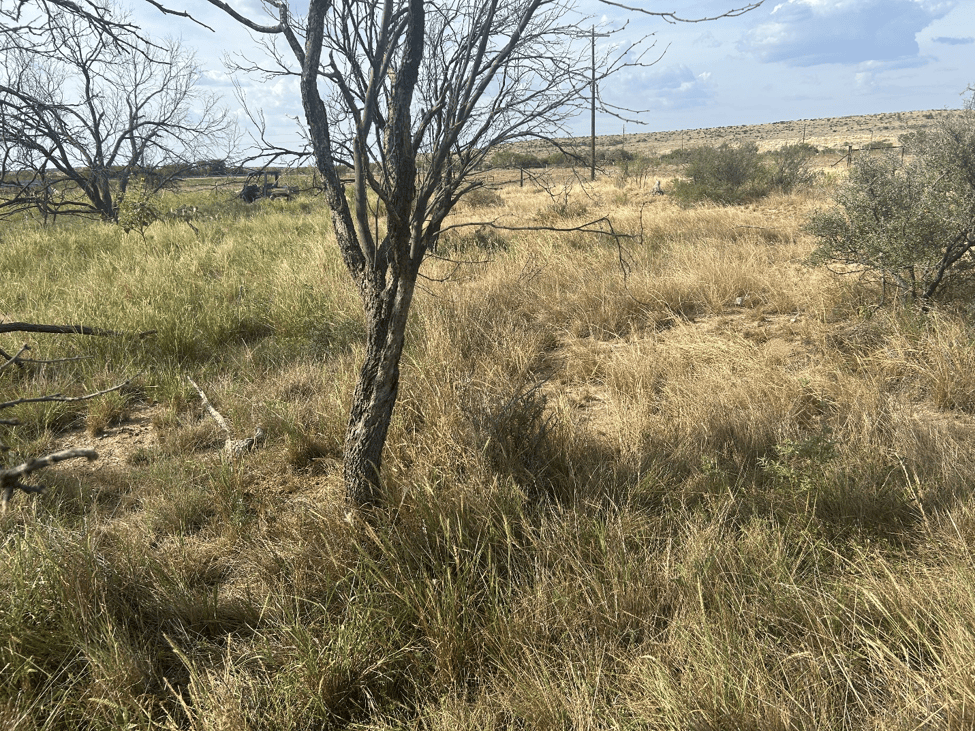
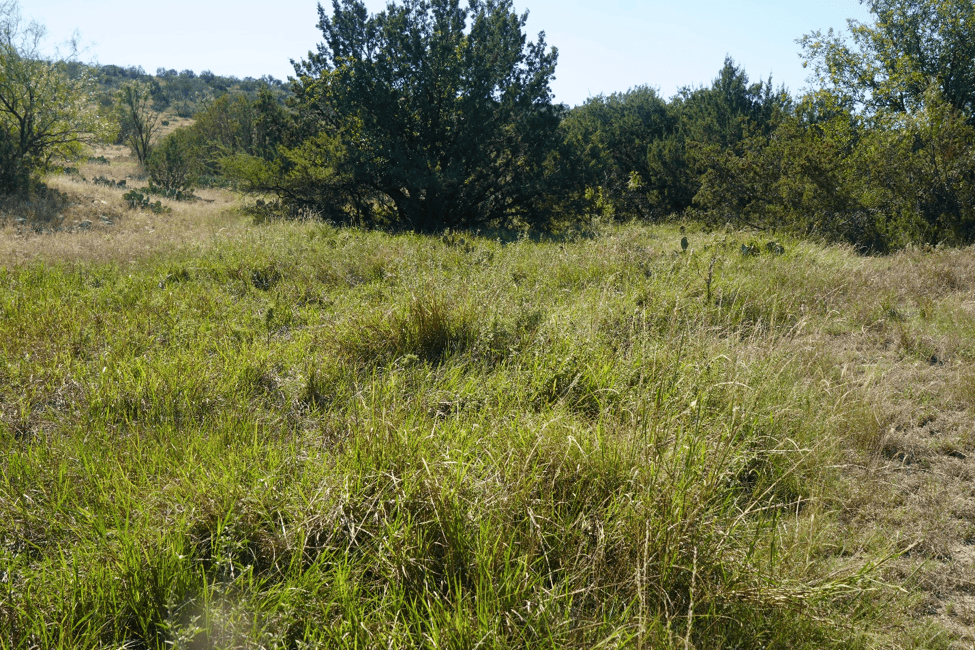
It is exciting to see areas like this photo that tells an amazing story of what nature can do if given the chance. The dry tan areas on either side of the rain catchment area express how limited the rainfall has been for the past 60 days. Yes, the dry area and the plants on it are ready to jump when adequate rain does fall, as relatively good cover of healthy grass’ are established just waiting on that proverbial good rain. The green area is moving forward nicely, ready to provide excellent grazing when the rotation places livestock within this portion of the grazing unit.

If the rain does not come to the area before grazing, great care must be used not to abuse the green area. One of two things must happen, probably both in unison: Livestock numbers must be at a reduced level, and the graze period must be very short. (Drought planning) It has been found that the green area will be quickly and severely grazed regardless of the technique used and well over 50% of that area will be utilized. Many times, 90% or more will be grazed and while this is not preferred, the area can recover nicely if the graze period is not long enough to encourage a second bite by the livestock and the recovery period is long enough for adequate regrowth of leaf surface and roots.

The size of the green area is increasing and getting wider with each passing season.

Love it when a plan comes together, but it is just that: Planning and careful observation is essential with intensive grazing.

               THE BETTER IT GETS, THE FASTER IT GETS BETTER
Soil Erosion is Unacceptable

Soil erosion is a large player in degraded rangelands. The loss of soil results in loss of fertility as the topsoil is the heart of the stored carbon and active growth of the perhaps millions or trillions of microorganisms, earthworms, protozoa, nematodes, the list goes on, that build and maintain the rangeland. Once that soil is lost, nature must start its process over and that can take a very long time to get back to its original state, perhaps it never will. The next net destruction of erosion is the lost soil goes downstream and fills the lakes and reservoirs with silt, reducing the amount of water available for human use and the shallow water storage of the reservoir makes evaporation an even greater loss of water.

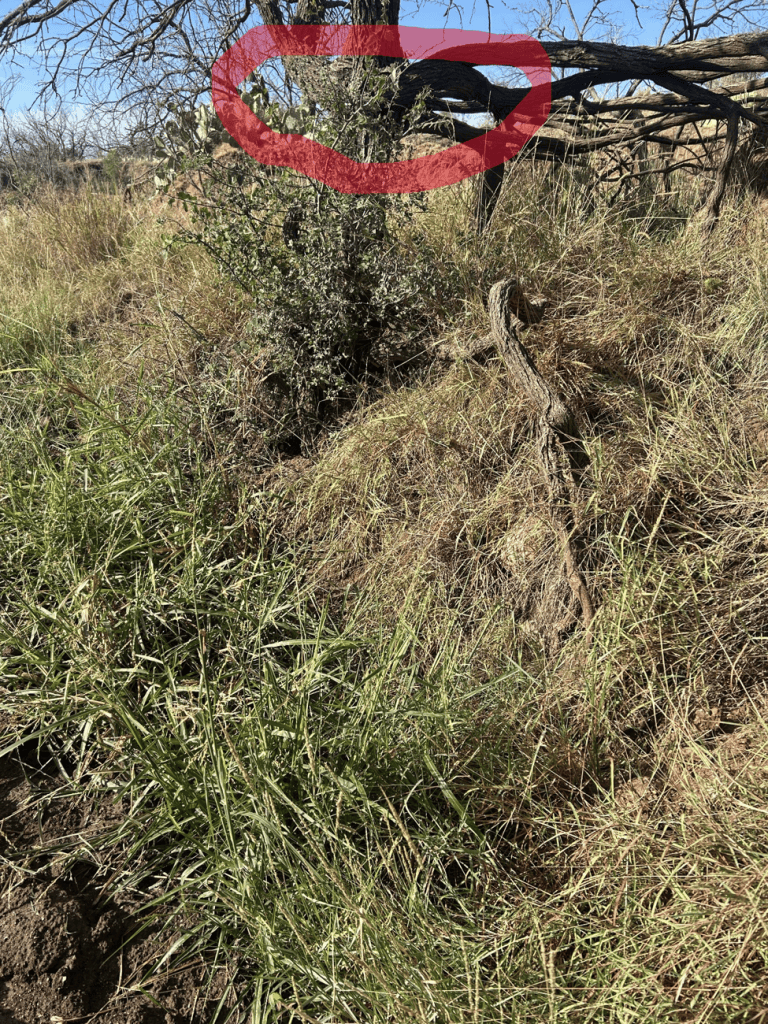
The photo below shows how far erosion can go. The circled area is where soil around the mesquite tree was when the seed germinated. To the right of the circle are what some would call limbs but are only bare roots that were exposed by erosion, some five feet of lost soil. (Observe the roots as they turn down going into the remaining soil)

With the advent of an effective grazing program, when the grasses have been allowed to reestablish providing soil stability, the process has been reversed. No expensive terraces-diversions have been put in place, only an effective grazing program and a secondary utilization of a brush management program. Keep in mind that the brush management should always follow the continuing-effective grazing program, as without proper grazing the erosion issue will not be resolved. No reseeding has taken place, only the native seed bank has been utilized.

Isn’t Nature an awesome process that can rebuild what we humans have destroyed. All she asks of us is to figure out what we did wrong to disrupt her amazing work. When we correct the cause (Poor grazing practices-management) she will do the rest. This natural recovery of rangelands requires patience; This site has been under a structured grazing program for more than 30 years. Yes, the techniques have changed as the managers’ knowledge of grazing is a continual learning process, but worth every moment of time and effort.

                                     THE BETTER IT GETS, THE FASTER IT GETS BETTER
A close-up view of a grassy area with a bush and some dry branches in a natural landscape.

Nature will provide the water: We provide the means

It is said that 90 percent of the moisture received from rain and snow fall comes from the oceans of the world. With this knowledge it can be considered a relief that nature has the tools to renew the fresh water that is needed by every living thing.  Yet it is common knowledge that we are running short of that valuable resource as numerous rivers are drying up, manmade freshwater lakes have filled with eroded soil, and our ground-well water production capability is becoming less with each passing day.

It is obvious that as modern man keeps coming up with new uses of the available fresh water, along with already existing water use, the pressure on the entire water system is becoming unsustainable. While individuals can have little effect on the ‘big picture’, when it comes to those rangeland managers and their direct effect on their piece of land, a huge difference can be made. With nature providing the ‘new’ water from the salty oceans, that manager can help provide healthy lands that slow runoff, store water in the soil and build an effective water cycle.

Photo shows, even under dry conditions, what can be achieved with a good grazing program. Note the line of green grasses to the left, which is adjacent to a runoff area, but not directly in it. As the deep-rooted plants that established within the runoff area have expanded, the plants just outside the area can grow during the dry spell utilizing the moisture from the runoff but not actually being in the overflow area.

As a sub note: Observe the few bare spots with no cover. Perhaps can be considered Quail habitat, bare spots don’t have to be large for dusting areas; small ones will suffice. (Would be interested in the quail guru’s thoughts on this.)

                                   THE BETTER IT GETS, THE FASTER IT GETS BETTER