Nature will provide the water: We provide the means

It is said that 90 percent of the moisture received from rain and snow fall comes from the oceans of the world. With this knowledge it can be considered a relief that nature has the tools to renew the fresh water that is needed by every living thing.  Yet it is common knowledge that we are running short of that valuable resource as numerous rivers are drying up, manmade freshwater lakes have filled with eroded soil, and our ground-well water production capability is becoming less with each passing day.

It is obvious that as modern man keeps coming up with new uses of the available fresh water, along with already existing water use, the pressure on the entire water system is becoming unsustainable. While individuals can have little effect on the ‘big picture’, when it comes to those rangeland managers and their direct effect on their piece of land, a huge difference can be made. With nature providing the ‘new’ water from the salty oceans, that manager can help provide healthy lands that slow runoff, store water in the soil and build an effective water cycle.

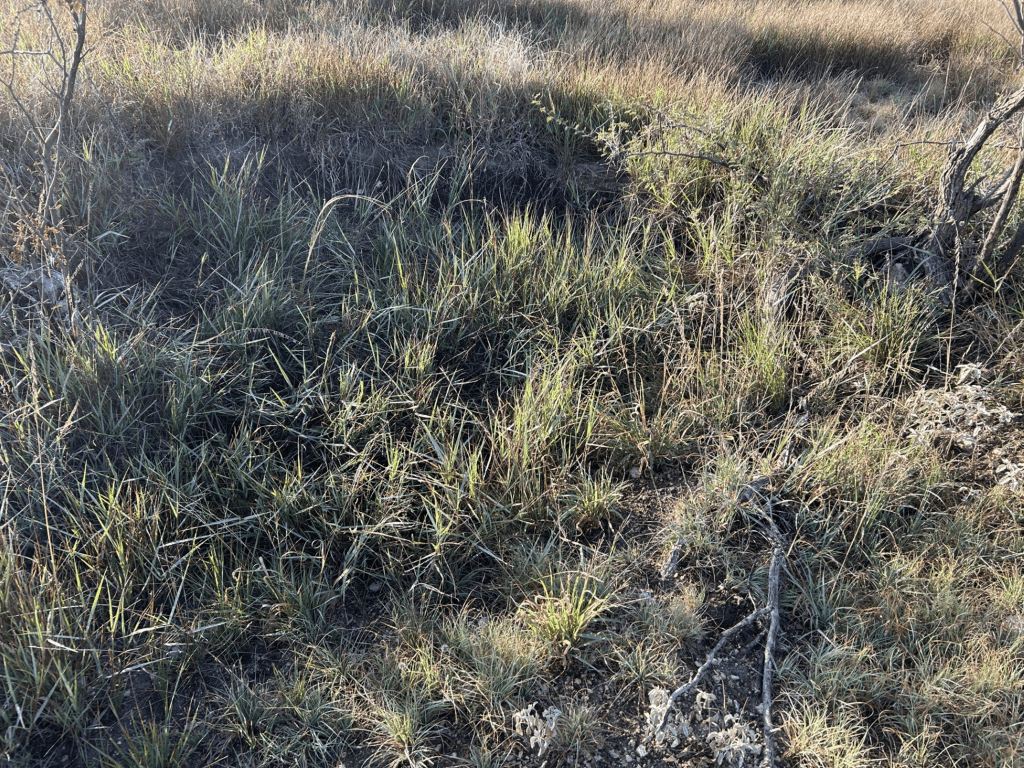
Photo shows, even under dry conditions, what can be achieved with a good grazing program. Note the line of green grasses to the left, which is adjacent to a runoff area, but not directly in it. As the deep-rooted plants that established within the runoff area have expanded, the plants just outside the area can grow during the dry spell utilizing the moisture from the runoff but not actually being in the overflow area.

As a sub note: Observe the few bare spots with no cover. Perhaps can be considered Quail habitat, bare spots don’t have to be large for dusting areas; small ones will suffice. (Would be interested in the quail guru’s thoughts on this.)

                                   THE BETTER IT GETS, THE FASTER IT GETS BETTER
Grass Growth and Rangeland Recovery: Scientific Insights and Management Practices

Understanding how a grass plant grows and reproduces can be a very complex (scientific) learning process. The below link will offer interesting, yet tedious reading (For us simple ranchmen) that some grass managers might find productive in their understanding of ‘why’ some grazing-management programs are more effective than others.

One of the highlights from the article is: “Perennial grasses can produce by both buds and seed, although more than 99 percent of new tiller growth comes from the bud bank. Seed life spans are short-lived and do not extend beyond 1 year. However, buds are long-lived and have a potential life that may exceed 5 years. Since bud life varies among grass species, current research efforts are focused on determining which species have the longer living buds. Vegetative buds respond quickly to environmental changes like rain, fire, and grazing.” It should be added that disturbance of the grass plant, including grazing, trampling, mechanical, fire and even the destruction of moribund grass plants caused by desert termites’ can all effect the simulation of new growth nodes. (Nature has developed numerous recovery process over millennia)

While I disagree with the statement that the seed life span is only one-year. It has been my experience that given the opportunity, seed can survive for an extremely long time and when given the opportunity (an effective graze-rest program) dormmate seed can provide excellent rangeland recovery. Albeit over an extended period. (Numerous years of application of that effective management program.)

A second highlight emphasized by the article is: “Current research has shown that perennial grasses reproduce by vegetative processes through asexual reproduction. Seed contribution to maintain an established grassland is less than 1 percent of the total reproductive effort.”

What can be gleaned form this article is that grazing-management programs should be designed to enhance bud simulation of the grass plant, seeding will take care of itself over time. (Patience is key here)

 It is all about stimulating growth buds to promote rangeland recovery and after stimulation giving the plant the opportunity (REST) to reach its genetic potential.

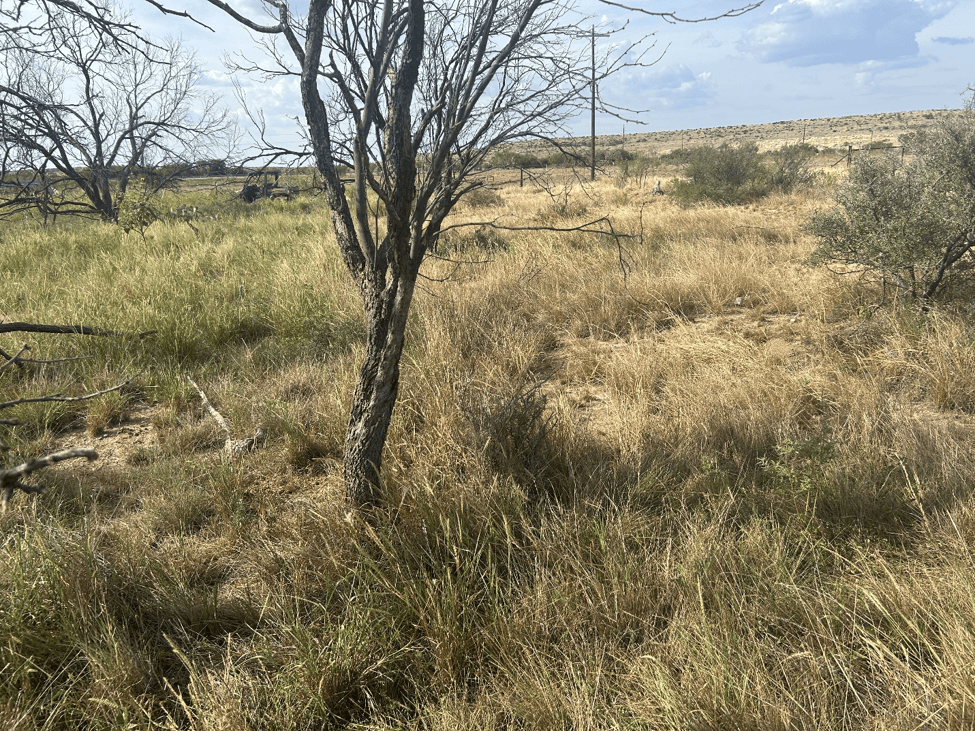
Photo shows a formerly erosive site that has almost total recovery form loss of soil. Vine Mesquite Grass is an excellent plant to quickly cover bare areas, especially when extra rain water is provided from runoff. After it is established, runoff is slowed to the point of putting the water into the ground. Greatly enhancing soil health.

THE BETTER IT GETS, THE FASTER IT GETS BETTER