Soil erosion is a large player in degraded rangelands. The loss of soil results in loss of fertility as the topsoil is the heart of the stored carbon and active growth of the perhaps millions or trillions of microorganisms, earthworms, protozoa, nematodes, the list goes on, that build and maintain the rangeland. Once that soil is lost, nature must start its process over and that can take a very long time to get back to its original state, perhaps it never will. The next net destruction of erosion is the lost soil goes downstream and fills the lakes and reservoirs with silt, reducing the amount of water available for human use and the shallow water storage of the reservoir makes evaporation an even greater loss of water.
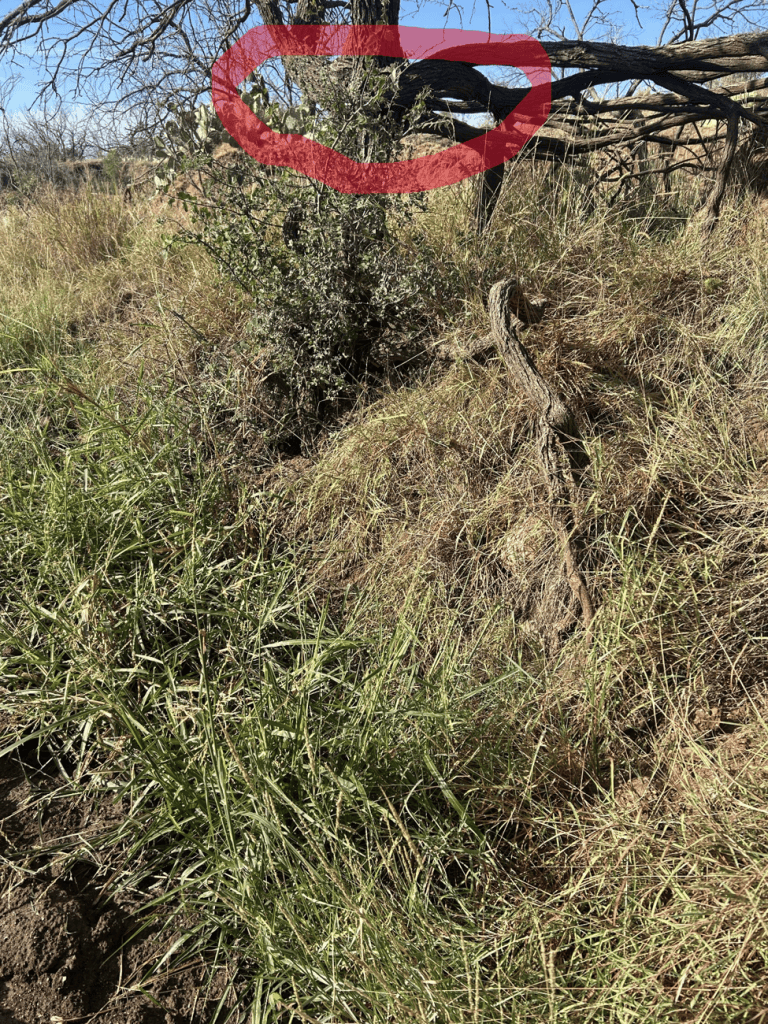
The photo below shows how far erosion can go. The circled area is where soil around the mesquite tree was when the seed germinated. To the right of the circle are what some would call limbs but are only bare roots that were exposed by erosion, some five feet of lost soil. (Observe the roots as they turn down going into the remaining soil)
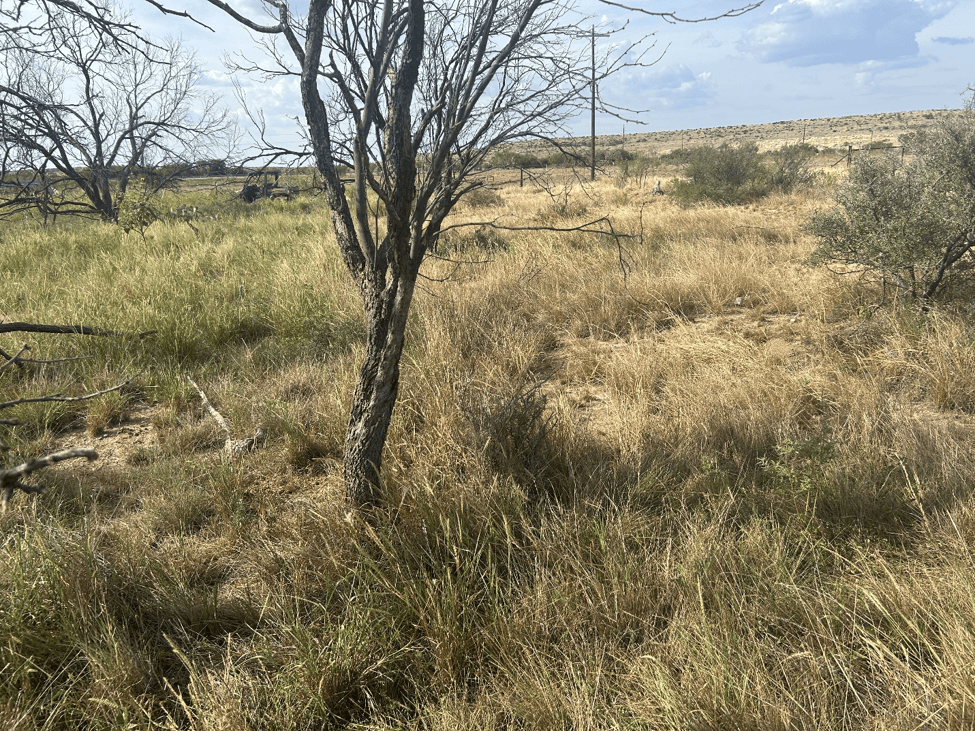
With the advent of an effective grazing program, when the grasses have been allowed to reestablish providing soil stability, the process has been reversed. No expensive terraces-diversions have been put in place, only an effective grazing program and a secondary utilization of a brush management program. Keep in mind that the brush management should always follow the continuing-effective grazing program, as without proper grazing the erosion issue will not be resolved. No reseeding has taken place, only the native seed bank has been utilized.
Isn’t Nature an awesome process that can rebuild what we humans have destroyed. All she asks of us is to figure out what we did wrong to disrupt her amazing work. When we correct the cause (Poor grazing practices-management) she will do the rest. This natural recovery of rangelands requires patience; This site has been under a structured grazing program for more than 30 years. Yes, the techniques have changed as the managers’ knowledge of grazing is a continual learning process, but worth every moment of time and effort.
THE BETTER IT GETS, THE FASTER IT GETS BETTER