Soil Erosion is Unacceptable

Soil erosion is a large player in degraded rangelands. The loss of soil results in loss of fertility as the topsoil is the heart of the stored carbon and active growth of the perhaps millions or trillions of microorganisms, earthworms, protozoa, nematodes, the list goes on, that build and maintain the rangeland. Once that soil is lost, nature must start its process over and that can take a very long time to get back to its original state, perhaps it never will. The next net destruction of erosion is the lost soil goes downstream and fills the lakes and reservoirs with silt, reducing the amount of water available for human use and the shallow water storage of the reservoir makes evaporation an even greater loss of water.

The photo below shows how far erosion can go. The circled area is where soil around the mesquite tree was when the seed germinated. To the right of the circle are what some would call limbs but are only bare roots that were exposed by erosion, some five feet of lost soil. (Observe the roots as they turn down going into the remaining soil)

With the advent of an effective grazing program, when the grasses have been allowed to reestablish providing soil stability, the process has been reversed. No expensive terraces-diversions have been put in place, only an effective grazing program and a secondary utilization of a brush management program. Keep in mind that the brush management should always follow the continuing-effective grazing program, as without proper grazing the erosion issue will not be resolved. No reseeding has taken place, only the native seed bank has been utilized.

Isn’t Nature an awesome process that can rebuild what we humans have destroyed. All she asks of us is to figure out what we did wrong to disrupt her amazing work. When we correct the cause (Poor grazing practices-management) she will do the rest. This natural recovery of rangelands requires patience; This site has been under a structured grazing program for more than 30 years. Yes, the techniques have changed as the managers’ knowledge of grazing is a continual learning process, but worth every moment of time and effort.

                                     THE BETTER IT GETS, THE FASTER IT GETS BETTER
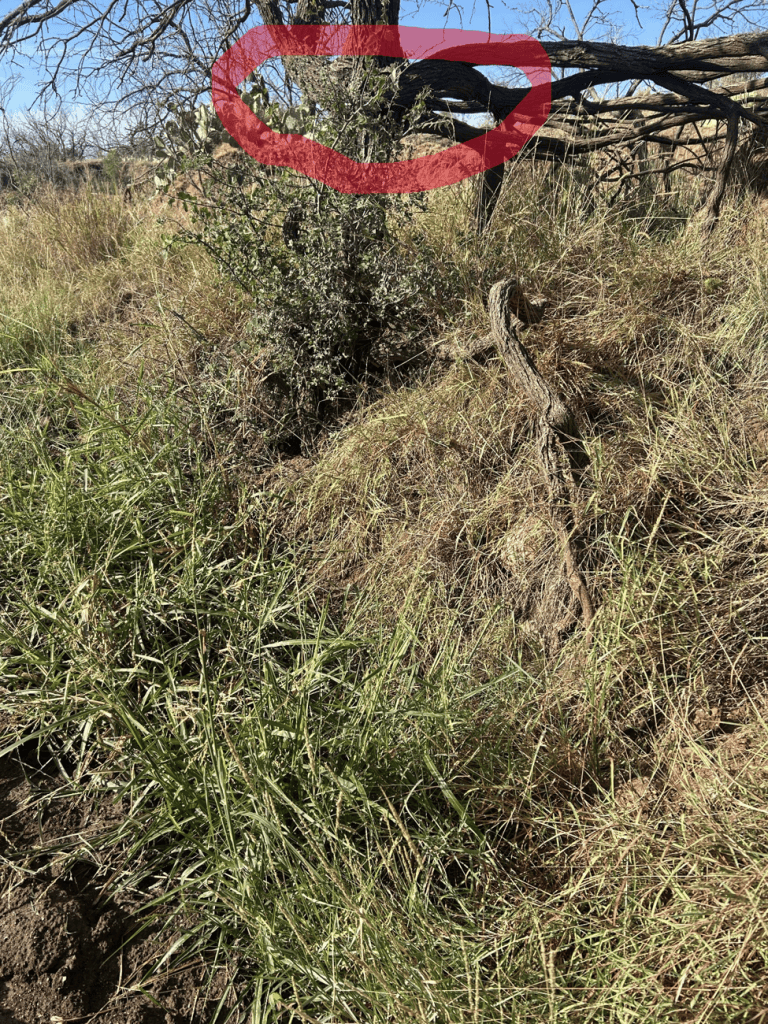
A close-up view of a grassy area with a bush and some dry branches in a natural landscape.

Rangeland Brush Control Starts With Grazing Management

Brush management has become the go-to-management item for many (Even most) when the operator desires to improve the grazing for his livestock. While this can make for a dramatic change in the amount of grass that can be made available for the livestock, so many times it is only temporary as the brush quickly returns. Many times, the result is thicker and harder to control brush than before the initial treatment. Considering and understanding why the brush has become a problem is the most important consideration prior to the initiation of a brush program.

Nature’s highest priority is to put ‘cover’ on the soil as this is the fastest, most practical way of rangeland recovery. Shading of the soil, slowing erosion, protecting seedlings and the microflora within the soil are but a few of the processes that are essential for rangeland ‘long term’ improvement. Annual weeds, brush, mold, lichens and soil capping are some of the tools at nature’s disposal and none of those ‘tools’ are acceptable to the rancher wanting to raise livestock. Yes, they are valuable tools that over the long haul can make a difference, but we are too impatient to wait for the results, which might take thousands of years.

When nature finds that the grazing program causes the premier plants such as perennial -deep- rooted- palatable grasses and forbs can’t survive due to continuous grazing and too many mouths to feed, it resorts to covering the soil with anything that will survive. Brush is often the answer to covering the soil. Yes, over time that brush can result in enhancing the soil’s carbon content. (Thanks, Steve Nelle, for pointing this out in your Cowboy Ecologist article in the Livestock Weekly.) The important thing is to recognize what nature has accomplished with covering the soil with that brush and not destroy her creation by removing the brush and going back to over grazing and not providing adequate recovery time. Without this grazing management the newly created healthy soil will quickly be lost to erosion, and the brush cycle will start over again. If you consider nature to be a being, one can look at as if the grazing manager made her mad and she will put that much more brush at play in a much denser form. (Which she isn’t. She is a process that was put in place during creation.)

So, it must be understood that the only way to improve grazing and soil health is to initiate that effective grazing program first, let it work its magic for a few years then, if needed, attack the brush and the results can be an awesome, exceptionally quick long-term result.

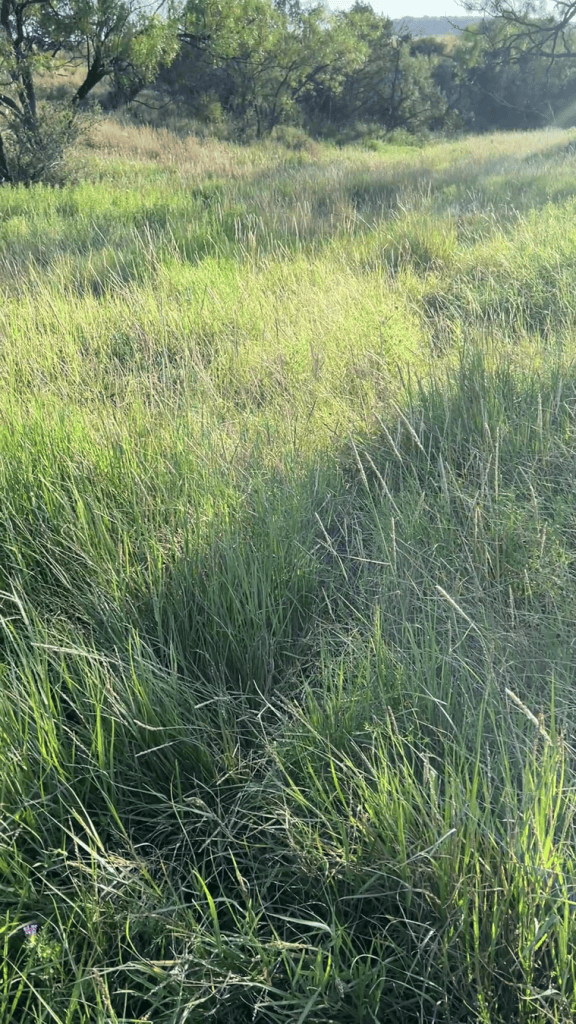
While still not perfect grass recovery. Photo depicts recovery after clearing very heavy brush from a draw area two years ago. I suspect the high carbon-organic matter discussed by Steve exists on this site also.

                            THE BETTER IT GETS, THE FASTER IT GETS BETTER
Brush Management and Increase in Grazable Forage

A short time ago a research scientist asked what percentage increase in grass production I expected after completing a brush management program. My response was that I wasn’t qualified to respond with a percentage increase (Not a research scientist), but that the amount of increase in production seemed to be directly related to the length of time an effective graze-rest program had been in place PRIOR to the brush management program.

To understand this thought, one must consider what a healthy plant with a strong root system is capable of. A healthy root system recovers quickly with just about anything you can ‘throw’ at it. Trample it severely, either with animals, heavy equipment, fire and even extended drought conditions and it is amazing what that healthy plant can do to quickly recover. However, if it is in poor condition lacking the energy reserves stored below ground, lacking the extensive-massive root system that is capable of drawing nutrients and water from limited sources, that plant may die from the brush management process that was initiated to increase the grazable production of the rangeland.  Resulting in a negative connotation, making recovery and the hoped for increase in production a slow and many times disastrous result of only creating more denuded bare ground creating a perfect place for the brush to germinate and become thicker than when the original ‘brush management’ program was initiated. Once again, how do you create those healthy plants prior to the brush management program? Graze-Rest-Graze-Rest it is essential.

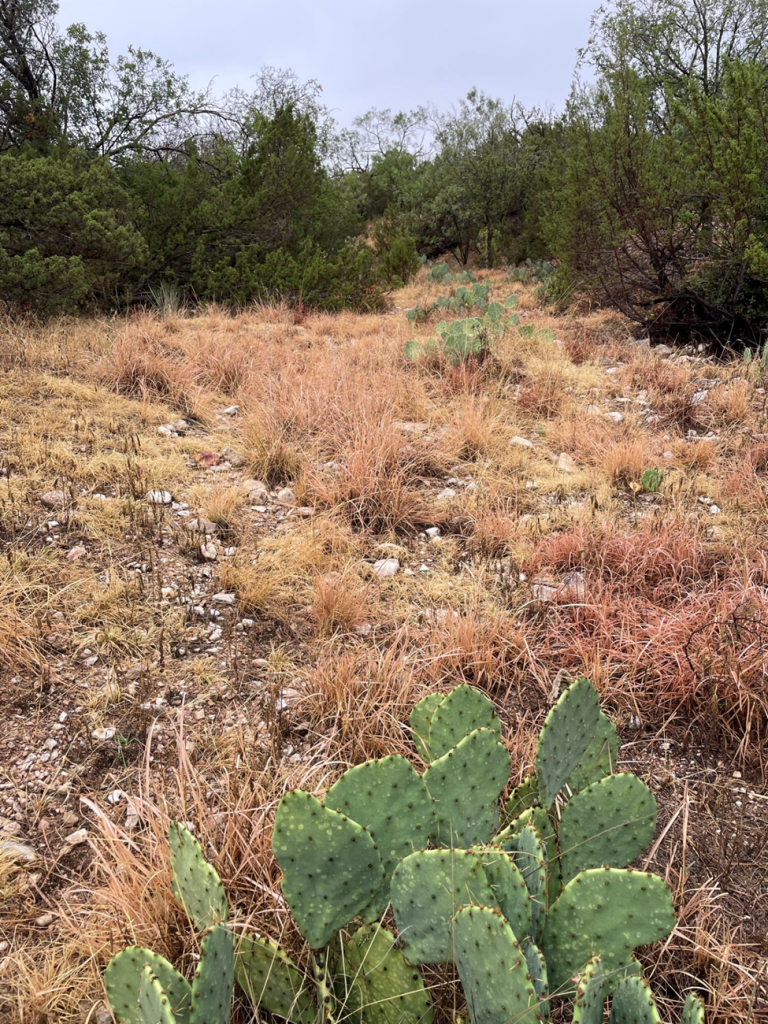
The photo below tells several stories.

  1. Preparing for brush management establishing healthy grassland prior to it.
  2. The beginnings of rocks disappearing
  3. The starting effects of prickly pear control with the use of the ‘native’ prickly pear beetle. (Yellow dots on the prickly pear pads.)

THE BETTER IT GETS THE FASTER IT GETS BETTER

Brush Management and Grazing

For many grassland managers brush management is the costliest of all the management options. Those operators that have a substantial outside income are, as a rule, the only ones that can afford to ‘Control the Brush’, without the help of various government ‘help’ programs. Regardless of the source of money, understanding why the brush is an ever-increasing problem, despite the long-term efforts of ‘controlling’ it, is essential to developing a viable program of brush management. Long term continuous-sometimes heavy grazing, loss of the fire regime and perhaps the ever-changing climate are all factors in creating the brush issues many face on rangeland. Perhaps the combination of these ‘causes’ creates a multiplying factor to the brush issue.

The first thing a rangeland manager can do to change this paradigm is to be certain he has adapted an effective graze-rest program so the plants can survive and flourish after the brush management plan is initiated. The importance of creating this grazing management process PRIOR to the brush management practice cannot be over emphasized. The results of such a program have been shown to be dramatic.

Stay tuned as in the following weeks we will discuss several brush management issues both good and perhaps not so good.

The photo below shows even with heavy cover of brush, some grass plants are established. When a good grazing program is established prior to removing brush those grass plants are given the opportunity to flourish. Making the brush removal effort effective in grassland improvement.

THE BETTER IT GETS THE FASTER IT GETS BETTER