It is Only a Bunch of Rocks

Many times, a rancher makes the statement that “not much will grow on these rocks”. Time and effective grazing management practices are proving this to be incorrect. Proper length of rest and grazing of those rocky areas are proving to be among the first areas to show dramatic improvement. Big Bluestem, Little Bluestem, Indian Grass, and others of the deeper-rooted grasses seem to like the fractured limestone rocks of West Texas and some of the rockier areas that show little topsoil are beginning to team with good cover of healthy plants.

Why is this taking place? Maybe the rocks at the surface concentrate the limited rainfall. Maybe those rocks help protect new and even older plants from grazing. Perhaps the slopes and draws where the rocks seem to be most prevalent, concentrate the rainfall in areas that used to be streams and creeks of flowing water, providing more moisture for growth.

As the pictures depict: Big Blue seems to like the same areas as the shin oak prefers, much the same as a former post showed of Indiangrass. Granted the Big Blue pictured are young plants that have grown with the rare occurrence of this year’s almost ideal growing conditions. (Hopefully your area has been blessed with this ‘anomaly’.) It will be exciting to watch over time to see if these youngsters survive the drought like conditions that are sure to follow this growing event. With the continuation of the graze-rest program I am betting they do.

THE BETTER IT GETS THE FASTER IT GETS BETTER
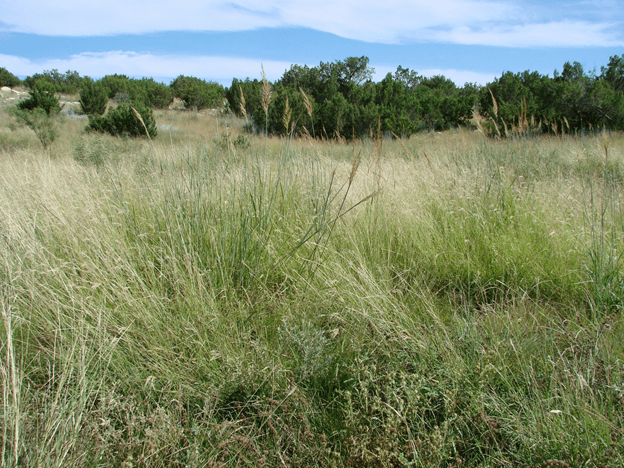
Big Blue on Rocky Hillside
Big Blue Growing Within Dense Limestone Shinnery

Importance of GRAZE-REST

Exciting things are happening on rangeland that has been properly cared for through utilization of a carefully planned and applied graze-rest program. The recent rainfall across the area, granted more in places than other, is proving exceptionally valuable on areas that have a continuous cover of healthy perennial grass plants. Even the places that received sparser amounts of moisture are showing amazing recovery from the limited rainfall of late winter and spring. Regretfully, but fully expected, the areas that have not recovered from past continuous and sometimes heavy grazing are struggling to achieve the growth needed to allow the rangeland manager to be assured of good grazing through the summer season. Leaving that producer dependent of “a good follow-up rain soon” of course all concerned will thankfully take it if the Lord sees fit to send it. Recovery of rangeland is a slow process and is directly proportional to the brittleness (Total rainfall and low humidity levels) of the environment the rangeland manager is working within.


This view of a good stand of Big Bluestem was taken across the fence on a neighbor’s place. (Awesome indication of outstanding grazing management of Jim and IW Terry, right Sarena Wright Terry?) In the country that we manage, any time Big Blue is found it is an indicator of good to most likely excellent rangeland management. Most ranchmen have never seen the likes on their country.
This photo indicates how two different grazing programs, except for GRAZE-REST commonality, can be successful. Developing a program that works for each manger is important, but it must always involve  GRAZE-REST.