There is no fixed way of reaching effective grazing management “The Way”. The grazing manager must find “A Way” of reaching his goals.
Effective grazing management is not a fixed process that is always the same. Certain broad principles will aways be applied, but there are innumerable ways of achieving the results wanted by the individual producer or manager. Many times, other producers looking across the fence condemn what his neighbor is doing just because it is different than his own and he does not understand what the goals are. (Perhaps we need to find a way of communicating with the neighbor, then the opportunity of learning from each other will move them both forward.)
Reaching the goal of what is best for our rangeland health and the health of the ranching operation should be the priority of all rangeland-ranch managers. Applying grazing principles that attempt to get our rangelands back to pre-European health with healthy soils, little erosion and an effective water cycle. When that goal is moving toward successful conclusion the profitability and health of the ranching operation are virtually exponential. In effect, what’s good for the health of the rangeland is good for the health of the pocketbook.
False Switch Grass, Canada Wildrye, Sideoats and Texas Winter Grass in an overflow area. Formerly a highly erodible area that did not utilize the neighbor’s rainwater that they were sharing with us. Now that ‘shared’ water is providing excellent results.
Patience is an essential virtue when creating and adapting to an effective grazing program. Achieving meaningful results requires time and consistent effort, especially when implementing a dedicated graze-rest strategy designed to enhance the health of rangelands and the soils that sustain these ecosystems.
Transitioning from Continuous Grazing Practices
It is important to acknowledge that moving away from the continuous grazing practices of the past and into a planned-adaptive graze-rest program will not yield immediate results. The journey toward improved rangeland health and soil recovery is a long-term process, often taking years to reach the intended goals. This gradual approach allows the land to recover and thrive under the guidance of a well-structured grazing plan.
Continuous Improvement and Realistic Goals
As progress is made, the process can become more challenging when initial goals are met and new, higher objectives emerge. The question arises: Where is the ultimate point of ranchland recovery? It is becoming clear that there may not be a definitive endpoint. Instead, reaching a level of recovery and productivity that the producer can justify for themselves and their family’s needs and desires is a worthy and sufficient accomplishment. In a self-determining society, having the freedom to set and pursue individual goals is a valuable aspect of managing rangeland resources.
This enhanced grazing area features Indian grass, Little Blue, Side Oats, and KR Bluestem, with Big Blue nearby. The turf is dense and free of bare spots. After a severe four-year drought that almost led to livestock removal, rains in April reversed the situation. Though rain totals were modest, recovery in six months exceeded pre-drought conditions—an outcome not seen under traditional continuous grazing.
Vine Mesquite Grass is becoming much more prevalent than in the past. Its long runners (Stolon’s) can cover an area very quickly when given the opportunity. (Graze-Rest) While the descriptions of its growth habits show it to dominantly grow in low areas, depressions, and bottomlands once it is established within an effective graze-rest program it extends its colonies to surrounding areas of less quality soils and out of the depressions. The more seeds and stolon’s that are out there the faster it covers surrounding bare ground. One of the issues with Vine Mesquite is that, while it covers the ground well it is not a very dense cover. (One of those grasses that look great when looking across the rangeland, but when looking down the density leaves some to be desired.)
Possibly the closest competitor of ‘stoloniferous’ grasses to Vine Mesquite is Buffalo Grass. Given the opportunity, healthy Buffalo plants can cover bare ground at a fast pace. This cover is generally very dense, allowing little sunlight-wind to get to the soil. The problem with it is it does not grow very tall and that can be a limiting factor as to its ability to build soil and save valuable water resources. As the picture below shows, Vine Mesquite and Buffalo get along well together. The Buffalo will mix with the Vine and form a tall (12” to 24” +) dense cover over the soil surface. This ‘magic’ potion is one of the fastest ways of creating a soil building program on the rangeland. It also protects the soil from wind and water erosion, while providing an excellent seed bed for the next generation of even higher quality plants. (Succession)
Remember this process takes time, probably years of a productive graze-rest program but is well worth the effort and of low cost to the producer. The programs that make large inputs to the range resource for a ‘quick’ recovery to the grasslands of old, generally fail, and certainly will fail if the application of an effective grazing program is not applied, from the start.
Black Grama with its narrow spindly leaf structure doesn’t look to be a highly preferred native grass, but it certainly is and is a key ingredient to healthy short-mid grass prairie. Much of the West Texas rangeland is almost devoid of this valuable plant as it has not been able to survive continuous-heavy grazing. While with continuous light grazing it can be occasionally found, (Usually within a shrub or cactus) but nothing like the amount found under a controlled graze-rest program. Under the properly applied grazed-rest scenario Black Grama is increasing very nicely on hill sides, shallow rocky ridges, and shallow soiled lowlands. The unique characteristic of retaining some green in the winter along the stolon’s and somewhat in the lower portions of the spindly leaves makes it an excellent winter feed for Vitamin A.
This photo of Black Grama is the most robust I have ever witnessed. Found in the bottom of an extremely rocky draw and is probably getting some extra water as a result. Take note of the Switch Grass just behind the Black Grama, doing quite well in what some would say was very poor soil. I beg to differ as nature has found many ways to adapt. (Wish more people were so included to follow this example.)
The recent extended dry spell from September 1, 2021, through April 31, 2023 (14.16” for a 20-month period or an adjusted annual rainfall of 8.5” for 2 years) was devastating for most, over a wide area of Texas. Some had much less rainfall than us and the resulting lack of rangeland forage growth put most ranching operations’ future sustainability in jeopardy. Those that had an established-effective graze-rest program in place fared much better than others during this period. As some of those grazing programs had little need for expensive feeding and relocation of livestock costs. Yes, they reduced herd size dramatically, weaned calves early and utilized various other drought management protocols, as with grazing programs, drought management is essential. May to June was an established ‘sell out’ date by many in the area as little to no grazable forage remained.
Fortunately, on May 2nd rain did begin to fall. Over the month of May and into the first week of June 4.24” fell here at the headquarters. Perfect timing for grass growth and the recovery has been phenomenal. However, as the hot days of June progress, those areas that did not have deep rooted healthy plants established prior to the dry spell are already beginning to suffer, brown-out will soon occur and growth already has ceased in many cases. Some producers are expressing concern about the density of the weed population, robbing the moisture from the grass resulting in poor grass growth, while the areas with well established-dense cover of healthy grasses are not showing those weed issues.
It is interesting that those areas that have been in an effective grazing management program the longest are showing the impressive grass growth rates the best, as some of the latest established grazing programs are obviously behind the recovery of the long time established proper grazing programs. RANGELAND RECOVERY IS A SLOW PROCESS THAT TAKES CONSIDERABLE PATIENCE OF THE PRODUCER-GRAZER. (And for that matter the research-extension-collegiate study groups. A short-term study is of little value when grazing studies are the priority.) It is notable that within some of those well-established programs of 10 plus years, the recovery is arguably to the point of conditions prior to the beginning of the dry spell and are perhaps in better condition than it was prior to the start of the dry spell. (Fresh grazable plants increasing in density and cover area.) This is impressive to say the least, as most expect recovery after drought to take several growing seasons or years to recover and get back to the pre drought point.
Perhaps the most gratifying point is that the livestock have recovered well and are gaining weight rapidly. Making the ranch operations future look much more positive than a short time ago.
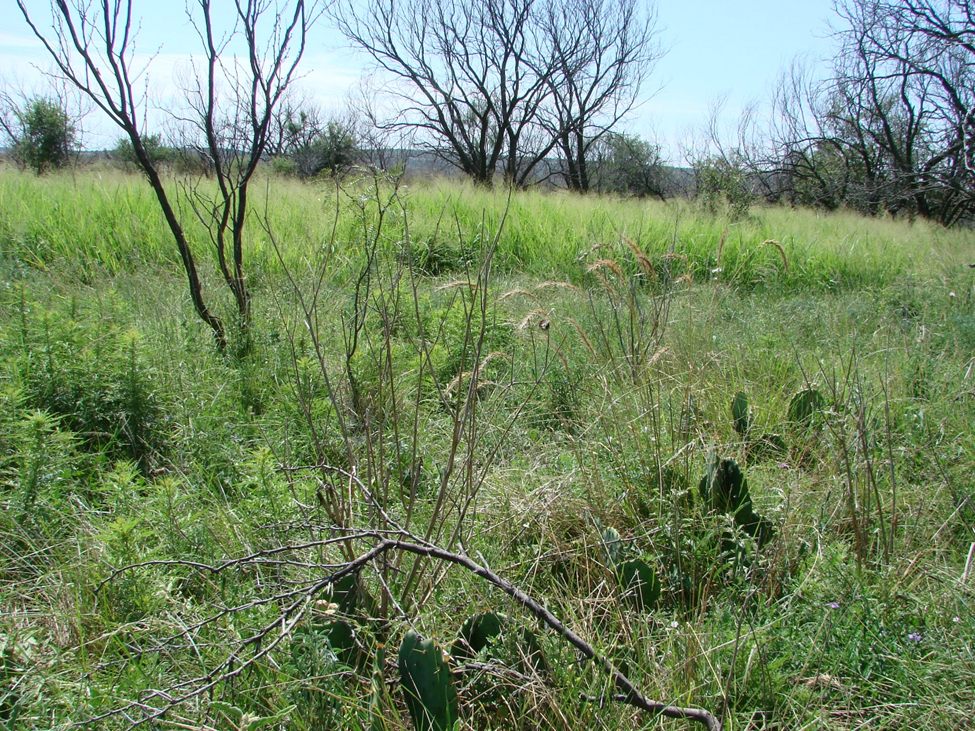
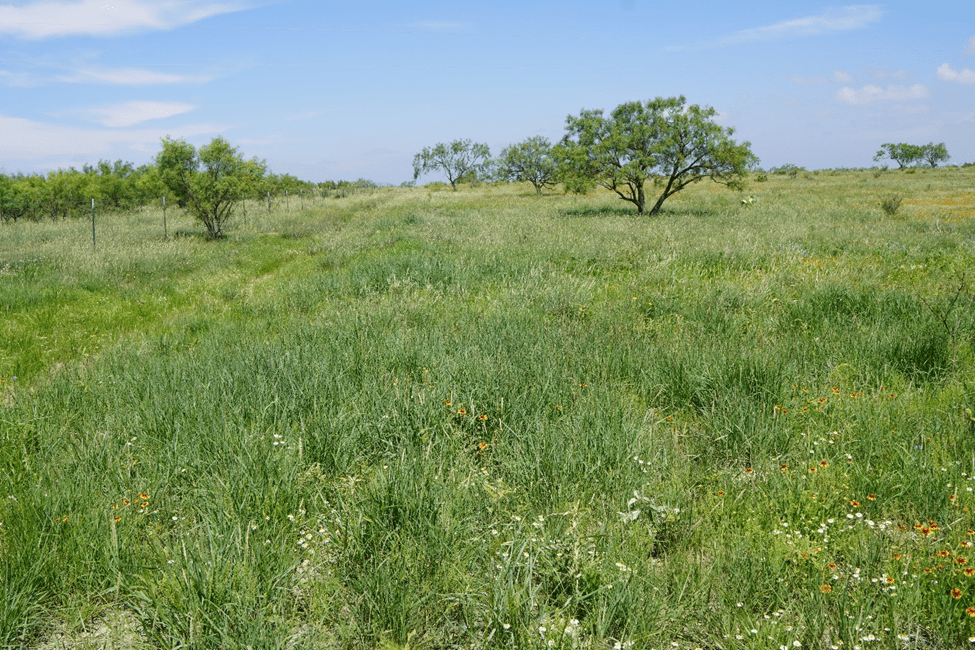
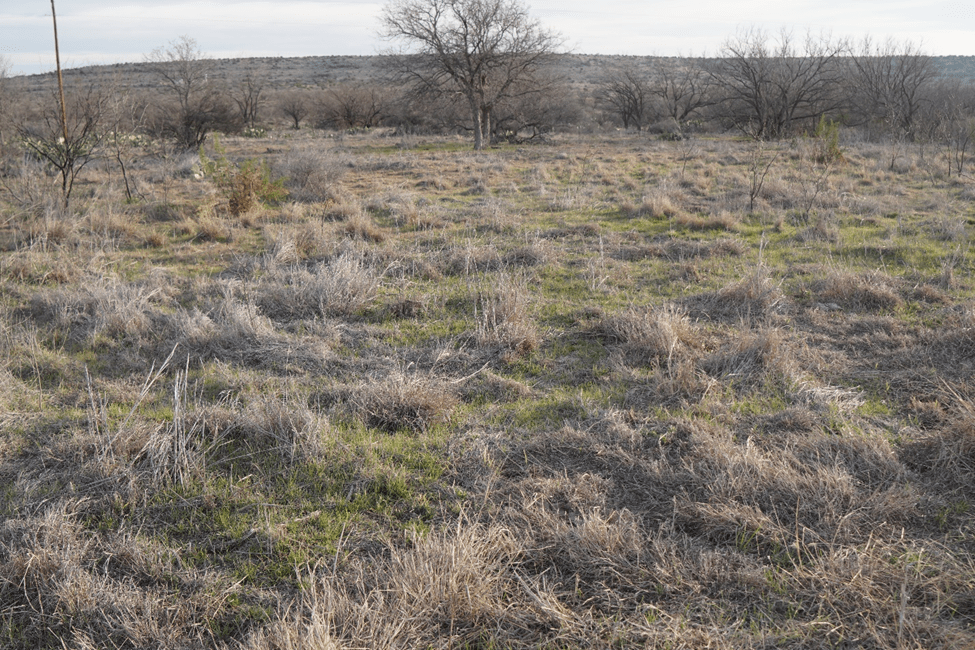
The three photos below taken in the last week are a dramatic case in point. Native-not seeded Indian Grass, Big Bluestem, Little Bluestem, Texas Cup Grass, Vine Mesquite and even the lowly (In some opinions) introduced KR Bluestem are showing amazing recovery in a short 6-week period.
Spring green up is struggling to proceed as the Texas Winter Grass, Canada Wildrye, Western Wheat, Engleman Daisy and the annual Rescue Grass is beginning to lose some of its green luster. Without a rain shower soon, the potential ‘good’ spring will be lost over this area. Where good ground cover including grass, forb and litter are present along with healthy root systems the potential is still possible. Without that cover the spring is all but lost for those that have not utilized a sound grazing management program.
The below photo shows Engleman Daisy, Texas Filary, Rescue grass, Globe Mallow and several other forbs and annuals moving into the survival mode that nature has designed into its program. This survival mode is to produce seed at all costs, as the very low growth of leaf surface is obvious. (The pocketknife is of the 3 ¾” variety for visual comparison) This survival mode is also heavy on the mind of livestock producers in the area, as all ranchmen are faced with critical and possibly very expensive resolutions to the continued drought conditions.
“We caught many catfish, sun perch and trout. At the time the North Concho was very large and deep. Many live mussel shells crawled around on the flat surface bank, dropping off into the river when anyone approached the bank.” Edna Allison ‘Milling Around Sterling County’ 1911 era. This memory of the North Concho River just south of Sterling City is a sad statement as to the current condition of the river. The river was named Concho by Spanish explorers, because of the numerous mussel shells found. The Spanish word concho is interpreted to be shell in English. As a young boy in the late 1950’s and early 60’s I found numerous mussel shells along the river, but never any live mussels. Today one must search to find a single remaining shell and the river is only a remnant of what it once was. Dry in many areas with a few clear pools of water, running a small stream during wet spells-mainly in the winter. Still a beautiful river when looking at the areas of clear live water, though wide and muddy when big rains come.
‘Milling Around Sterling County’ a history of the settlement of Sterling County was published in 1976 and is currently being updated after close to fifty years of new history taking place. Wouldn’t it be wonderful after the next fifty years if a third book were to be published telling of the North Concho once again being ‘large and deep’. The knowledge as to what caused the river to ‘dry up’ is now understood, as the loss of the dense cover of vibrant grasses and forbs has been lost and the water cycle no longer works as it once did. Yes, the increase in brush has added to the loss of the water cycle effectiveness, but it is only an ’effect’ of the loss of cover and healthy soils that is the ‘cause’. It is also understood by some that proper grazing management can overcome this lack of cover and healthy plants allowing that water cycle to become an effective provider of water to the aquifer once again. Yes, many other factors, including the many water wells that draw on the aquifer that once provided the beautiful fish and mussel filled river with water, are a contributing factor and always will be.
It is but a dream, but dreams can come true with sharing of knowledge, diligence of labor and love of the land. Fifty years from now Sterling County could be looking at struggling to have any water and the wells that now provide that high quality water could produce little to none. An unlikely thought? While fishing on the North Concho watching the mussels get away from her, Miss Allison probably didn’t dream, at some time in the future, the ‘conchos’ on the river could not be found.
THE BETTER IT GETS, THE FASTER IT GETS BETTER
Engleman Daisy, having been grazed short during the last grazing cycle in the fall. Is beginning to show recovery from the current rest period.
The following three pictures (All of the same location) have an interesting story to tell of the ability of our rangelands to adapt to ever changing climatic conditions. Both short term and long term. Proper grazing management is critical to assisting natures long range plan.
THE BETTER IT GETS THE FASTER IT GETS BETTER
Recovering from extended dry spell of 2022. False Switchgrass having been grazed twice since lush conditions of 2021, depicted in last photo. Note the excellent ground cover of both plants and litter accumulation. Drought is possibly a major part of nature’s rangeland maintenance plan.False Switchgrass working to produce a seed crop late in growing season (October 2022) after the extended dry spell of 2022.False Switchgrass September 2011. One of the best grass growing seasons of memory.
Historical data and ecological studies of droughts of the past (Paleoclimatology) shows a long history of drought. It is nothing new and as the climate has changed over the millennia (Always has and always will) the plant community adapted to those changing environmental conditions. Climate change is currently and going back to the beginning has always been a determining factor in the development of the plant and animal community. Man is at fault primarily because of his influence or contribution to the poor health of the rangeland.
Yes, drought is much more severe now than in the past, not because the amount of rainfall is less than in the past. It is more severe because our rangelands are in much poorer condition (bare ground-unthrifty plants with weak root systems, loss of the drought tolerant plants, brush encroachment– the list goes on and on.)
When drought occurred prior to mans influence, the wildlife either moved to other areas or died of starvation or lack of water. This resulted in ‘destocking ‘of the land and possibly disruption of the normal migration patterns of the migratory animals. (Moved to other less drought-stricken areas.) This destocking and the length of the ‘rest period’ was greatly influenced by the length of the dry spell. Recovery of those drought-stricken lands of the past was probably very quick thanks to natures quick response to controlling numbers of animals and rapid response to drought management protocol. (Move or die) The length of the drought was a determining factor as to how many numbers were ‘cut from the herd’ and the length of rest until restocked. Take note that this description of natures ‘drought management’ procedure is the basis of many currently productive grazing management programs. (Over simplified statement for certain)
Man, being more concerned with his survival than the land or the animals and originally his lack of understanding of the design of natures ‘drought protocol’ has resulted in the current severity of ongoing droughts. The understanding and knowledge of these drought protocols is now clearly understood by many producers and the lack of that understanding should no longer be a part of any rangeland management process.
Photo is of a transplanted Eastern Gama Grass. Long lost and to a great extent ‘extinct’ from the rangeland in my area. The result of grazing management practices that resulted in loss of the deep-rooted tall grasses that were much more drought tolerant than today’s plant community of the rangeland and the loss of a continuous cover of grasses and forbs over the soil. (Note the density of cover in the photo. Yes, this spot has had some help in the form of irrigation to aid in establishing the Eastern Gama, not a true rangeland condition) With tender loving care (Proper grazing management) and time, this plant could be a part of the basis of recovering the rangeland to its former drought resistant dominance.
THE BETTER IT GETSTHE FASTER IT GETS BETTER
Eastern Gama Grass about 1 month after transplanting
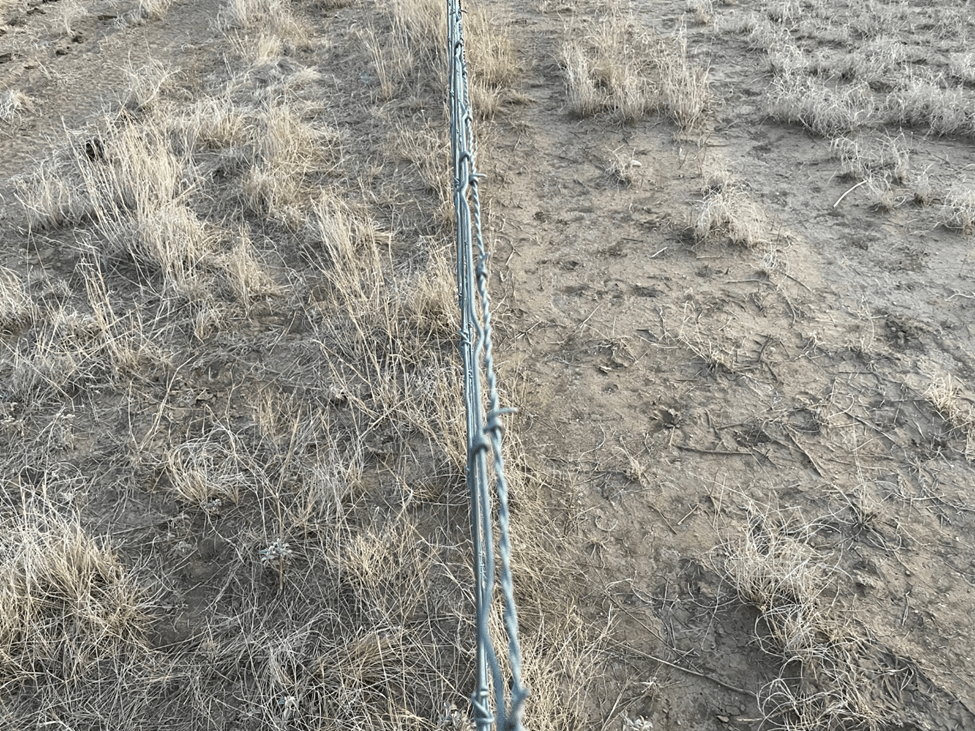
Still setting at 4.47 inches for the past 10 months on the home place. The photo below depicts the current conditions very vividly. Well-planned grazing operations are suffering along with all others, and it is difficult to look forward to the future in this dismal state. When hoping for a good rain to brighten the rancher’s perspective, looking at this same photo reveals two different scenarios.
First zoom in, look closely at the right-hand side, and think what will happen when that long hoped for rain does come. Very little grass or forage of any kind is to be found, no litter of old decaying grasses are available to slow water flow and shade the soil. The slick-compacted soil surface will absorb little of the rainfall unless it is a very slow rainfall event. While the rain will be a welcome benefit to this rangeland most of that precious water will run off taking valuable soil with it and what little does not will be quickly lost to evaporation.
Now look at the lift-hand side. While not what one would hope for, there are standing grass plants that show to have some vigor despite the drought, ground litter is present, and if one zooms in even further, he can see that the soil surface is chipped and broken. (Animal impact) allowing for quicker soil absorption of the rainfall. Even some Texas Croton is present although very small, certainly it is a positive that it is present and sadly is not on the other side of the fence. When the rain does come the left side is much better prepared to capitalize on the wetting event.
Grazing management utilizing a well-planned graze-rest program on a continuing basis is by far the best approach to minimizing the devastating effects of drought. Yes, the height left of the grasses after grazing is critical, but under these conditions many times that is foreshadowed by the devastating drought conditions.






 Rangelands and Ranching