The Importance of Patience in Grazing Program Development

Patience is an essential virtue when creating and adapting to an effective grazing program. Achieving meaningful results requires time and consistent effort, especially when implementing a dedicated graze-rest strategy designed to enhance the health of rangelands and the soils that sustain these ecosystems.

Transitioning from Continuous Grazing Practices

It is important to acknowledge that moving away from the continuous grazing practices of the past and into a planned-adaptive graze-rest program will not yield immediate results. The journey toward improved rangeland health and soil recovery is a long-term process, often taking years to reach the intended goals. This gradual approach allows the land to recover and thrive under the guidance of a well-structured grazing plan.

Continuous Improvement and Realistic Goals

As progress is made, the process can become more challenging when initial goals are met and new, higher objectives emerge. The question arises: Where is the ultimate point of ranchland recovery? It is becoming clear that there may not be a definitive endpoint. Instead, reaching a level of recovery and productivity that the producer can justify for themselves and their family’s needs and desires is a worthy and sufficient accomplishment. In a self-determining society, having the freedom to set and pursue individual goals is a valuable aspect of managing rangeland resources.

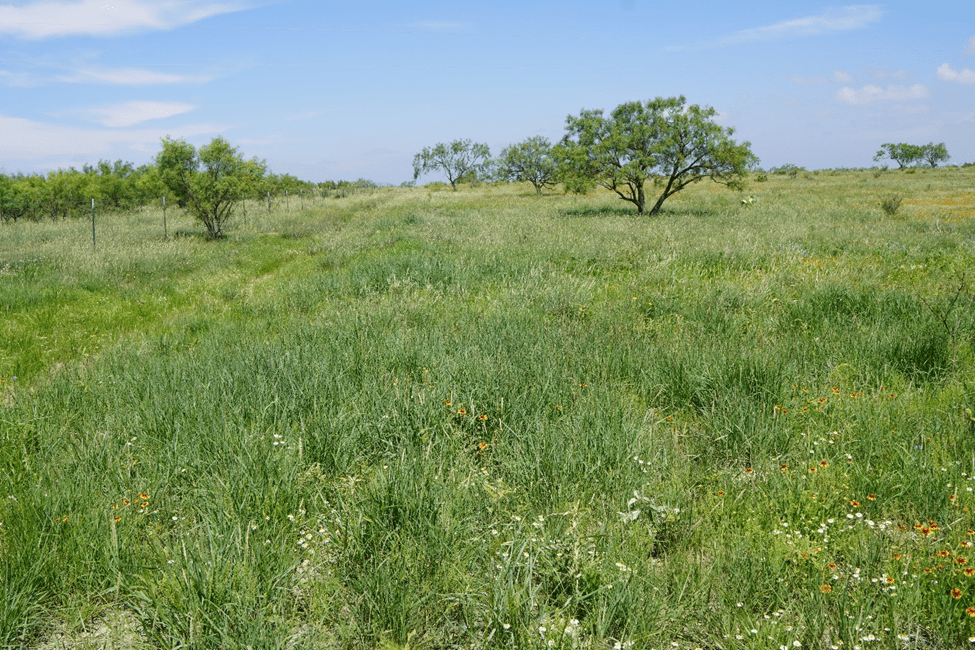
This enhanced grazing area features Indian grass, Little Blue, Side Oats, and KR Bluestem, with Big Blue nearby. The turf is dense and free of bare spots. After a severe four-year drought that almost led to livestock removal, rains in April reversed the situation. Though rain totals were modest, recovery in six months exceeded pre-drought conditions—an outcome not seen under traditional continuous grazing.

The Better it gets, the faster it gets better

Managing Thru Drought

Texas Cup Grass

It is interesting to note the different plants and how they are reacting to the awesome rainfall received this past week. (3” in two different rains 6 days apart)

The prickly pear, which was shriveled to the point that one rancher commented that he thought if we had a wildfire it would burn like grass, has ‘fluffed out’ and greened up amazingly in just a few days, as its shallow roots quickly absorbed the moisture. The amazing pear apple crop was the result of the last rain event in May. Pear is certainly well adapted to drought conditions.

Black Walnuts, which appeared to be drought killed have already begun putting on new leaf growth, even at this late date in the growing season. Many dead limbs and stems are evidence of the lack of moisture through the exceptionally hot-dry summer. The Lords plan with natures resiliency is awesome, and only needs the help of man to move the process forward.

Grasses are very slow to show any green up as the moisture conditions were strikingly poor, being the result of a long drought period only offset by the May rain event that provided excellent recovery from prior drought conditions, however that rain event did not provide any deep moisture for long term recovery. (Take note that this rainfall event does not mean the end of the drought, but it is an excellent start.) Thus, the grass was in a dormant condition, and it takes time for the growth process to begin again. Even the deeper-rooted dense stands of grasses that traditionally fare much better than the sparsely spaced grass plants of heavy-continuous grazed programs, are dormant from this current dry spell. Yet having said all this, some grass plants recover much more quickly from extended drought-heat than others.

The picture below is of a Texas Cupgrass plant, while every other grass in the pasture is struggling to show any green at all even at the base of the plant, the Texas Cup is already making very positive new growth of leaf structure. For a review of past discussions, Texas Cup under continuous grazing is a rare find and will almost always be found growing within a protected area from grazing like a bush. Being one of the first to green up in spring, the last of the summer grasses to brown out in fall and in many years will retain some green in the stems through the winter much like Black Grama. With the timely initiation of a dedicated graze-rest program utilizing an extended rest period the Texas Cup will increase at a dramatic rate as the seed source is allowed to expand. While not known as one of the ‘tall’ grasses this mid grass is one of the better indicators of rangeland improvement and is a key plant in putting the grazing manager in a position of profitable ranching on a consistent basis.

                            THE BETTER IT GETS THE FASTER IT GETS BETTER

Effective Rainfall

The small rainfall events throughout the year are many times of too little volume to have a positive effect on the rangeland, but how small is that amount?

There are numerous factors that have a direct bearing on whether rainfall will be effective in promoting growth of plants. Quantity of rain, temperature, humidity, wind, and timing of the next rainfall event are all critical to the effectiveness of the Lord’s gift of moisture. The rancher-manager has no influence or control of any of those factors, thus he should not lose any sleep from worrying over those things. (Yet most all of us do so.) However, he does have control over a key factor, that being the health and cover of the soil he is managing. Or perhaps more simply stated, rangeland health. When the rangeland is healthy those small rainfall events become a valuable part of the ecosystem’s ability to move forward. Sustaining the rancher until the next rain.

The exciting thing is there are many ways of achieving the desired rangeland health, arguably some more effective than others and the type grazing program chosen is critical. It is up to the manager to evaluate goals, both long term and short term, in selecting the type and intensity of the grazing program. Within the more brittle-dryer environments achieving that healthy rangeland is dependent on grazing and rest as they are key ingredients to that successful program. Those two factors are controlled by animal impact and recovery from that impact. Leave out either one of those two and the grazing program and rangeland health improvement will most likely be an undesirable result.

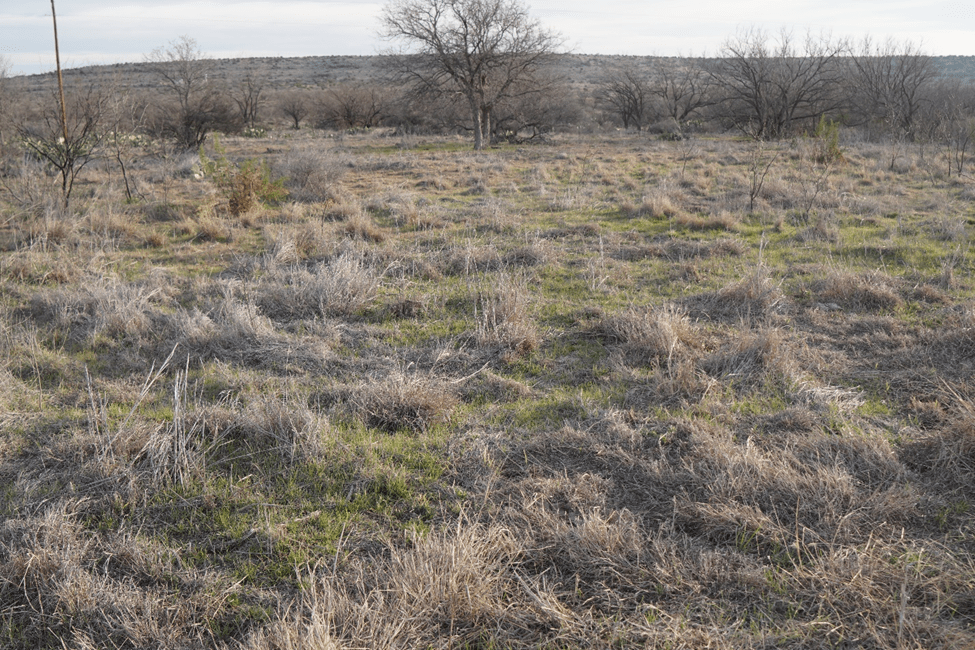
The photo below is an excellent example of achieving the healthy rangeland goal and what can happen without an effective grazing program, but remember it takes time to accomplish. Those wishing for instant success will be disappointed.

It is up to the rancher to determine how he wants his rangeland to look.

Famine to Feast

The recent extended dry spell from September 1, 2021, through April 31, 2023 (14.16” for a 20-month period or an adjusted annual rainfall of 8.5” for 2 years) was devastating for most, over a wide area of Texas. Some had much less rainfall than us and the resulting lack of rangeland forage growth put most ranching operations’ future sustainability in jeopardy. Those that had an established-effective graze-rest program in place fared much better than others during this period. As some of those grazing programs had little need for expensive feeding and relocation of livestock costs. Yes, they reduced herd size dramatically, weaned calves early and utilized various other drought management protocols, as with grazing programs, drought management is essential. May to June was an established ‘sell out’ date by many in the area as little to no grazable forage remained.

Fortunately, on May 2nd rain did begin to fall. Over the month of May and into the first week of June 4.24” fell here at the headquarters. Perfect timing for grass growth and the recovery has been phenomenal. However, as the hot days of June progress, those areas that did not have deep rooted healthy plants established prior to the dry spell are already beginning to suffer, brown-out will soon occur and growth already has ceased in many cases.  Some producers are expressing concern about the density of the weed population, robbing the moisture from the grass resulting in poor grass growth, while the areas with well established-dense cover of healthy grasses are not showing those weed issues.

It is interesting that those areas that have been in an effective grazing management program the longest are showing the impressive grass growth rates the best, as some of the latest established grazing programs are obviously behind the recovery of the long time established proper grazing programs. RANGELAND RECOVERY IS A SLOW PROCESS THAT TAKES CONSIDERABLE PATIENCE OF THE PRODUCER-GRAZER. (And for that matter the research-extension-collegiate study groups. A short-term study is of little value when grazing studies are the priority.) It is notable that within some of those well-established programs of 10 plus years, the recovery is arguably to the point of conditions prior to the beginning of the dry spell and are perhaps in better condition than it was prior to the start of the dry spell. (Fresh grazable plants increasing in density and cover area.) This is impressive to say the least, as most expect recovery after drought to take several growing seasons or years to recover and get back to the pre drought point.

Perhaps the most gratifying point is that the livestock have recovered well and are gaining weight rapidly. Making the ranch operations future look much more positive than a short time ago.

The three photos below taken in the last  week are a dramatic case in point. Native-not seeded Indian Grass, Big Bluestem, Little Bluestem, Texas Cup Grass, Vine Mesquite and even the lowly (In some opinions) introduced KR Bluestem are showing amazing recovery in a short 6-week period.

THE BETTER IT GETS, THE FASTER IT GETS BETTER!!

Drought is Taking its Toll.

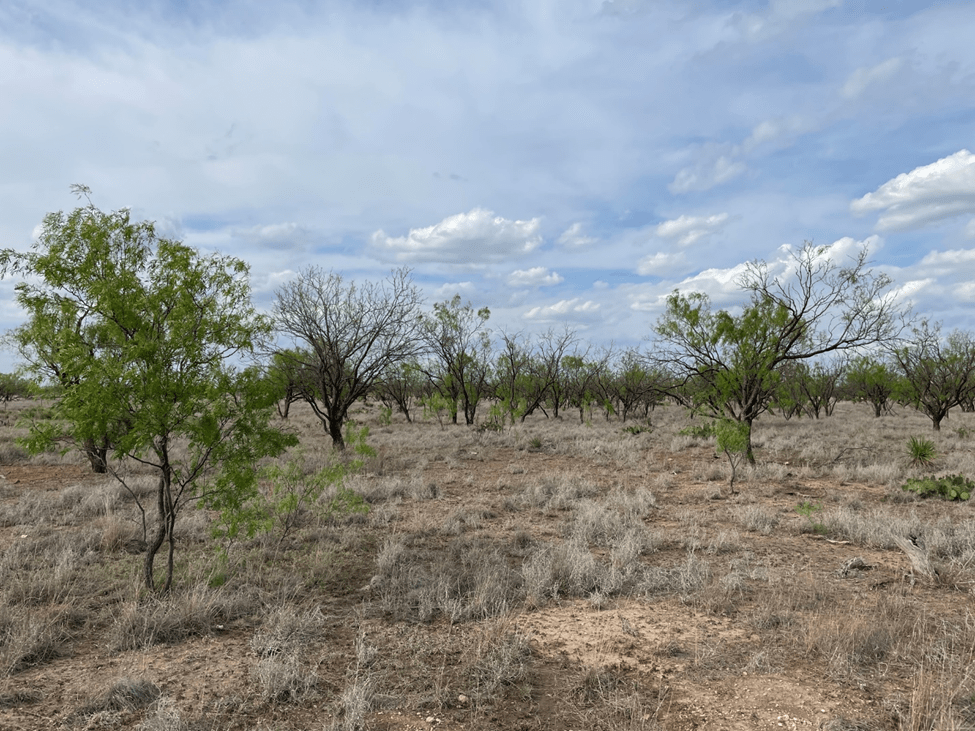
Drought is affecting even the mesquites. This photo appears to be a bad spray job from the past but has never been sprayed and certainly will not be this year. The trees are very stressed from lack of moisture for the last two years. The rangeland grasses are a depressing sight, as the desert termites have finished off the bulk of the old moribund plants. (It is my opinion that termites seldom attack healthy grass plants, only those that are decaying from age and lack of use.) A good chance of rain shows to be in the forecast late this week, sure hope it is a GOOD PREDICTION. Photo was taken May 4, 2023

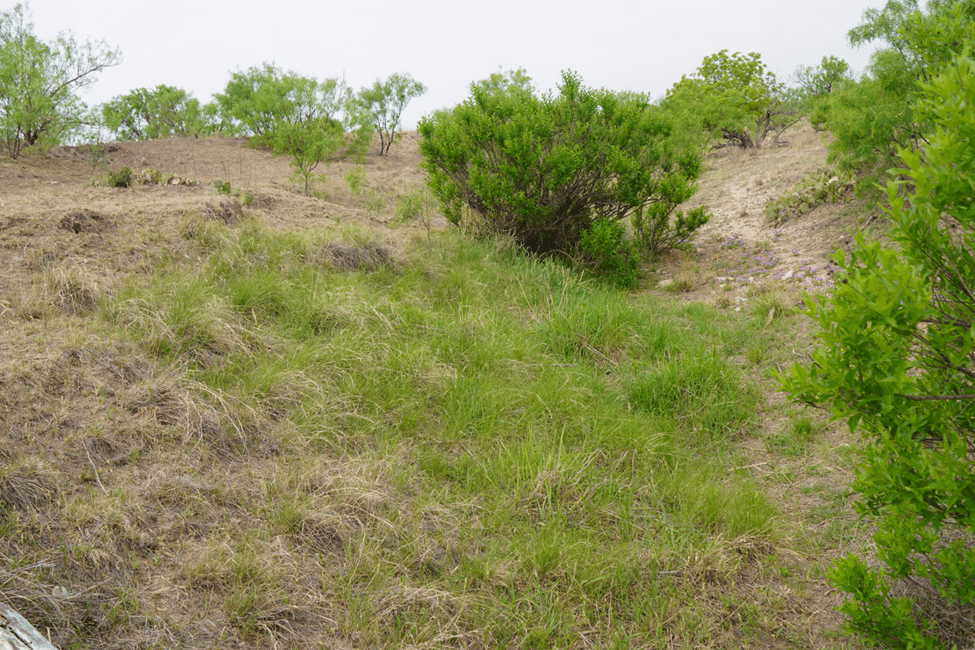
The next photo was taken yesterday May 6 and shows how the creek bottom is struggling to green up and is actually growing some forage. Note the upper portion of the creek is very dry. This is an awesome statement as to the effectiveness of a productive graze rest program over the last several years. The bottoms of the creeks and washes are the first to recover from continuous grazing and begins the process of recovery from erosion of our precious soil, even during a drought.

THE BETTER IT GETS THE FASTER IT GETS BETTER, BUT ADEQUATE RAINFALL IS ALWAYS A KEY INGREDIENT REGARDLESS OF THE GRAZING PROGRAM.

Looking Forward to Some Relief

Spring green up is struggling to proceed as the Texas Winter Grass, Canada Wildrye, Western Wheat, Engleman Daisy and the annual Rescue Grass is beginning to lose some of its green luster. Without a rain shower soon, the potential ‘good’ spring will be lost over this area. Where good ground cover including grass, forb and litter are present along with healthy root systems the potential is still possible. Without that cover the spring is all but lost for those that have not utilized a sound grazing management program.

The below photo shows Engleman Daisy, Texas Filary, Rescue grass, Globe Mallow and several other forbs and annuals moving into the survival mode that nature has designed into its program. This survival mode is to produce seed at all costs, as the very low growth of leaf surface is obvious. (The pocketknife is of the 3 ¾” variety for visual comparison) This survival mode is also heavy on the mind of livestock producers in the area, as all ranchmen are faced with critical and possibly very expensive resolutions to the continued drought conditions.

Effective Rainfall

As the ongoing dry spell continues over a wide area. The question of ‘How much rain does it take to be effective?’ becomes an even more relative issue than during higher rainfall periods. The answer lies within numerous ‘What ifs?’ most of which the rangeland manager has no control over. Humidity, wind, cloud cover, temperature and length of time until the next rain event are all things that the manager has no control over and can’t do anything to change. But the most important of all variables that the manager does have control over are the health of the plants on the ground, the density of those plants and the amount of litter covering the ground. (Litter being, dead plant material that has fallen on the soil and is in a state of decay.)

Some managers would say ‘It is dry and has been for a long time, there is no way I can improve on those things.’ Preparation for the ongoing drought began during the last good growing conditions and continues even during the dry spell, by proper grazing rate and giving adequate recovery time for those plants by removing the animals from the pasture for predetermined periods of time. This preparation does not happen by chance alone, it takes planning and diligence of initiation. Then replanning after observing livestock, plant recovery, economic conditions, and rainfall, this is called ‘proper grazing management’. When this ‘plan’ is put in place density of cover -over time- will approach 100% coverage, healthy root systems provide healthy soils that retain moisture and ground litter covers the soil lessoning the evaporation rate caused by all of those variables that the manager has no control over.

The current drought is hurting good managers and poor managers alike. Those that have prepared for current conditions are faring much better than others, even to the point of growing a little forage where good ground cover-healthy soils are prevalent.

THE BETTER IT GETS, THE FASTER IT GETS BETTER

Take note that this photo is along a formerly erosive creek bank. Recovery of creek areas is one of the first places an effective grazing program influences.

Rocks-Drought-Rangeland Recovery

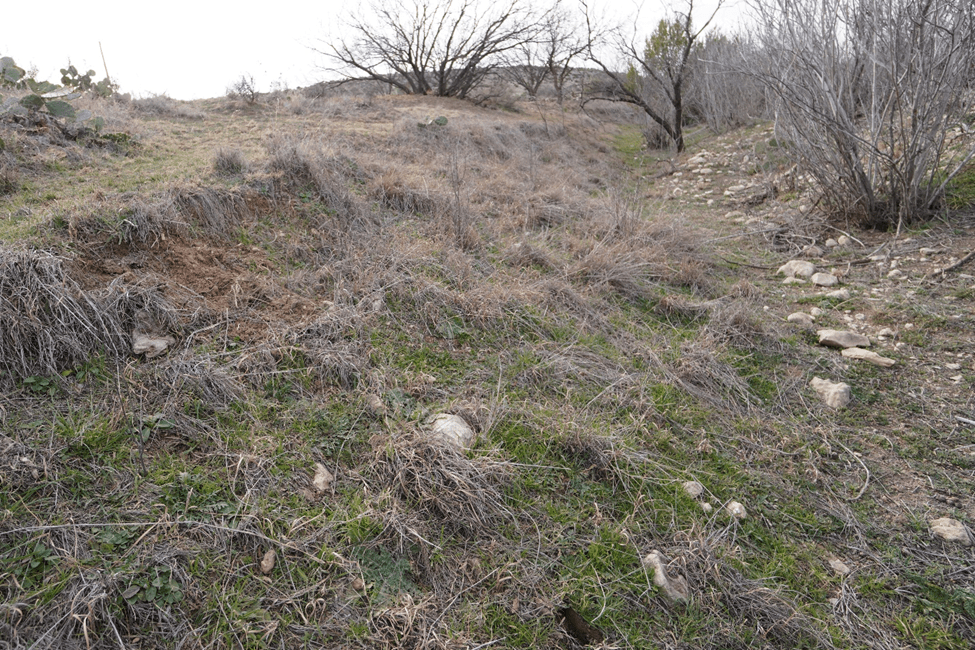
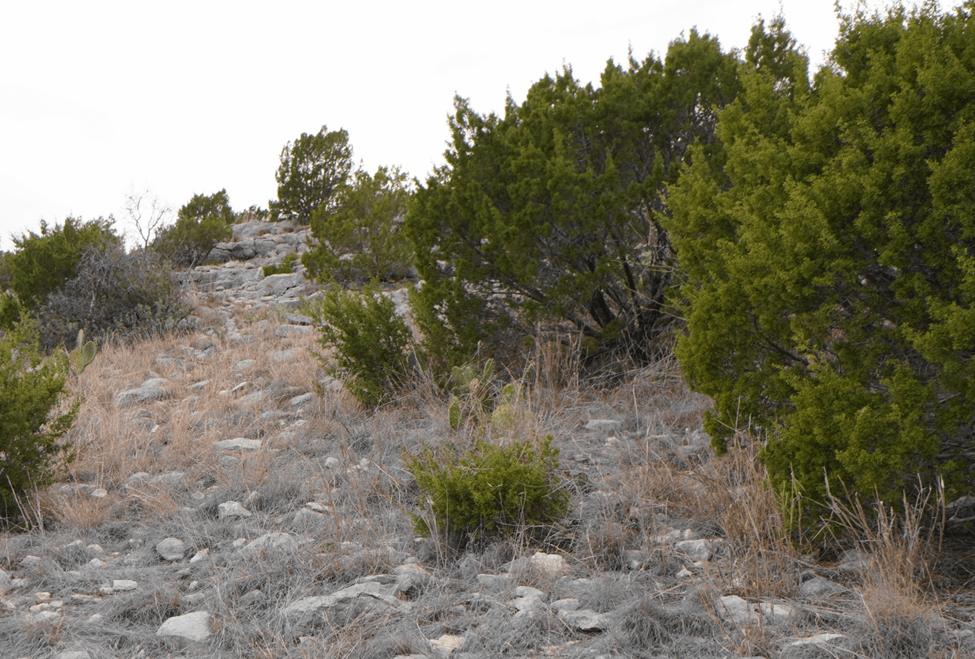
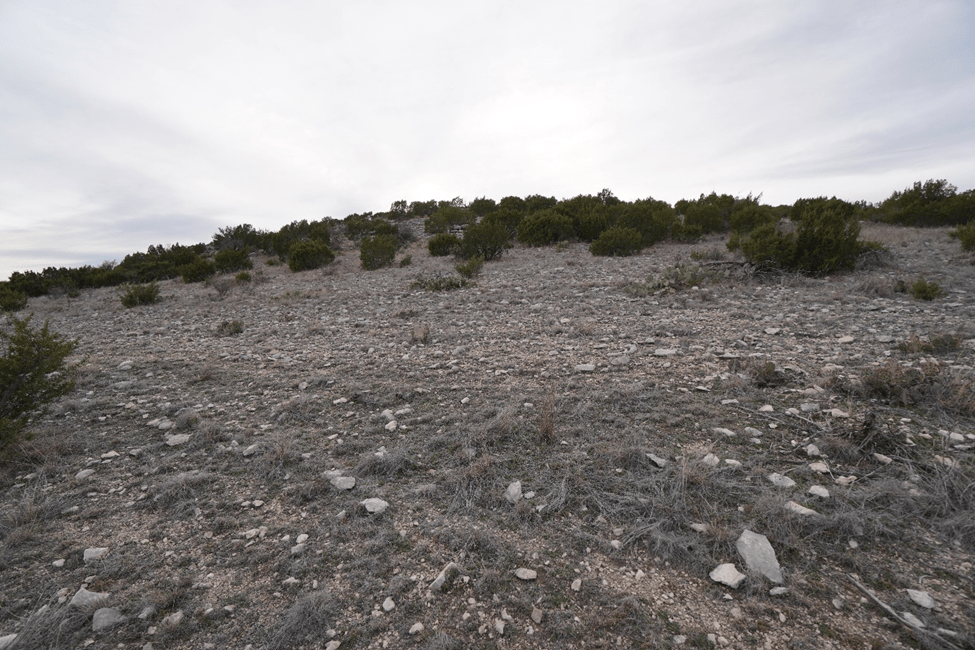
Went for a little ‘walk about’ yesterday and made some interesting observations. I have long said that the rocks of the West Texas area that I have the privilege of working with, have become more prevalent in my lifetime of caring for the rangeland. In short, that means erosion (At an almost imperceptible pace) of the limited soil of the hillsides has continued, and the rocks appear to be more prevalent and larger than when I was but a ‘munchkin’. This little ‘walkabout’ showed that even in the midst of the current dry spell the rocks are slowly becoming less noticeable and grasses like Black Grama, Side Oats and most excitingly Little Bluestem are filling in the open spaces of the very rocky terrain, with very little soil to move the rangeland to a higher successional-environmental level. Without proper grazing management (An effective graze-rest program) this would not be the case, the continuous grazing of the past only resulted in more erosion, even on the rocky hillsides that my great grandfather staked his legacy on. This was not his fault, as he did not have the knowledge to know that REST FROM GRAZING is a key factor within any RANGELAND-GRAZING program. We now have that understanding of the rangeland-grazing process and must uRockstilize that knowledge.

With ground litter, grasses and their roots systems the limited rainfall is slowed, resulting in better rainfall retention, thus the rocky hillside and the existing plants get more water per plant than in deeper soils during an extended dry spell.

THE BETTER IT GETS THE FASTER IT GETS BETTER

Not a beautiful picture, but one that tells the recovery story well.

Extremely shallow soils showing slow recovery, even during drought. The next few years should tell and even bigger story.

Optimism vs. Realism or Optimism in Conjunction with Realism

Working with rangeland and livestock (Ranching) has always been an industry of OPTIMISM.

“It will rain soon.”

“When it does rain it will be of adequate volume to cause the land to recover.”

“We’ll hold on for a bit longer, it will rain soon.”

“Yes, feed is high, but it is better than———-”

“Next year’s calves will be better.”

Being a REALIST is many times the hardest to accept but is the process that can make that ranching operation truly sustainable and provide a future for the operation, moving the operation forward to the next step in the ever-changing ranching environment.

The author Adam M Grant states “The goal of learning is not to shield old views against new facts. It’s to revise old views to incorporate new facts.” Utilizing this statement to make the ranching operation sustainable for the families involved and the environment within the operation is critical in todays complicated processes of attaining those sustainability goals.

Understanding the positive relationship of grazing the rangeland and the rest that is to follow is a major key to sustainable ranching and sustainable rangeland resources. This is new information for many and must be incorporated into the old views for future profitability and recovery of our rangeland resources.

Now that the ‘new’ facts are being applied, the rancher’s optimism can now be confidently applied to his operation thanks to the reality of understanding the Graze-Rest relationship

“When it does rain, the land will recover quickly thanks to the improved soil health and the continuous cover of deep-rooted thriving perennial grasses and forbs.”

“Drought is no longer as prevalent as it used to be thanks to the healthy rangeland.”

“Feeding of livestock is no longer a major expense, as the land is providing adequate feed resources for the livestock.”

“Now that I understand the graze-rest relationship, the future of the operation is bright.”

A mark of an open mind is being more committed to your curiosity than to your convictions.

The goal of learning is not to shield old views against new facts. It’s to revise old views to incorporate new facts.

Ideas are possibilities to explore, not certainties to defend.

THE BETTER IT GETS

THE FASTER IT GETS BETTER

How much rain does it take to be effective? Depends on the density and health of the plants on the ground.

Properly Cared for Rangelands Can Adapt to Most Environmental Conditions

The following three pictures (All of the same location) have an interesting story to tell of the ability of our rangelands to adapt to ever changing climatic conditions. Both short term and long term. Proper grazing management is critical to assisting natures long range plan.

THE BETTER IT GETS THE FASTER IT GETS BETTER

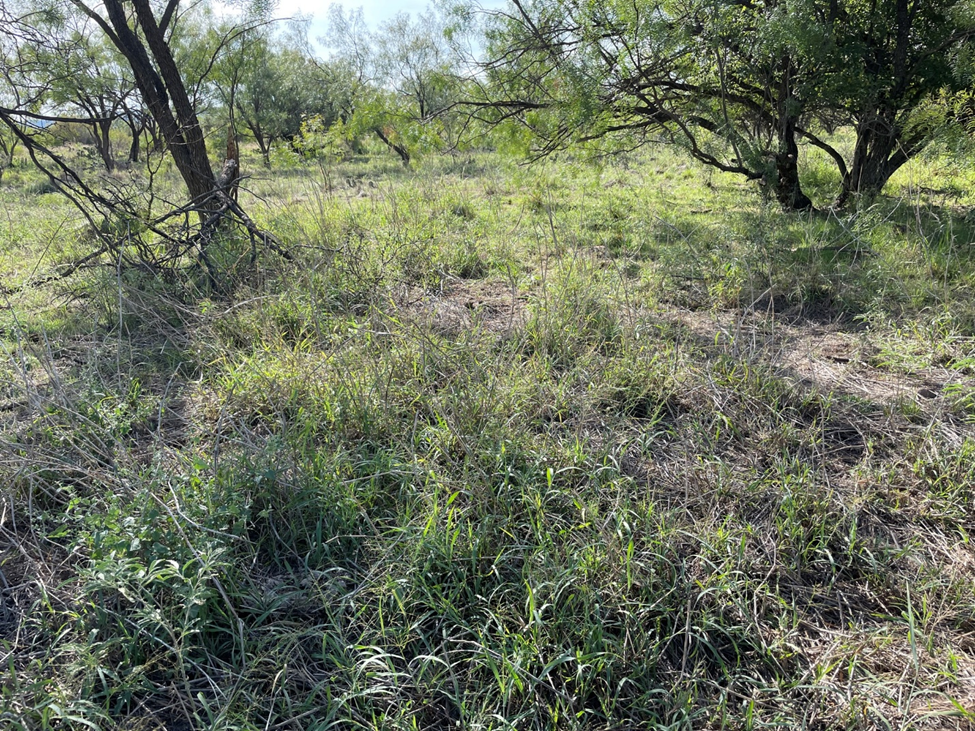
Recovering from extended dry spell of 2022. False Switchgrass having been grazed twice since lush conditions of 2021, depicted in last photo. Note the excellent ground cover of both plants and litter accumulation. Drought is possibly a major part of nature’s rangeland maintenance plan.
False Switchgrass working to produce a seed crop late in growing season (October 2022) after the extended dry spell of 2022.
False Switchgrass September 2011. One of the best grass growing seasons of memory.