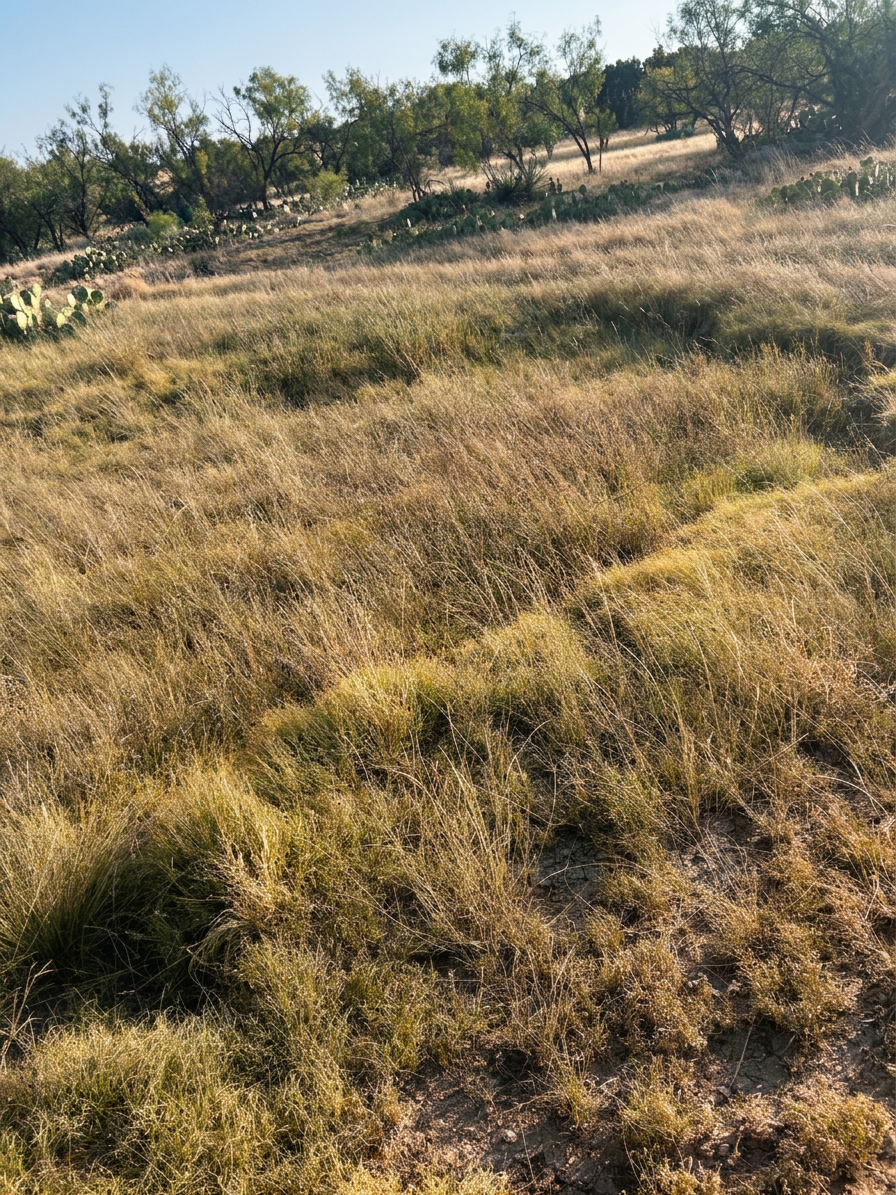
The pictured area was known as a buffalo wallow during my younger years, or at least that’s what the old timers I grew up with called it. For those that are unfamiliar with buffalo wallows they were low areas that held shallow bodies of rainwater after a rain event and seldom had anything growing in them. They were generally bare soil except for, on occasion, annual weeds and sometimes annual grasses. The old timers I referred to believed that during the days of buffalo roaming the prairie the buffalo would roll in the moist muddy spots for relief or perhaps lounging purposes. Whether those tales or stories were correct, I do know that some 150 years later, until an effective graze rest-recovery program was put into action the area did not grow perennial grasses and a visible area of erosion was getting deeper and more prominent. That area of erosion has now become the quite visible area of taller-greener grasses and the entire ‘Buffalo Wallow’ is now one of the most productive areas within the pasture.
Perhaps a bit of history has been lost with this recovery of a potential historical site, but it is certainly satisfying to witness the value of long-term rangeland recovery.
(It would be interesting to see any comments readers might have about tales of buffalo wallows. The old timers are gone, and good stories of the past are at a premium.)
THE BETTER IT GETS, THE FASTER IT GETS BETTER.