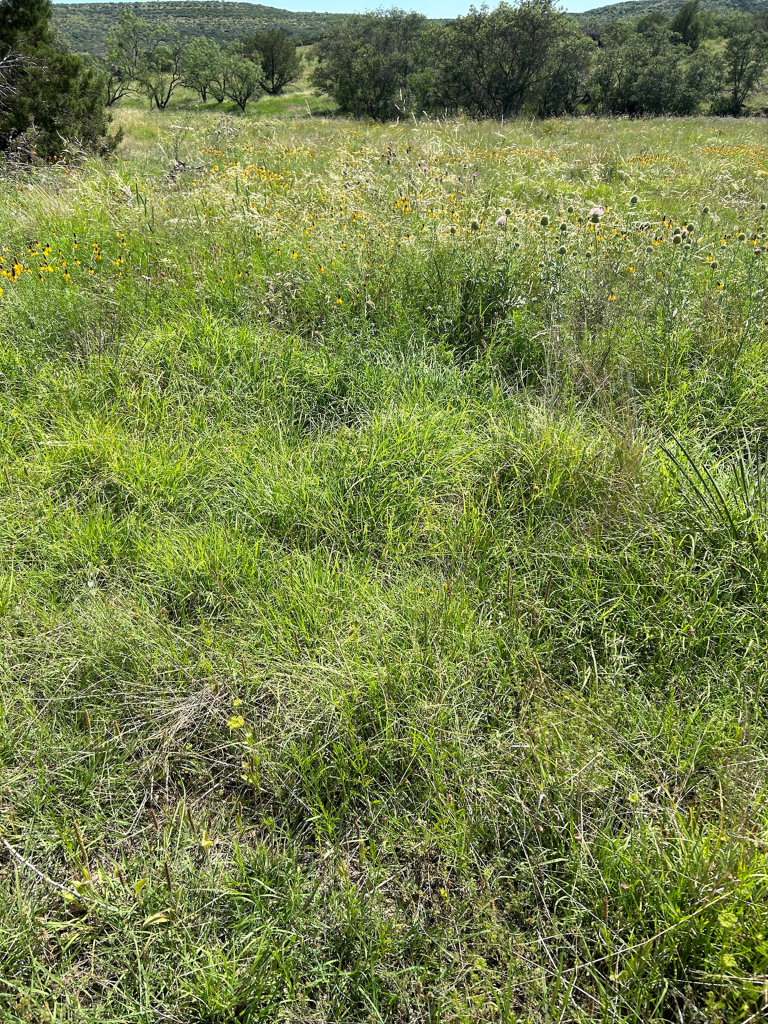
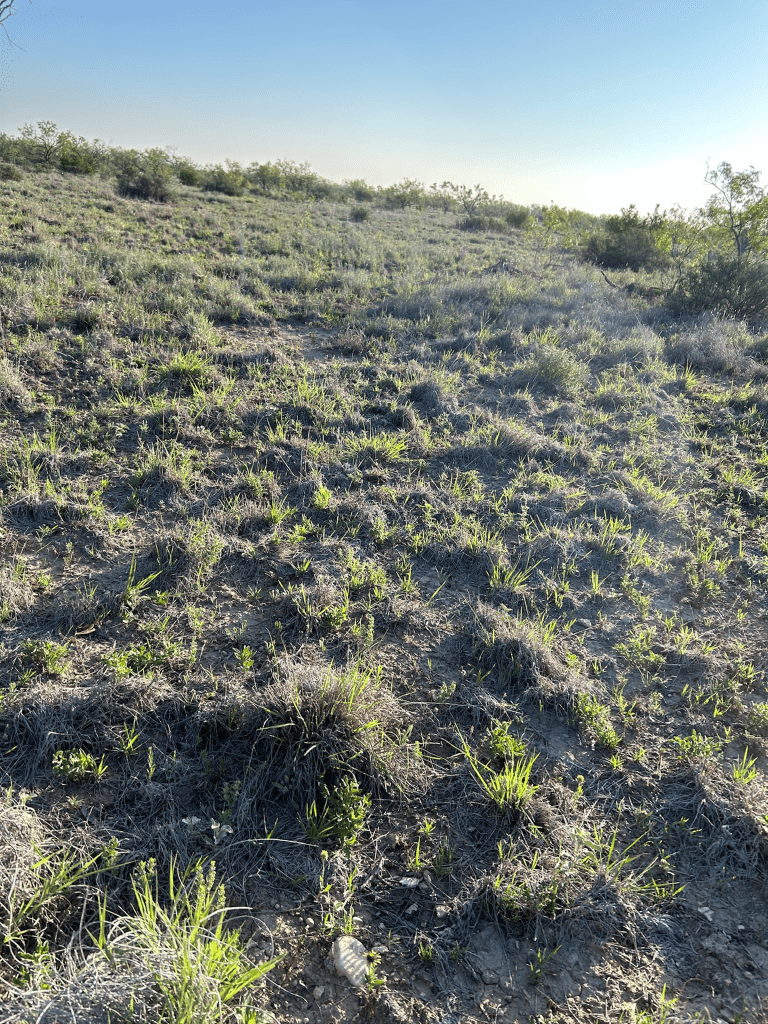
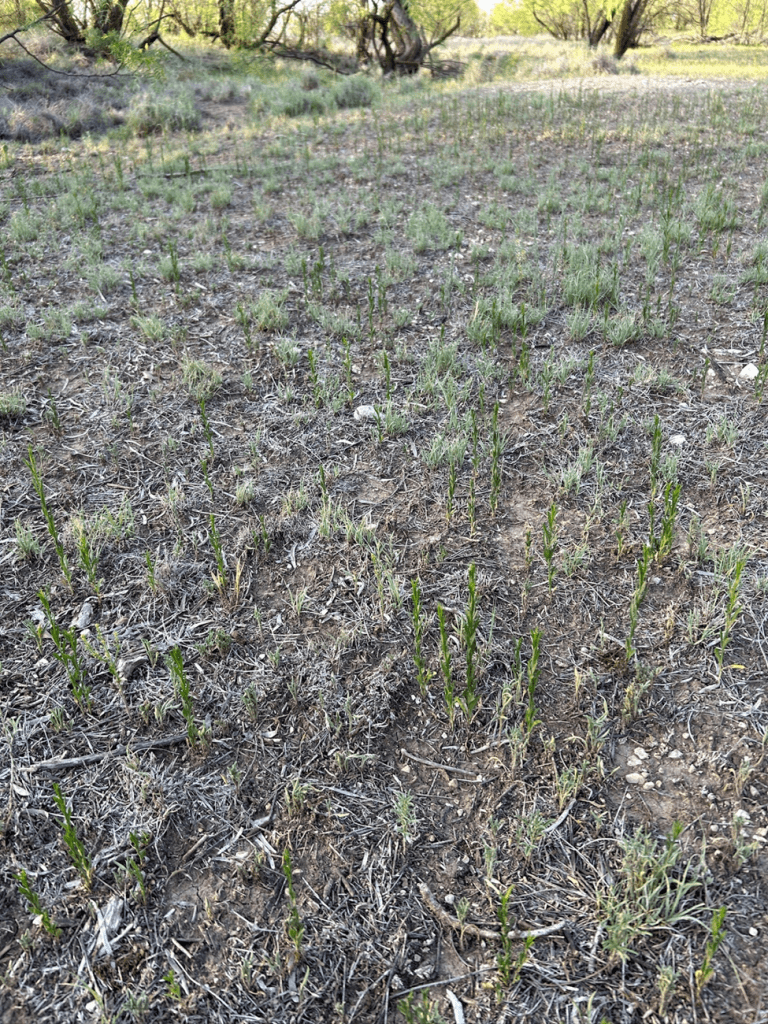
Adequate rainfall is critical to any grazing program. The following photos depict this with great emphasis. All taken within a few days of each other, spanning some 30 miles east to west. All three places have essentially the same grazing program, long rest (250 to 300 days) short graze period determined by number of pastures within the grazing unit from 23 in the latter picture to 12 pastures in the first picture. Certainly not mob grazing, but a single herd grazing program adapted to the managers goals and overall management plan. The only difference in the grazing units is primarily the annual rainfall, which within the 30 miles is dramatic. The extended drought of three years going into the fourth, has delt the management team many serious decisions, that at many times have felt very wrong, but essential within the long-term plan of both the rangeland health and economic health of the ranching operation.
It is obvious that the first place pictured has recovered very well from the drought conditions that were prevalent just a couple of months ago. That rapid recovery is, no doubt, the result of the dedicated-on-going grazing management program. When looking at the second picture the limited rainfall this year is showing great promise, as the fresh growth shows numerous surviving grass plants that with ‘a little’ more rainfall can quickly move the rangeland condition forward to a fully recovered state. Going a bit further west, the third picture shows a struggling rangeland. Yes, it is probably grazed too short for most managers eyes but still has good litter cover and remaining plants that will recover quickly once the rains come in larger volume. An old-time rancher once told me that “With each passing dry spell (drought) one can never run as much livestock as he could prior to that dry spell. He was correct until it was figured out that grazing management, utilizing a well-planned and initiated graze-rest-graze-rest program was essential. Now recovery after drought does not have to be so devastating.
Sure, hope the predictions of the upcoming La Nina event aren’t as severe as predicted, otherwise the grazing units of the last two pictures will be temporarily abandoned until adequate rains do come. Of course, here is proof that El Nino doesn’t always produce rain. As I like to say, “It depends on where you are standing.”
THE BETTER IT GETS, THE FASTER IT GETS BETTER
 Rangelands and Ranching