Grass Growth and Rangeland Recovery: Scientific Insights and Management Practices

Understanding how a grass plant grows and reproduces can be a very complex (scientific) learning process. The below link will offer interesting, yet tedious reading (For us simple ranchmen) that some grass managers might find productive in their understanding of ‘why’ some grazing-management programs are more effective than others.

One of the highlights from the article is: “Perennial grasses can produce by both buds and seed, although more than 99 percent of new tiller growth comes from the bud bank. Seed life spans are short-lived and do not extend beyond 1 year. However, buds are long-lived and have a potential life that may exceed 5 years. Since bud life varies among grass species, current research efforts are focused on determining which species have the longer living buds. Vegetative buds respond quickly to environmental changes like rain, fire, and grazing.” It should be added that disturbance of the grass plant, including grazing, trampling, mechanical, fire and even the destruction of moribund grass plants caused by desert termites’ can all effect the simulation of new growth nodes. (Nature has developed numerous recovery process over millennia)

While I disagree with the statement that the seed life span is only one-year. It has been my experience that given the opportunity, seed can survive for an extremely long time and when given the opportunity (an effective graze-rest program) dormmate seed can provide excellent rangeland recovery. Albeit over an extended period. (Numerous years of application of that effective management program.)

A second highlight emphasized by the article is: “Current research has shown that perennial grasses reproduce by vegetative processes through asexual reproduction. Seed contribution to maintain an established grassland is less than 1 percent of the total reproductive effort.”

What can be gleaned form this article is that grazing-management programs should be designed to enhance bud simulation of the grass plant, seeding will take care of itself over time. (Patience is key here)

 It is all about stimulating growth buds to promote rangeland recovery and after stimulation giving the plant the opportunity (REST) to reach its genetic potential.

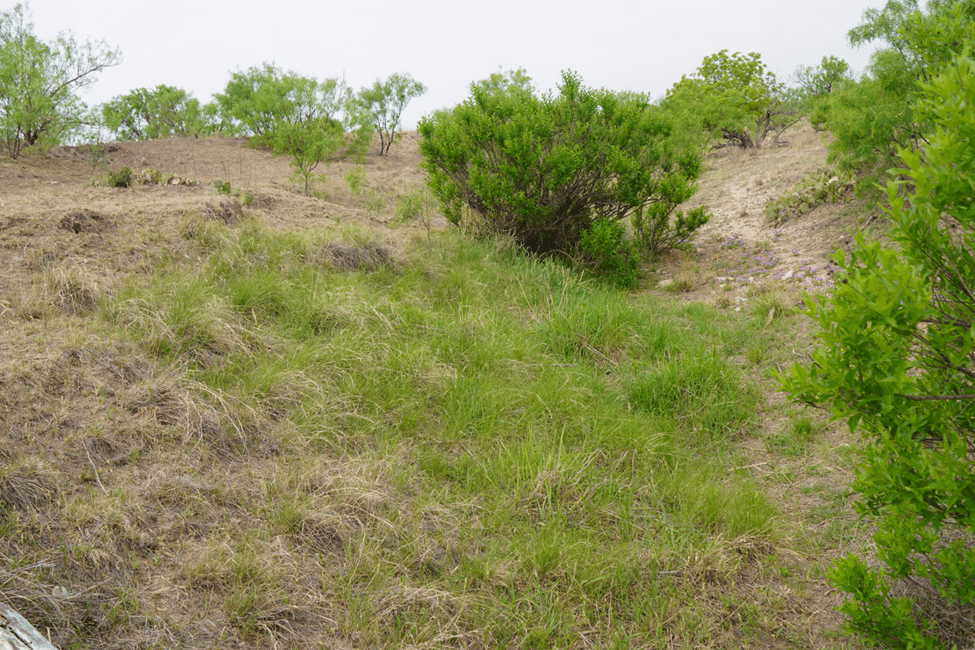
Photo shows a formerly erosive site that has almost total recovery form loss of soil. Vine Mesquite Grass is an excellent plant to quickly cover bare areas, especially when extra rain water is provided from runoff. After it is established, runoff is slowed to the point of putting the water into the ground. Greatly enhancing soil health.

THE BETTER IT GETS, THE FASTER IT GETS BETTER
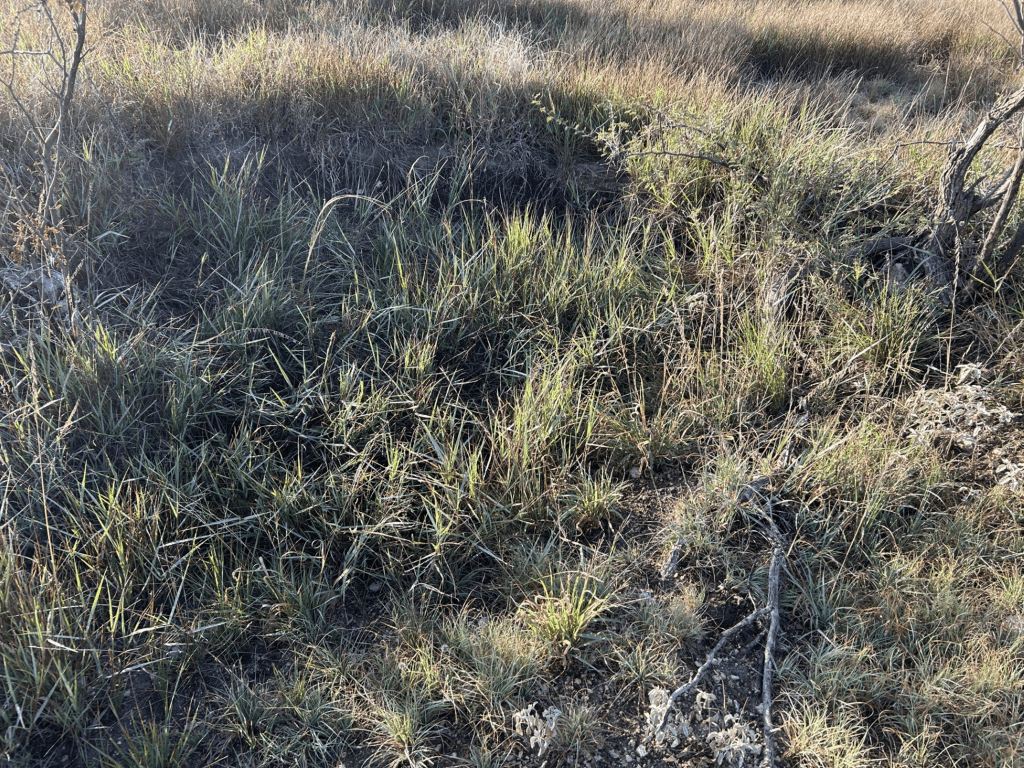
Recovery after an extended dry spell is an exciting event.

After approaching four years of extended drought and having exhausted all drought management options, total liquidation of the livestock was imminent. Thankfully the rains began to fall in mid-April, not large amounts .87” the largest rain event, but consistent small rains continuing from April to the current date. Along with relatively cool spring temperature’s, excellent growth and recovery of the rangeland has been achieved. (Seldom does this combination of rains and cool temps occur even during high rainfall times.) Past graze-rest adaptive grazing is paying excellent benefits as the photo below shows.

Big Blue (Center of picture) and Indian Grass (Upper center, just above Big Blue) are showing excellent recovery even though grazed to the ground during the dry spell. Some would say to never graze that short and I would concur, but under extended drought conditions that seems to occur often. Obviously, the root systems of both plants were healthy enough to recover quickly under those extenuating circumstances. Perhaps the rocky terrain helped, as the livestock could not graze so close as to ‘grub’ the roots below the surface. Of important note Sideoats, Texas Cup, Green Sprangle Top and Silver Bluestem are doing well, but they were not grazed to the ground as the highly palatable Indian and Big Blue were.

The Better It Gets, The Fast It Gets Better

Rangeland Drought Comparison: 1950s vs Current Situation

A veteran producer recently asked me: Is the current drought worse than the one in the 1950’s? My quick response was that we hadn’t seen anything yet. As in the early ‘50s drought, the rain gauge at the Bobs Creek headquarters (My home) had an average rainfall of just under 6” per year for a four-year period and the drought lasted from 6 to 7 years depending on the area.

Then it occurred to me that the rangeland was in much better condition prior to the ‘50s drought than it is today. Remember the story of a long-time rancher telling me when I was in my 20’s (late 1970’s) that: “With each passing dry spell one can never run as many livestock as he could prior to that dry spell.” Loss of grazing capacity has dwindled from documented grazing of 100 plus animal units per section in 1880 to 15 -10 and even less animals per section today on the same rangeland. With that loss of grass density, root structure in the soil (sod if you will) loss of topsoil due to erosion, soil health decline and density of brush cover increase. The limited moisture that has fallen during this dry period has considerably less opportunity to produce new growth providing all of the benefits healthy growing plants provide. (5.49” for the year at his point in 2024 at my house)

So perhaps on rangelands that are not under an effective grazing management program this drought is possibly worse than the 1950’s event. Many to the north and east of my area have had a tremendous rainfall year and recovered well, but even in those areas I suspect it is noticeable which operations have practiced a good grazing management program prior to and during the dry conditions before the rains came.

Just a few miles to the west of me it is obvious that the desert is steadily encroaching to the east and without a dramatic change in grazing technique this trend will continue. The knowledge is out there, and the time is here to do something about it.

The photo below is of some native-unseeded Switch grass that has survived from many years of abuse (heavy brush and very forbidding-rough terrain has protected these surviving plants) and under the current Graze-Rest-Graze-Rest program is making a strong recovery even without a direct water source. (Most consider Switch grass to be dependent on a close source of water, springs-sub irrigated-intermittent standing water.) Think back to the beginning of the cattle industry in West Texas when Switch grass and other tall grasses were healthy and numerous, this ‘little’ dry spell would have a much different affect and would have little consequence to the long-range health of the plants with a healthy rangeland in place before the droughts beginning.

The Better it Gets the Faster it gets Better

Rainfall and Grazing Management are Both Essential

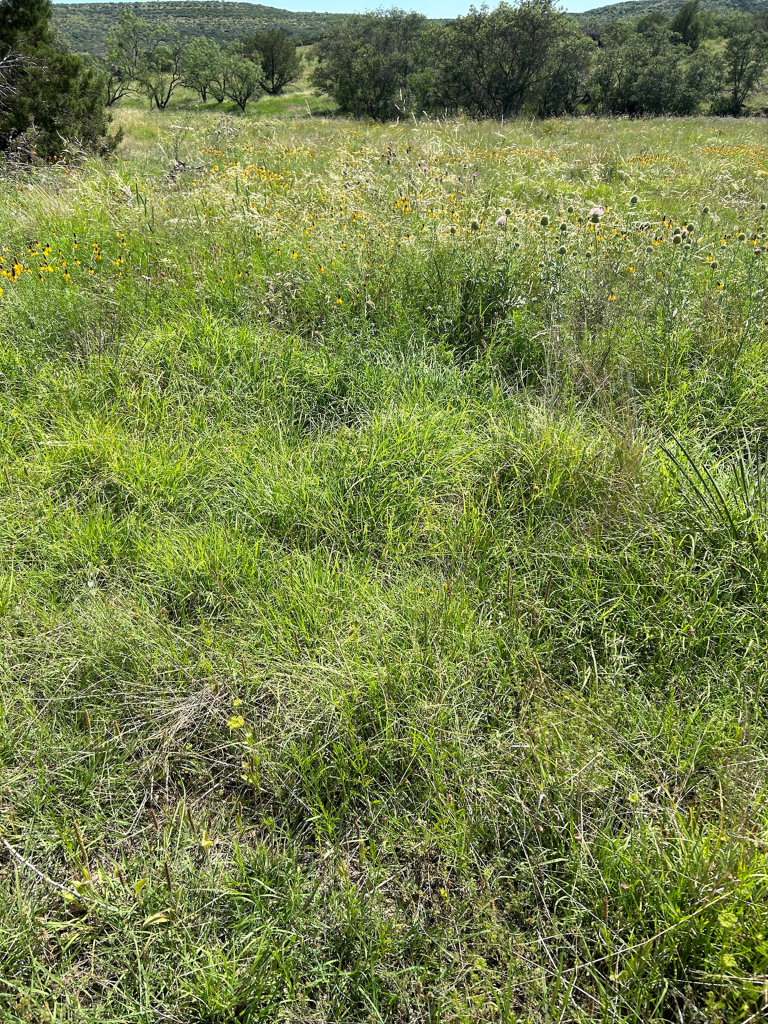
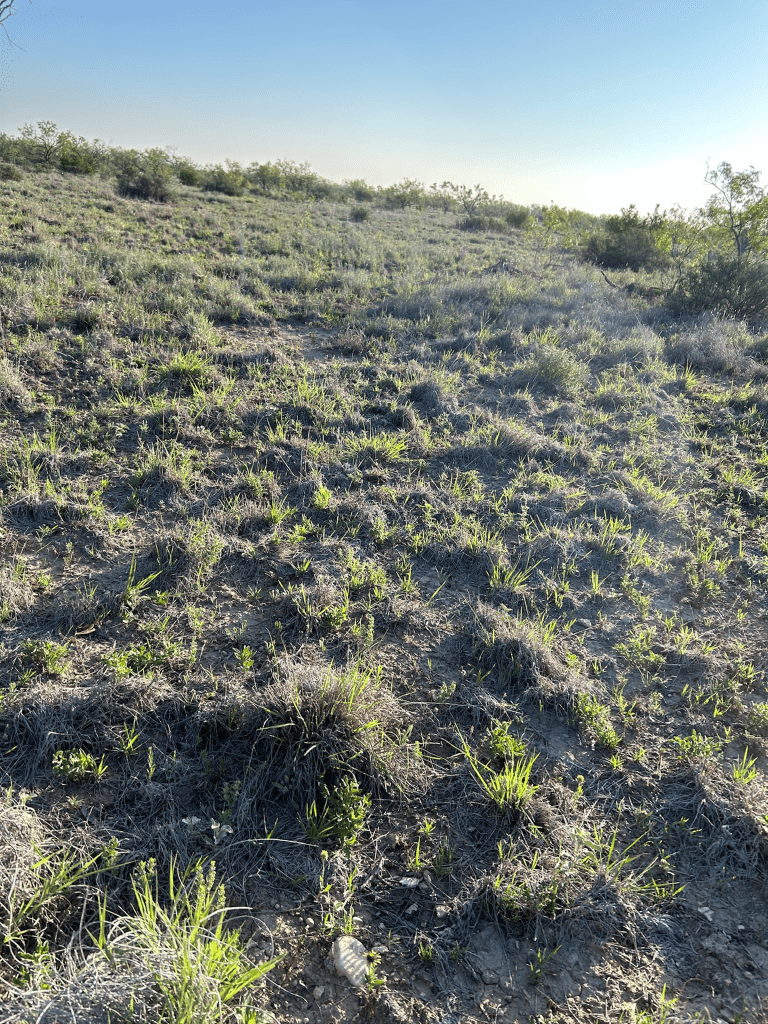
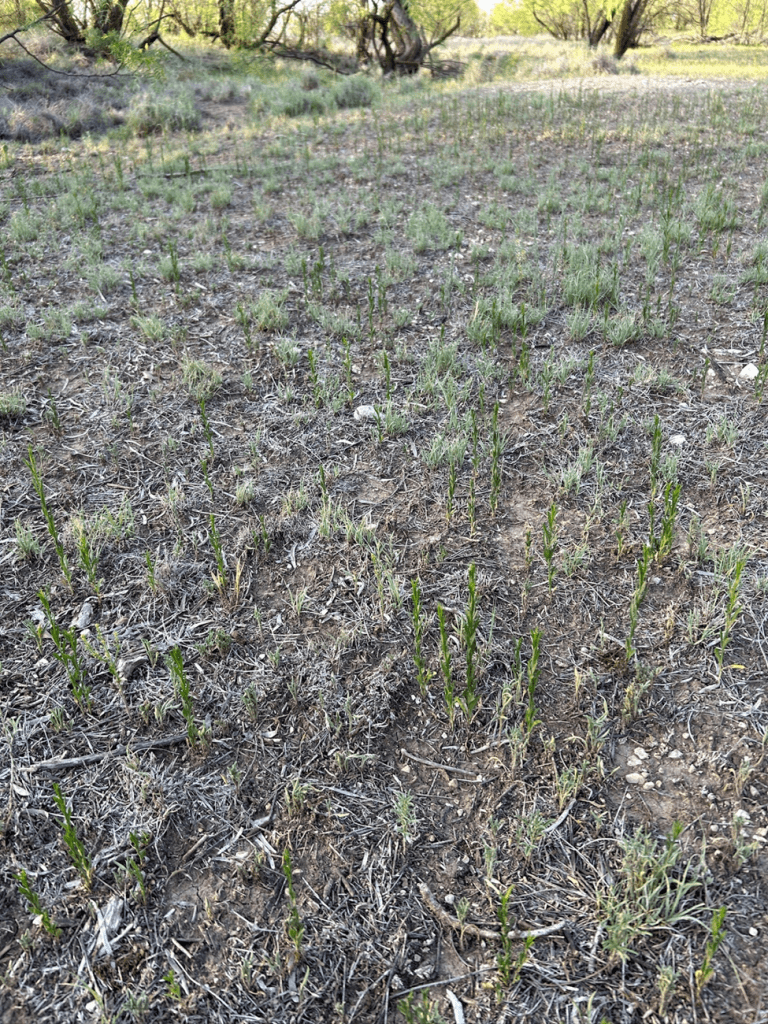
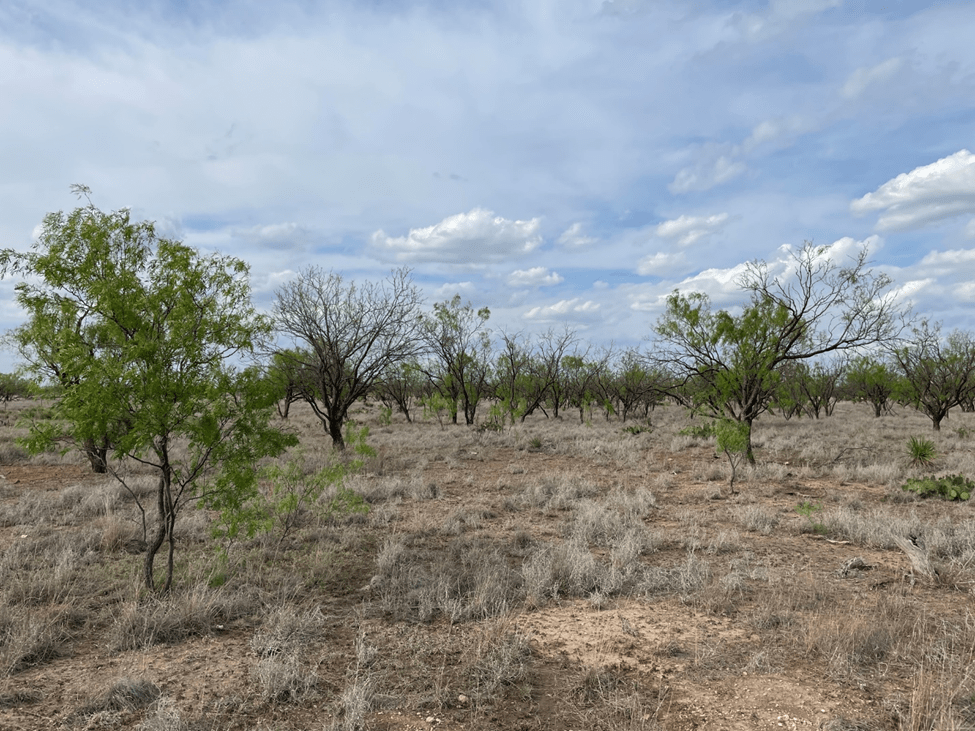
Adequate rainfall is critical to any grazing program. The following photos depict this with great emphasis. All taken within a few days of each other, spanning some 30 miles east to west. All three places have essentially the same grazing program, long rest (250 to 300 days) short graze period determined by number of pastures within the grazing unit from 23 in the latter picture to 12 pastures in the first picture. Certainly not mob grazing, but a single herd grazing program adapted to the managers goals and overall management plan. The only difference in the grazing units is primarily the annual rainfall, which within the 30 miles is dramatic. The extended drought of three years going into the fourth, has delt the management team many serious decisions, that at many times have felt very wrong, but essential within the long-term plan of both the rangeland health and economic health of the ranching operation.

It is obvious that the first place pictured has recovered very well from the drought conditions that were prevalent just a couple of months ago. That rapid recovery is, no doubt, the result of the dedicated-on-going grazing management program. When looking at the second picture the limited rainfall this year is showing great promise, as the fresh growth shows numerous surviving grass plants that with ‘a little’ more rainfall can quickly move the rangeland condition forward to a fully recovered state. Going a bit further west, the third picture shows a struggling rangeland. Yes, it is probably grazed too short for most managers eyes but still has good litter cover and remaining plants that will recover quickly once the rains come in larger volume. An old-time rancher once told me that “With each passing dry spell (drought) one can never run as much livestock as he could prior to that dry spell. He was correct until it was figured out that grazing management, utilizing a well-planned and initiated graze-rest-graze-rest program was essential. Now recovery after drought does not have to be so devastating.

Sure, hope the predictions of the upcoming La Nina event aren’t as severe as predicted, otherwise the grazing units of the last two pictures will be temporarily abandoned until adequate rains do come. Of course, here is proof that El Nino doesn’t always produce rain. As I like to say, “It depends on where you are standing.”

THE BETTER IT GETS, THE FASTER IT GETS BETTER

Effective Rainfall

The small rainfall events throughout the year are many times of too little volume to have a positive effect on the rangeland, but how small is that amount?

There are numerous factors that have a direct bearing on whether rainfall will be effective in promoting growth of plants. Quantity of rain, temperature, humidity, wind, and timing of the next rainfall event are all critical to the effectiveness of the Lord’s gift of moisture. The rancher-manager has no influence or control of any of those factors, thus he should not lose any sleep from worrying over those things. (Yet most all of us do so.) However, he does have control over a key factor, that being the health and cover of the soil he is managing. Or perhaps more simply stated, rangeland health. When the rangeland is healthy those small rainfall events become a valuable part of the ecosystem’s ability to move forward. Sustaining the rancher until the next rain.

The exciting thing is there are many ways of achieving the desired rangeland health, arguably some more effective than others and the type grazing program chosen is critical. It is up to the manager to evaluate goals, both long term and short term, in selecting the type and intensity of the grazing program. Within the more brittle-dryer environments achieving that healthy rangeland is dependent on grazing and rest as they are key ingredients to that successful program. Those two factors are controlled by animal impact and recovery from that impact. Leave out either one of those two and the grazing program and rangeland health improvement will most likely be an undesirable result.

The photo below is an excellent example of achieving the healthy rangeland goal and what can happen without an effective grazing program, but remember it takes time to accomplish. Those wishing for instant success will be disappointed.

It is up to the rancher to determine how he wants his rangeland to look.

Drought is Taking its Toll.

Drought is affecting even the mesquites. This photo appears to be a bad spray job from the past but has never been sprayed and certainly will not be this year. The trees are very stressed from lack of moisture for the last two years. The rangeland grasses are a depressing sight, as the desert termites have finished off the bulk of the old moribund plants. (It is my opinion that termites seldom attack healthy grass plants, only those that are decaying from age and lack of use.) A good chance of rain shows to be in the forecast late this week, sure hope it is a GOOD PREDICTION. Photo was taken May 4, 2023

The next photo was taken yesterday May 6 and shows how the creek bottom is struggling to green up and is actually growing some forage. Note the upper portion of the creek is very dry. This is an awesome statement as to the effectiveness of a productive graze rest program over the last several years. The bottoms of the creeks and washes are the first to recover from continuous grazing and begins the process of recovery from erosion of our precious soil, even during a drought.

THE BETTER IT GETS THE FASTER IT GETS BETTER, BUT ADEQUATE RAINFALL IS ALWAYS A KEY INGREDIENT REGARDLESS OF THE GRAZING PROGRAM.

Effective Rainfall

As the ongoing dry spell continues over a wide area. The question of ‘How much rain does it take to be effective?’ becomes an even more relative issue than during higher rainfall periods. The answer lies within numerous ‘What ifs?’ most of which the rangeland manager has no control over. Humidity, wind, cloud cover, temperature and length of time until the next rain event are all things that the manager has no control over and can’t do anything to change. But the most important of all variables that the manager does have control over are the health of the plants on the ground, the density of those plants and the amount of litter covering the ground. (Litter being, dead plant material that has fallen on the soil and is in a state of decay.)

Some managers would say ‘It is dry and has been for a long time, there is no way I can improve on those things.’ Preparation for the ongoing drought began during the last good growing conditions and continues even during the dry spell, by proper grazing rate and giving adequate recovery time for those plants by removing the animals from the pasture for predetermined periods of time. This preparation does not happen by chance alone, it takes planning and diligence of initiation. Then replanning after observing livestock, plant recovery, economic conditions, and rainfall, this is called ‘proper grazing management’. When this ‘plan’ is put in place density of cover -over time- will approach 100% coverage, healthy root systems provide healthy soils that retain moisture and ground litter covers the soil lessoning the evaporation rate caused by all of those variables that the manager has no control over.

The current drought is hurting good managers and poor managers alike. Those that have prepared for current conditions are faring much better than others, even to the point of growing a little forage where good ground cover-healthy soils are prevalent.

THE BETTER IT GETS, THE FASTER IT GETS BETTER
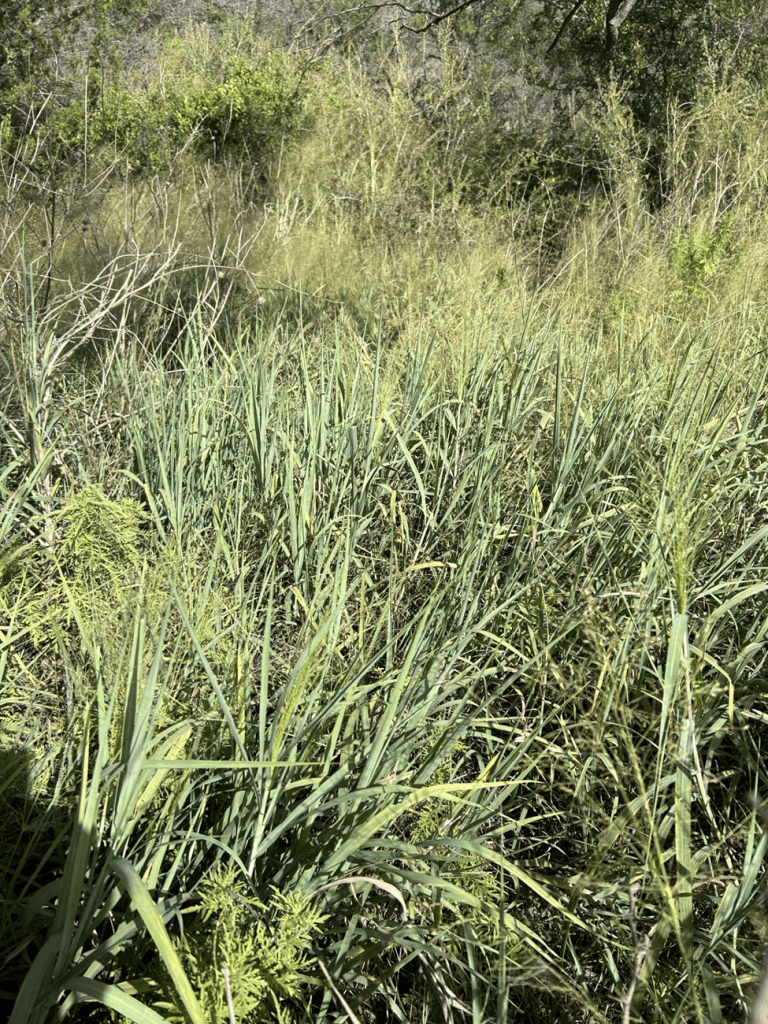
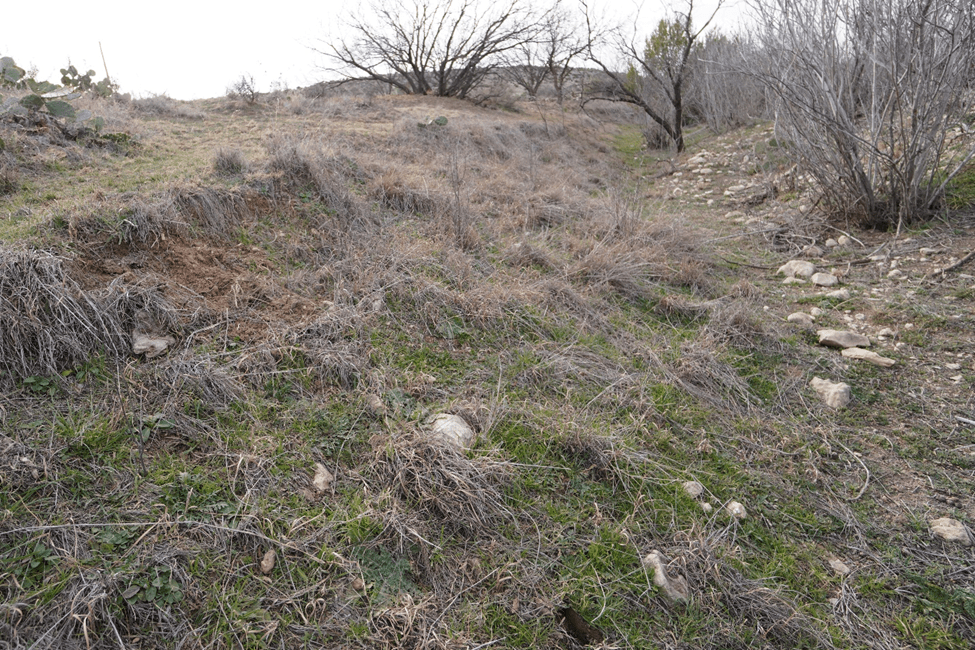
Take note that this photo is along a formerly erosive creek bank. Recovery of creek areas is one of the first places an effective grazing program influences.

Burning Success Not Only the Result of Fire

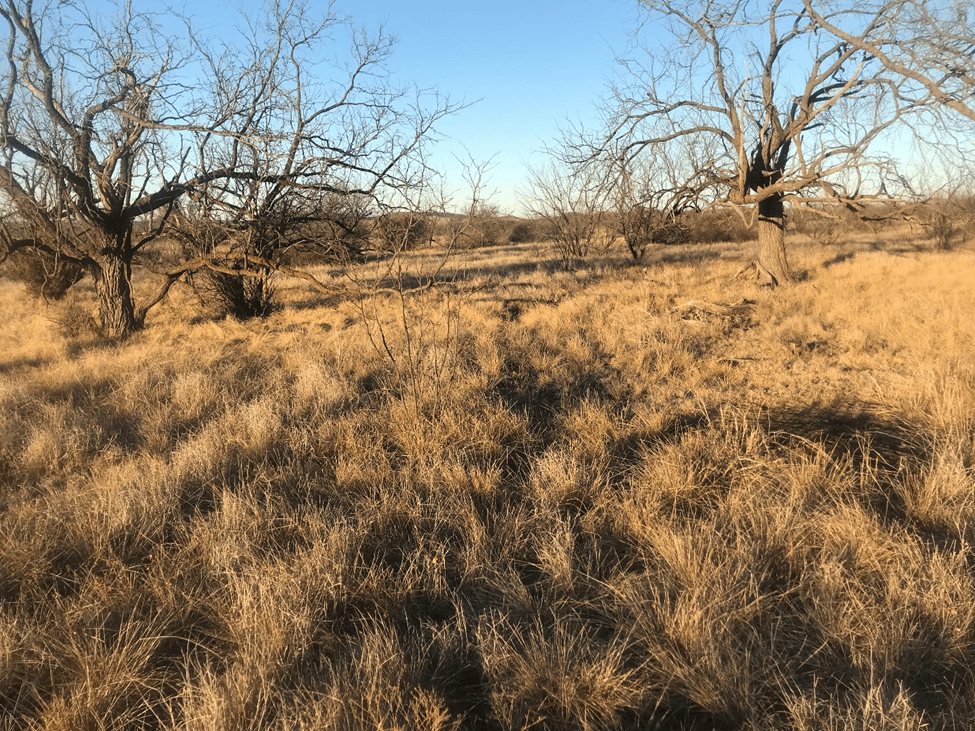
Here are three photos of the burn in 2018, the first being a few days after the burn, take note of the large mesquite tree in upper center of photo. Of interest is Grant Teplicek on the far right. Grant is a very proficient-knowledgeable burn specialist with the NRCS, it is sad that the powers that be, have virtually stopped the use of these specialists. Not letting them participate in prescribed burns other than design of a burn. They cannot participate in the burn itself, to the point of if the fire escapes they are to do nothing to help control it.)

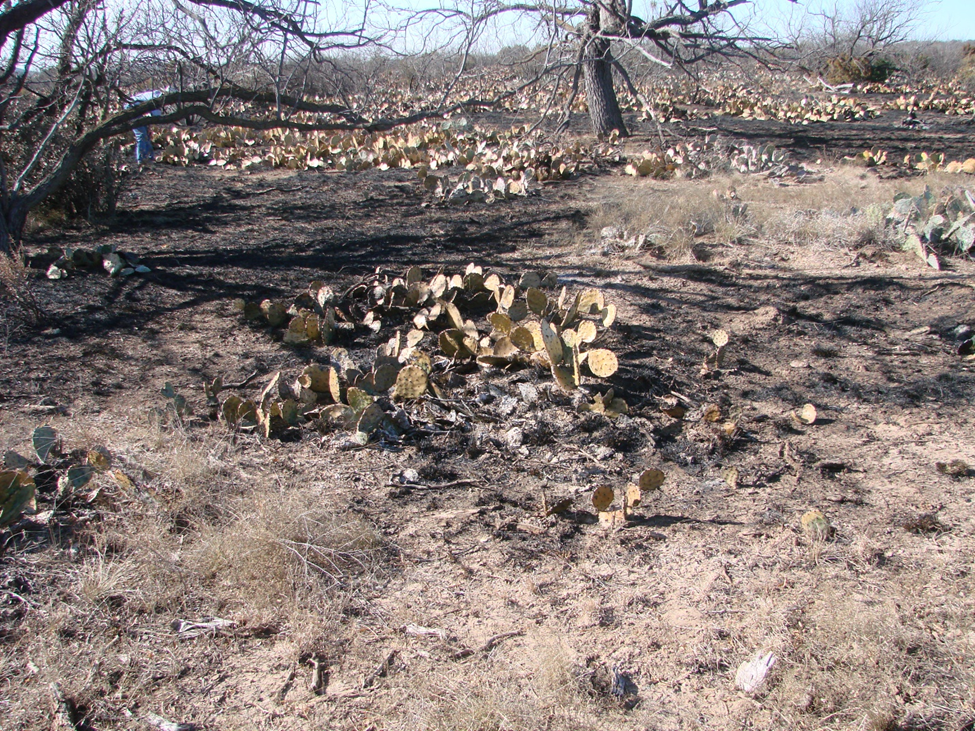
A very effective burn of relatively hot conditions, the second photo taken mid-February 2022, showing the same large mesquite in the first photo. (I recommend that when photo points of a burn are established not to use trees as the identification of a specific site as the tree may be top killed as a result of the burn and over time it becomes very hard to find that exact site.) Take note of the lack of visible prickly pear, yes there are several plants remaining but are covered by the vigorous grass community. The third picture is of a dead pear that has expired because of the burn and the density of the grasses and their root systems competing with the pear, no chemicals applied. Perhaps aided by insects and unknown microbial activity as a result of the more intensive graze rest management program.

It is my belief that the first prerequisite of any rangeland recovery program is establishment of an effective graze-rest management program.

THE BETTER IT GETS THE FASTER IT GETS BETTER

January 2018 Burn
Recovered Site Four Years Later
Prickly Pear Mortality Four Years After Burn

Burning-Wildlife-Recovery

In January 2018, after the burn pictured below, Sims and I were making one last circle of a 1,300 acre burn about 20 minutes before sundown. (With the help of NRCS’s EQIP program, a 500-foot strip cleared of volatile fuels on the downwind side of the burn had been put in a few years prior to the burn. 8 people were able to complete the entire burn, black line included, in one day. First torch was lit at 10:00 AM, final head fire was set at 3:00 PM. Note we were not in a hurry and used proper protocol of burn initiation, but the cleared area makes burns much safer and allows for fewer personnel to move quickly and efficiently.)

OK, back to the story. Sims and I were on the north side of the burn entering a wide draw area. To our surprise both Blue and Bobwhite quail were entering the burned area by the hundreds. (Perhaps thousands, but I’ll stay with the hundreds) Covey after covey were flying in front of and over us, landing in the burned area-indiscriminate of species- scurrying about on the burned ground. In wonderment we stopped momentarily and observed what was taking place. Sims noted that he had seen small beetles moving about on the burned ground earlier in the day, possibly disrupted from their winter homes in the ground. Perhaps the birds were in a feeding frenzy? (Sorry, we took no pictures of the event and moved on quickly to finish our task of being sure the burn was safe prior to dark.) Looking back on what we saw and after talking with others more familiar with quail, we-perhaps, witnessed an event that few have the opportunity to see. The question I have is how did the quail-both Bobs and Blues- know to return to the burned area so soon after the fire? Did a few venture into the burned area and find the food source to be exceptionally good, then return to the displaced coveys and say “Hey guys you will never believe what I have found, let’s go get ‘em”? Some might say it was “instinct”, a trait bred into the birds after centuries of living in a fire culture. I don’t know, but it was a sight to behold and I wish a trained quail man had been there to talk us through the event.

After contemplating on this viewed event, I have developed a theory of my own. (Keep in mind this is just a theory from an untrained eye and I welcome thought from others.) The burn was done is several stages, even to the point of having 6 head fire ignitions. (As a general rule we prefer to ignite a single head fire to achieve the intensity of fire that is most beneficial to suppressing both cedar and prickly pear, however this burn had several well-traveled roads running through it and we were dealing with less that preferred quantities of fine fuel. -Grass- Overall, we were satisfied with this tactic. One must keep in mind that no two prescribed burns are alike, the fire boss must always be considering the conditions of each burn on an individual basis.)

Back to my theory, with each head fire initiation the fire moved the quail away from that fire, putting them into the area not burned. Each time we burned a new area the quail were concentrated that much more. Finally, when we burned the last head fire area the quail were moved into the draw on the north side of the burn. In effect we unwittingly ‘gathered’ the quail, somewhat like one would gather a pasture of livestock. Sims and I happened to pass by that area at the precise time the quail began to move back to their home territory. (I am told quail spend their lives within a very few acres and I don’t doubt their homing instinct is every bit as strong as most other ‘critters’ in natures domain.) On their way home, they discovered the ‘windfall’ of insects that had been displaced due to the burn. Of course, the reader of this must accept that my imagination can ‘get away with itself’ at times.

The pear shown here is ‘wounded’ at best, but it is a start and with grass density increasing after the burn, good grazing management following in subsequent years, perhaps it is on the way out. In particular with a ‘follow-up’ burn in a few years. (True a treatment with chemicals would do away with the pear issue quickly, but that is not an option as the owner of the property is unwilling to make that kind of investment. Natural control is the current policy.) We had some excellent cedar flaring in other areas of the burn, of course it was Red Berry, so it is suppressed not killed.

The next post will illude to conditions four years later.

No photo description available.

Little Bluestem and Indian Grass on a Rocky Hillside

May not be an impressive photo to some, but those that know the area -a few years back- would have described it as nothing but a bunch of rocks and cedar trees. Blaming the poor condition of the rangeland on low average rainfall and little soil on which to produce any grass, let alone tall grasses. The only thing that has changed is the initiation of a controlled graze-rest program. Nature is very resilient and even after some 140 years of continuous grazing, recovery can be just around the corner. Patience is in order though as it has taken several years of those grazing improvements and the management that goes with the program. Drought is much less prevalent when a good grazing program is utilized, and wouldn’t it be neat to have seen that pile of rocks 150 years ago? I’m betting that the rocks were not as noticeable because of the soil covering them, of course that washed away long ago. It will take many years, but the current management programs resulting healthy root systems will rebuild that soil.

THE BETTER IT GETS THE FASTER IT GETS BETTER