Managing Thru Drought

Texas Cup Grass

It is interesting to note the different plants and how they are reacting to the awesome rainfall received this past week. (3” in two different rains 6 days apart)

The prickly pear, which was shriveled to the point that one rancher commented that he thought if we had a wildfire it would burn like grass, has ‘fluffed out’ and greened up amazingly in just a few days, as its shallow roots quickly absorbed the moisture. The amazing pear apple crop was the result of the last rain event in May. Pear is certainly well adapted to drought conditions.

Black Walnuts, which appeared to be drought killed have already begun putting on new leaf growth, even at this late date in the growing season. Many dead limbs and stems are evidence of the lack of moisture through the exceptionally hot-dry summer. The Lords plan with natures resiliency is awesome, and only needs the help of man to move the process forward.

Grasses are very slow to show any green up as the moisture conditions were strikingly poor, being the result of a long drought period only offset by the May rain event that provided excellent recovery from prior drought conditions, however that rain event did not provide any deep moisture for long term recovery. (Take note that this rainfall event does not mean the end of the drought, but it is an excellent start.) Thus, the grass was in a dormant condition, and it takes time for the growth process to begin again. Even the deeper-rooted dense stands of grasses that traditionally fare much better than the sparsely spaced grass plants of heavy-continuous grazed programs, are dormant from this current dry spell. Yet having said all this, some grass plants recover much more quickly from extended drought-heat than others.

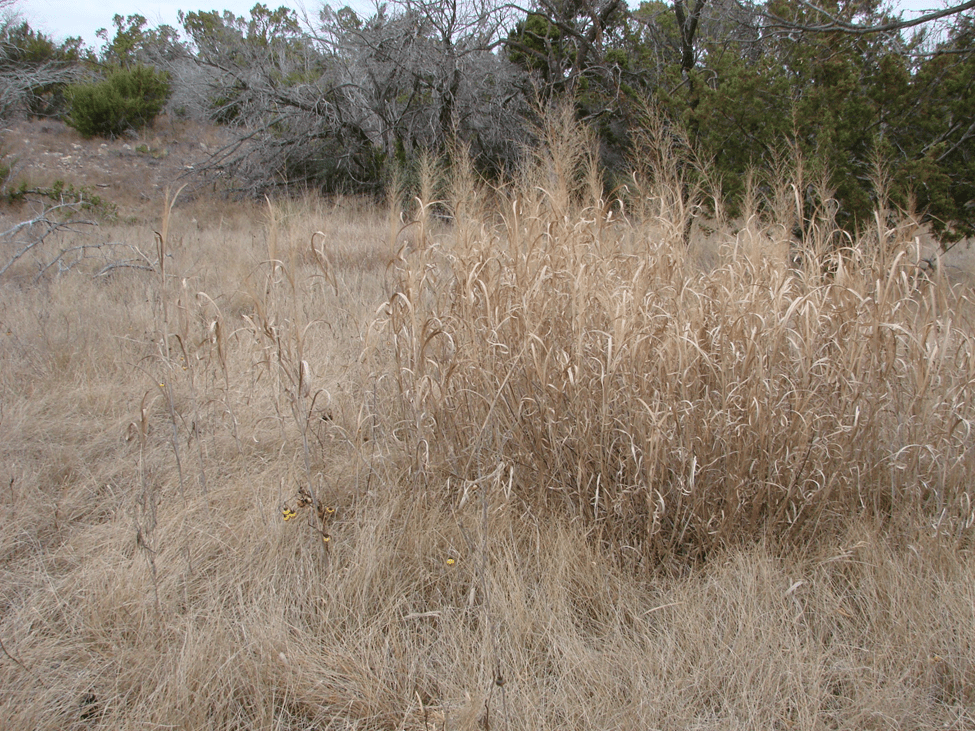
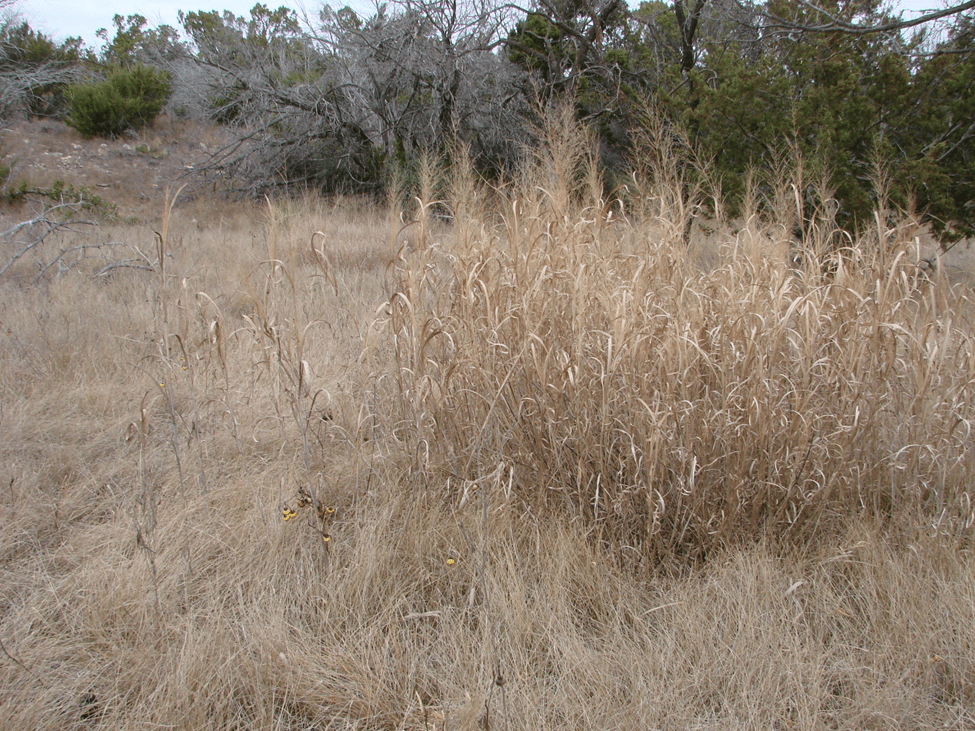
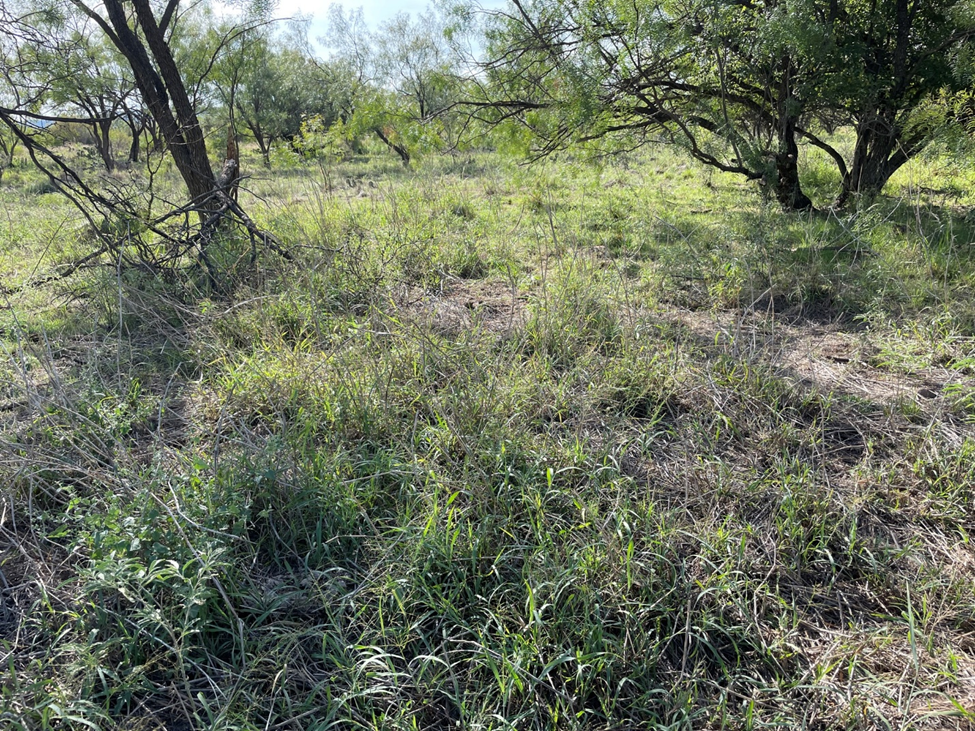
The picture below is of a Texas Cupgrass plant, while every other grass in the pasture is struggling to show any green at all even at the base of the plant, the Texas Cup is already making very positive new growth of leaf structure. For a review of past discussions, Texas Cup under continuous grazing is a rare find and will almost always be found growing within a protected area from grazing like a bush. Being one of the first to green up in spring, the last of the summer grasses to brown out in fall and in many years will retain some green in the stems through the winter much like Black Grama. With the timely initiation of a dedicated graze-rest program utilizing an extended rest period the Texas Cup will increase at a dramatic rate as the seed source is allowed to expand. While not known as one of the ‘tall’ grasses this mid grass is one of the better indicators of rangeland improvement and is a key plant in putting the grazing manager in a position of profitable ranching on a consistent basis.

                            THE BETTER IT GETS THE FASTER IT GETS BETTER

Nature Utilizing its Resources in Unison

Vine Mesquite Grass is becoming much more prevalent than in the past. Its long runners (Stolon’s) can cover an area very quickly when given the opportunity. (Graze-Rest) While the descriptions of its growth habits show it to dominantly grow in low areas, depressions, and bottomlands once it is established within an effective graze-rest program it extends its colonies to surrounding areas of less quality soils and out of the depressions. The more seeds and stolon’s that are out there the faster it covers surrounding bare ground. One of the issues with Vine Mesquite is that, while it covers the ground well it is not a very dense cover. (One of those grasses that look great when looking across the rangeland, but when looking down the density leaves some to be desired.)

Possibly the closest competitor of ‘stoloniferous’ grasses to Vine Mesquite is Buffalo Grass. Given the opportunity, healthy Buffalo plants can cover bare ground at a fast pace. This cover is generally very dense, allowing little sunlight-wind to get to the soil. The problem with it is it does not grow very tall and that can be a limiting factor as to its ability to build soil and save valuable water resources. As the picture below shows, Vine Mesquite and Buffalo get along well together. The Buffalo will mix with the Vine and form a tall (12” to 24” +) dense cover over the soil surface. This ‘magic’ potion is one of the fastest ways of creating a soil building program on the rangeland. It also protects the soil from wind and water erosion, while providing an excellent seed bed for the next generation of even higher quality plants. (Succession)

Remember this process takes time, probably years of a productive graze-rest program but is well worth the effort and of low cost to the producer. The programs that make large inputs to the range resource for a ‘quick’ recovery to the grasslands of old, generally fail, and certainly will fail if the application of an effective grazing program is not applied, from the start.

THE BETTER IT GETS THE FASTER IT GETS BETTER

Black Grama on Steroids

Black Grama with its narrow spindly leaf structure doesn’t look to be a highly preferred native grass, but it certainly is and is a key ingredient to healthy short-mid grass prairie.  Much of the West Texas rangeland is almost devoid of this valuable plant as it has not been able to survive continuous-heavy grazing. While with continuous light grazing it can be occasionally found, (Usually within a shrub or cactus) but nothing like the amount found under a controlled graze-rest program. Under the properly applied grazed-rest scenario Black Grama is increasing very nicely on hill sides, shallow rocky ridges, and shallow soiled lowlands. The unique characteristic of retaining some green in the winter along the stolon’s and somewhat in the lower portions of the spindly leaves makes it an excellent winter feed for Vitamin A.

This photo of Black Grama is the most robust I have ever witnessed. Found in the bottom of an extremely rocky draw and is probably getting some extra water as a result. Take note of the Switch Grass just behind the Black Grama, doing quite well in what some would say was very poor soil. I beg to differ as nature has found many ways to adapt. (Wish more people were so included to follow this example.)

THE BETTER IT GETS THE FASTER IT GETS BETTER

Loss of the Concho’s

“We caught many catfish, sun perch and trout. At the time the North Concho was very large and deep. Many live mussel shells crawled around on the flat surface bank, dropping off into the river when anyone approached the bank.” Edna Allison ‘Milling Around Sterling County’ 1911 era. This memory of the North Concho River just south of Sterling City is a sad statement as to the current condition of the river. The river was named Concho by Spanish explorers, because of the numerous mussel shells found. The Spanish word concho is interpreted to be shell in English. As a young boy in the late 1950’s and early 60’s I found numerous mussel shells along the river, but never any live mussels. Today one must search to find a single remaining shell and the river is only a remnant of what it once was. Dry in many areas with a few clear pools of water, running a small stream during wet spells-mainly in the winter. Still a beautiful river when looking at the areas of clear live water, though wide and muddy when big rains come.

‘Milling Around Sterling County’ a history of the settlement of Sterling County was published in 1976 and is currently being updated after close to fifty years of new history taking place. Wouldn’t it be wonderful after the next fifty years if a third book were to be published telling of the North Concho once again being ‘large and deep’. The knowledge as to what caused the river to ‘dry up’ is now understood, as the loss of the dense cover of vibrant grasses and forbs has been lost and the water cycle no longer works as it once did. Yes, the increase in brush has added to the loss of the water cycle effectiveness, but it is only an ’effect’ of the loss of cover and healthy soils that is the ‘cause’. It is also understood by some that proper grazing management can overcome this lack of cover and healthy plants allowing that water cycle to become an effective provider of water to the aquifer once again. Yes, many other factors, including the many water wells that draw on the aquifer that once provided the beautiful fish and mussel filled river with water, are a contributing factor and always will be.

It is but a dream, but dreams can come true with sharing of knowledge, diligence of labor and love of the land. Fifty years from now Sterling County could be looking at struggling to have any water and the wells that now provide that high quality water could produce little to none.   An unlikely thought? While fishing on the North Concho watching the mussels get away from her, Miss Allison probably didn’t dream, at some time in the future, the ‘conchos’ on the river could not be found.

THE BETTER IT GETS, THE FASTER IT GETS BETTER

Engleman Daisy, having been grazed short during the last grazing cycle in the fall. Is beginning to show recovery from the current rest period.

Properly Cared for Rangelands Can Adapt to Most Environmental Conditions

The following three pictures (All of the same location) have an interesting story to tell of the ability of our rangelands to adapt to ever changing climatic conditions. Both short term and long term. Proper grazing management is critical to assisting natures long range plan.

THE BETTER IT GETS THE FASTER IT GETS BETTER

Recovering from extended dry spell of 2022. False Switchgrass having been grazed twice since lush conditions of 2021, depicted in last photo. Note the excellent ground cover of both plants and litter accumulation. Drought is possibly a major part of nature’s rangeland maintenance plan.
False Switchgrass working to produce a seed crop late in growing season (October 2022) after the extended dry spell of 2022.
False Switchgrass September 2011. One of the best grass growing seasons of memory.

Have you ever considered what the rangeland of the past (Prior to man’s intervention.) looked like during and after a drought?

Historical data and ecological studies of droughts of the past (Paleoclimatology) shows a long history of drought. It is nothing new and as the climate has changed over the millennia (Always has and always will) the plant community adapted to those changing environmental conditions. Climate change is currently and going back to the beginning has always been a determining factor in the development of the plant and animal community. Man is at fault primarily because of his influence or contribution to the poor health of the rangeland.

Yes, drought is much more severe now than in the past, not because the amount of rainfall is less than in the past. It is more severe because our rangelands are in much poorer condition (bare ground-unthrifty plants with weak root systems, loss of the drought tolerant plants, brush encroachment– the list goes on and on.)

When drought occurred prior to mans influence, the wildlife either moved to other areas or died of starvation or lack of water. This resulted in ‘destocking ‘of the land and possibly disruption of the normal migration patterns of the migratory animals. (Moved to other less drought-stricken areas.) This destocking and the length of the ‘rest period’ was greatly influenced by the length of the dry spell. Recovery of those drought-stricken lands of the past was probably very quick thanks to natures quick response to controlling numbers of animals and rapid response to drought management protocol. (Move or die) The length of the drought was a determining factor as to how many numbers were ‘cut from the herd’ and the length of rest until restocked. Take note that this description of natures ‘drought management’ procedure is the basis of many currently productive grazing management programs. (Over simplified statement for certain)

Man, being more concerned with his survival than the land or the animals and originally his lack of understanding of the design of natures ‘drought protocol’ has resulted in the current severity of ongoing droughts. The understanding and knowledge of these drought protocols is now clearly understood by many producers and the lack of that understanding should no longer be a part of any rangeland management process.

Photo is of a transplanted Eastern Gama Grass. Long lost and to a great extent ‘extinct’ from the rangeland in my area. The result of grazing management practices that resulted in loss of the deep-rooted tall grasses that were much more drought tolerant than today’s plant community of the rangeland and the loss of a continuous cover of grasses and forbs over the soil. (Note the density of cover in the photo. Yes, this spot has had some help in the form of irrigation to aid in establishing the Eastern Gama, not a true rangeland condition) With tender loving care (Proper grazing management) and time, this plant could be a part of the basis of recovering the rangeland to its former drought resistant dominance.

THE BETTER IT GETS THE FASTER IT GETS BETTER
Eastern Gama Grass about 1 month after transplanting

Saving the Earth from Climate Change

Many within the ‘Save the Earth from Climate Change’ group are promoting doubling the land mass that is ‘Protected’. Protected areas are areas like national parks, Yellowstone National Park being one of them. Sadly, studies of the Yellowstone show land degradation continuing even though considerable study and resources have been used to reverse this trend. The Jornada Experiment station in New Mexico is another glaring example of what happens to land within a ‘brittle’ environment that are ‘protected’. (Protected area from grazing livestock was created some 90 years ago, to preserve an area of grassland. It is now a barren desert.)

Sound rangeland-grazing management is perhaps the most valuable environmental solution or tool to a continually changing climate and the resources available to PROTECT the environment. While the ranching-rangeland management industry has made many mistakes in the past, todays knowledge of rangeland recovery techniques has much to offer those concerned with declining environmental conditions. Everyone must learn from past mistakes-inequities; that involves study of the past and asking the simple question of ‘What is the Cause?’ (This not only applies to the environment but most everything that the past has to offer. In short, the study of history and understanding of the issues that caused the extenuating circumstances to exist.)

The climate has never been or ever will be a stable process.

Storing vast amounts of carbon, stabilizing those carbon rich soils, utilizing/storing virtually every drop of rain-snow, maximizing the mineral cycle that strong root systems and the micro biomes can provide a healthy rangeland. Utilizing sunlight energy to the maximum is what sound grassland management is all about, providing society with ever improving environmental conditions regardless of what climate The Lord/Nature provides.

The pictures below depict rangeland ‘protected’ from environmental destruction utilizing a controlled graze-rest program. Utilization of this process can be extremely valuable in preserving The Lords creation and the resulting environmental sound processes.

Big Blue or Sand Blue, Indian Grass, Side Oats: The mineral and water cycles moving forward, making the rangeland environment better for all.
A few yards away Switch Grass taking hold in overflow area. Building healthy-stable-carbon rich soils

Southwestern Bristle Grass

An exceptional specimen of winter dormant Southwestern Bristle Grass. (Several other SW Bristle grasses are visible within picture along with Indian Grass, perhaps long-time survivors, or seedlings from a time long ago prior to Europeans mans influence.) These have appeared along a creek that was formerly very dense cover of Blue Berry Cedar and regrowth oaks that burned some 11 years ago. Recently cleared of brush, the site has a long way to go in becoming a productive area for livestock and an environmentally significant site as to mineral, water and nutrient sequestering. There is little doubt that in short order, if the proper utilization of a well-planned graze-rest program is continued, this site will quickly become a productive part of the ecosystem. As I have previously noted the Southwestern is much more palatable, produces much more leaf, that is much wider than Plains Bristle’s leaves. As we move forward in our graze-rest-graze-rest management program the Southwestern is increasing at a considerable rate mainly within the eastern or slightly higher rainfall areas. This is a ‘up-and-comer’ in my book and is a very positive indication of better grazing conditions to come.

THE BETTER IT GETS THE FASTER IT BECOMES BETTER

Southwestern Bristle Grass

Little Bluestem and Indian Grass on a Rocky Hillside

May not be an impressive photo to some, but those that know the area -a few years back- would have described it as nothing but a bunch of rocks and cedar trees. Blaming the poor condition of the rangeland on low average rainfall and little soil on which to produce any grass, let alone tall grasses. The only thing that has changed is the initiation of a controlled graze-rest program. Nature is very resilient and even after some 140 years of continuous grazing, recovery can be just around the corner. Patience is in order though as it has taken several years of those grazing improvements and the management that goes with the program. Drought is much less prevalent when a good grazing program is utilized, and wouldn’t it be neat to have seen that pile of rocks 150 years ago? I’m betting that the rocks were not as noticeable because of the soil covering them, of course that washed away long ago. It will take many years, but the current management programs resulting healthy root systems will rebuild that soil.

THE BETTER IT GETS THE FASTER IT GETS BETTER

Saving the Earth from Climate Change

Many within the ‘Save the Earth from Climate Change’ group are promoting doubling the land mass that is ‘Protected’. Protected areas are considered to be areas like national parks, Yellowstone National Park being one of them. Sadly, studies of the Yellowstone show land degradation continuing even though considerable study and resources have been used to reverse this trend. The Jornada Experiment station in New Mexico is another glaring example of what happens to land within a ‘brittle’ environment that are ‘protected’. (Protected area from grazing livestock was created some 90 years ago, to preserve an area of grassland, it is now a barren desert.)

Sound grazing management is perhaps the most valuable environmental solution or tool to a continually changing climate and the resources available to PROTECT the environment.

As the pictures below depict rangeland ‘protected’ from environmental destruction utilizing a controlled graze-rest program can be extremely valuable in preserving The Lords creation and the resulting environmental sound processes. (Some call it Natures; I consider it one in the same)

Big Blue or Sand Blue, Indian Grass, Side Oats, Little Blue: The mineral and water cycles at their best.
A few yards away Switch Grass taking hold in overflow area.
Former erosive area recovering nicely. Note the Switch Grass in the background.

THE BETTER IT GETS, THE FASTER IT GETS BETTER