A short time ago a research scientist asked what percentage increase in grass production I expected after completing a brush management program. My response was that I wasn’t qualified to respond with a percentage increase (Not a research scientist), but that the amount of increase in production seemed to be directly related to the length of time an effective graze-rest program had been in place PRIOR to the brush management program.
To understand this thought, one must consider what a healthy plant with a strong root system is capable of. A healthy root system recovers quickly with just about anything you can ‘throw’ at it. Trample it severely, either with animals, heavy equipment, fire and even extended drought conditions and it is amazing what that healthy plant can do to quickly recover. However, if it is in poor condition lacking the energy reserves stored below ground, lacking the extensive-massive root system that is capable of drawing nutrients and water from limited sources, that plant may die from the brush management process that was initiated to increase the grazable production of the rangeland. Resulting in a negative connotation, making recovery and the hoped for increase in production a slow and many times disastrous result of only creating more denuded bare ground creating a perfect place for the brush to germinate and become thicker than when the original ‘brush management’ program was initiated. Once again, how do you create those healthy plants prior to the brush management program? Graze-Rest-Graze-Rest it is essential.
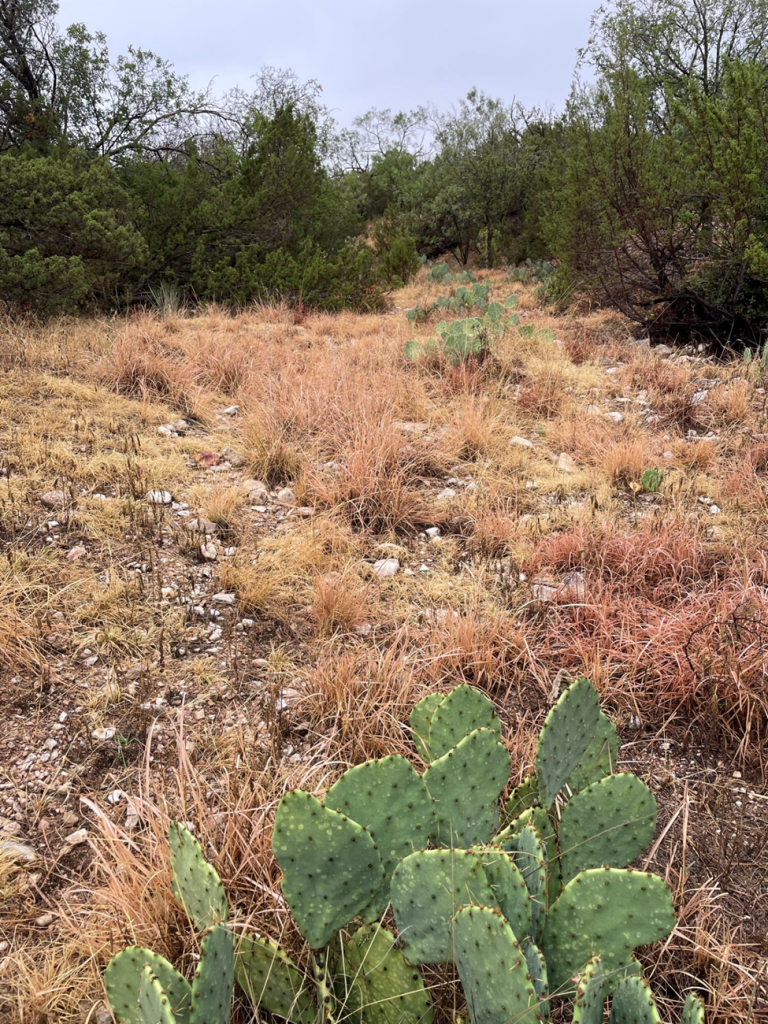
The photo below tells several stories.
- Preparing for brush management establishing healthy grassland prior to it.
- The beginnings of rocks disappearing
- The starting effects of prickly pear control with the use of the ‘native’ prickly pear beetle. (Yellow dots on the prickly pear pads.)
THE BETTER IT GETS THE FASTER IT GETS BETTER

 Rangelands and Ranching