Why the Cow is Important for Rangeland Ecosystem Health

This past summer I had the privilege of giving a presentation at the Texas Wildlife Association’s annual convention. Visiting with various owners of smaller places that have no interest in raising livestock proved very educational. Some expressed that after buying very degraded ranches that had been abused for years by failing ranching enterprises, rest from grazing was phenomenal in rangeland recovery for the first five to ten years. Then after that recovery period the rangeland seemed to start going backwards. The grasses were becoming what appeared to be old and dying, bare soil was becoming more evident and erosion was increasing after what was originally believed to be a phenomenal recovery of the land. My discussion during the presentation was about continual improvement to the rangeland resource well over the ten years that they had experienced. This led to discussion of what was happening to those rested (over rested) places.

Grass plants need disturbance to produce growth nodes and tillers for new growth. Once a grass plant matures without impact from some outside source, (breaking off the old leaves-trampling them to the ground-burning them off-biting them off etc.) the plant goes into a ‘neutral’ mode that ultimately reduces the plant to a moribund state that does not produce new tillers and growth nodes. This results in a slow death from the center of the plant outwards. A well-planned grazing program, utilizing cattle and other livestock to intensely graze the plants then providing extended rest periods is a very effective way of reversing this issue.

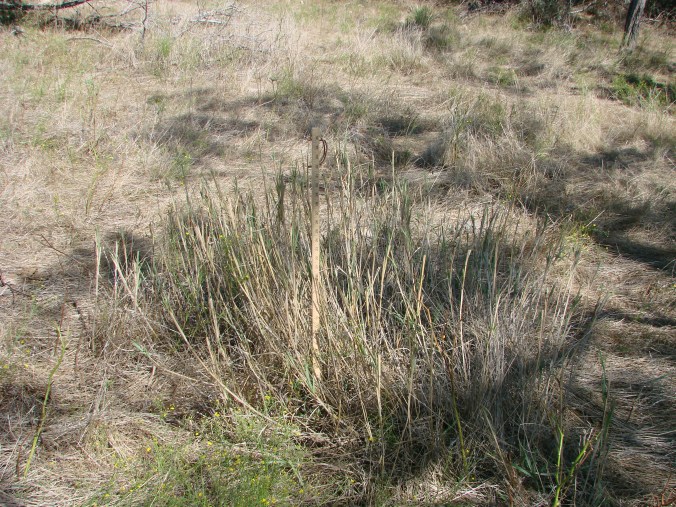
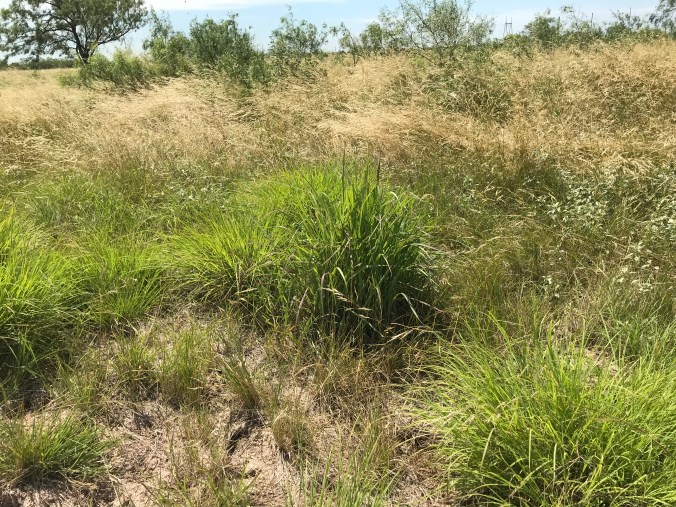
The picture below is of ‘a very lonesome’ Switch grass plant. (Only one I have found within this pasture.) Cattle were moved out 29 days ago and the current dry conditions reflect slight growth the plant has achieved in this length of time. However, note the lack of green of the other grasses, this expresses the drought mitigating characteristics of deep rooted-healthy tall grasses. Continuous grazing would destroy any hope of increasing the coverage of the Switch grass.
Of other interest is the pictures skeletal remains of what I believe to be Horse Nettle. The leaves have been stripped off these plants and as pastures that have not been grazed show no signs of this, I assume the cattle did the stripping. No health issues have been observed, so poisoning is not at issue. I do note that I have observed several other ‘poisonous’ plants grazed by livestock over the years and assume that limited grazing of these ‘bad’ plants is not necessarily a bad thing. Smaller Perennial Broom Weed is one of the others and I suspect percentage of diet is a major factor.
Studying the rangeland and seeking to understand what and why certain things are happening is fascinating.DSC00875

The Ecosystem and the Cow

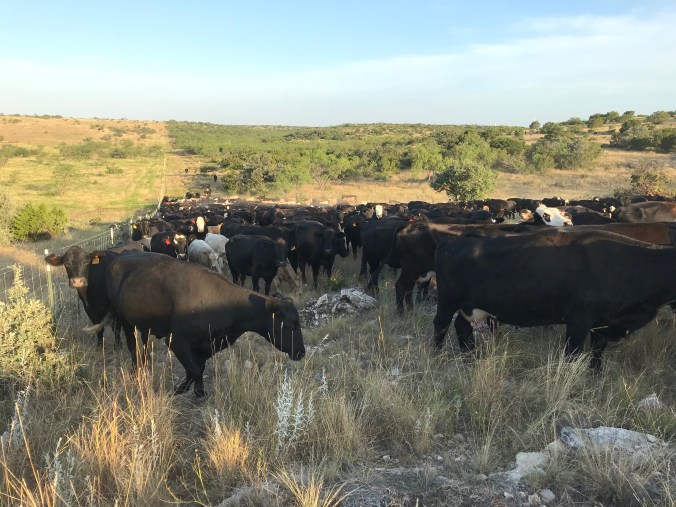
The huge buffalo herds of the past are accepted to be one of the factors in creating and maintaining the superior rangeland conditions prior to European mans coming to the Americas. With today’s fragmentation of the rangeland ecosystem (Roads-highways, cities, transmission lines, pipelines, farms, fenced rangelands the list goes on and on.) the roaming herds of buffalo are no longer part of the equation. (Nor will they ever be.) This results in a problem in trying to reestablish those rangelands of the past. The need for animal impact is very important to create grasslands that are healthy, providing an ecosystem that is actively preventing erosion, creating a water cycle that is efficient and sequestering carbon reducing CO2 levels.


What tool do we have available that can replace the buffalo of the past? That tool is the cow, properly managed she provides that trampling, dung and urine depositing, grazing stimulation that nature needs to provide the environment with quality-healthy stimulation. The great thing is while that cow can provide all those good things for the environment, she also provides a healthy source of protein for the human population.  Those folks that say the cow needs to go because she harms the environment need to reassess their opinion and study what the cow truly has to offer. If for no other reason than ‘Saving the Planet’ as many detractors of the cow say so often.


Those that understand how a quality environment works, need to offer their knowledge to those environmental enthusiasts that so often misinterpret the value of the cow. Everyone can live better because of it and sharing our knowledge with the voting public is essential. Sharing that knowledge with politicians has merit, needing to be offered to them so they can’t deny knowledge of the value of the cow. However, many of those politicians seem to have an agenda that isn’t focused on the environment, as discussion of it is only made to get the voters unknowing attention. Get the word out to the voters, the cowman and rangeland manager has a long term, simple solution to many environmental issues, that is when those tools are properly applied.IMG_0044(3)

Fenceline Weaning

Fenceline Weaning


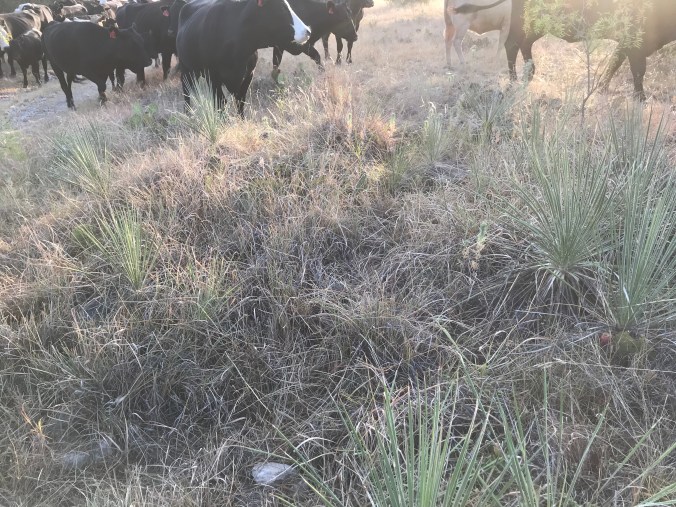
Several articles have recently been published about the efficiency of fenceline weaning. Sims and I have been practicing this management tool for several years and I can assure any cow-calf producer that it works and works well. Simple to accomplish if the cow herd has been trained in low stress handling practices. Simply gather herd, strip off calves and return calves to original pasture placing cows in adjoining pasture. After seven to ten days we consistently experience one pound per day gain on the weaned calves. No hay, only rangeland grass and a little training cake so that the calves will know how to eat and respond to a man operating a feeder. No dusty pens to deal with and virtually no health issues.


I know of one operator in the area that does not precondition his calves, only fenceline weans and after 10 days ships them to the new owner. The calves have gained around 10 pounds, no longer bawl or walk the fence. On shipping day, he does not have to strip calves, only walks them into the pen sexes them if necessary, weighs and puts them on the truck. Any producer can benefit from this program regardless of size operation. (20 pair or 500 it works.) May be a bit scary the first time, but that becomes a none issue with planning and good livestock management.IMG_0070(2)

Planning for Next Years Calf Crop

While weaning is an exciting-satisfying time for the cow calf producer, it needs to be considered the most important time to evaluate next year’s calf crop. (Don’t relax now as next year’s calf crop is in the balance.) How the ranchman determines availability of pasture, synchronizing the cow herd numbers with the land resource grazing plan for the next 12 months, can be the difference between a ‘wreck’ and a productive-profitable-happy year. Sitting down and thinking through pasture quality and how to bring the cattle through winter with body condition scores that lead to a strong healthy calf crop and breed up. Doing this without having a feed bill that will cause financial stress to the ranching program can be a very daunting task. Simply saying we’ll do it just like we have always done, is probably not the best answer. Yes, that answer is the most common approach for many producers, but the time spent in the office planning where the program is headed is the most valuable time a ranchman can utilize for the consistent profitability and rangeland resource improvement of his operation.


Detailed planning isn’t the most ‘romantic’ part of a ranching enterprise, but it certainly leads to those romantic results that make a rancher proud.


Granted this picture is of only one calf, but he stands out as what our program is striving to produce. Healthy-productive-happy calves and grasslands that, in spite of a dry summer are capable of seeing the program through the winter season.IMG_2261[6087]

Healthy Riparian Areas

Healthy riparian areas have great value including soil stabilization of creek banks, water quality, habitat for fish-wildlife-insects and the microbiome that flourishes above and beneath the soil.  When cared for properly not only are those sites beautiful, the positive environmental repercussions are tremendous.


Much time and study has been given as to how to enhance those precious resource areas of the rangeland. It seems that most of time the suggested treatment is to fence the area out from livestock grazing. While I have not had the opportunity to observe many of those fenced out areas, I do have the privilege of observing riparian areas that have not been fenced out and are simply part of a planned grazing program. (Properly applied animal impact should never be ruled out of any rangeland management program, as it is one of the key components creating a successful rangeland management program.) While the riparian areas within the ecosystem of West Central Texas tend to eb and flow rather dramatically as to the amount of water present, properly grazed areas seem to continually improve- regardless of the amount of rainfall God blesses us with.


Results of a riparian area within one of those ‘properly grazed’ areas. After being grazed for 25 days, cattle were removed from this pasture some 40 days ago and will be rested for 225 days. Make note of the large Switchgrass plant at start of video and the Redberry Cedar at the end. The Cedar shows the current water level is above normal, many other plants seen indicate a consistent water source. (Cat Tails-Button Bush-Sedges-and many more)


THE BETTER IT GETS THE FASTER IT GETS BETTER.

IMG_0019.jpg

Indiangrass Production VS. Old World Bluestem

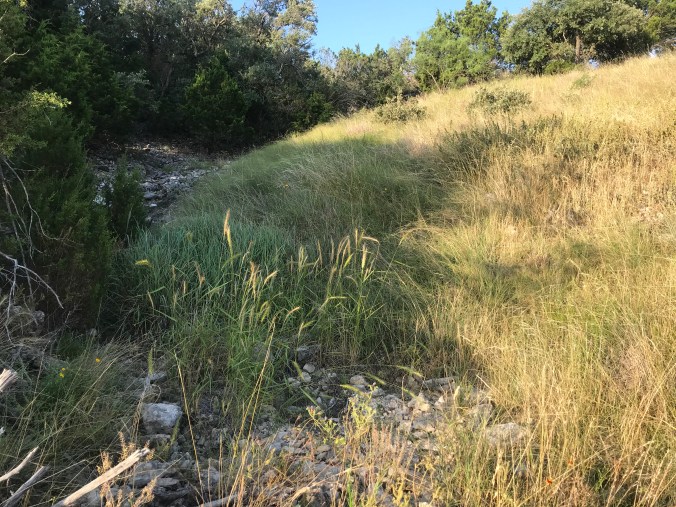
Old World Bluestem continues to show excellent ‘vertical’ growth after removal of cattle 32 days ago. If you zoom in- it is beginning to put on seed heads, another week should reveal considerable seed production. Now as to the Indiangrass in center of photo, it has achieved 2, 3 maybe 4 times the growth of the OWB. From recent posts of same plants, the Indian and OWB were grazed to approximately the same height. While this photo does not adequately reveal the increasing density of the Indian, close observation provides knowledge that many young plants are making headway.


An analogy can be made that OWB can be a very productive forage producer when a properly applied grazing program is utilized. However, don’t get too attached to it, as the Indiangrass just might overtake its dominance. (And some say I am not an optimist!) As for me I’ll take the diversity and with the rangeland grass managers caring hand and natures awesome influence, the improving rangeland resource appears to be secure.
Take note of the dense Texas Wintergrass at top of picture. As it has matured, the strong winds of West Texas have thrashed the spears, and is currently dispersing the tall seed stalks, what remains underneath those mature ‘Spear Grass’ plants reveal what summer grazing season has in store for us. More on this next time.IMG_0009.jpg

Considering the Environmental Facts

Wouldn’t it be wonderful if ONLY FACTS were used to address the degraded condition of our natural resources and the environment that is largely influenced by those resources? So many times, emotions and ill formed perceptions are considered the key to recovery of our environment and the facts are lost in the process. Granted, facts are extremely elusive these days, as one can find just about any “FACT” on the internet and social media that the reader wants to believe.

As we advance our understanding and implementation of effective grazing programs, the recovery of our rangeland resource is nothing short of phenomenal. The effective rangeland manager has the privilege to observe how soil erosion is becoming a thing of the past, how soil health is improving much quicker than most dreamed possible. With that improvement in soil health it is quite evident that carbon is being sequestered within that healthy soil, microbe activity seems to instantly come to life. (You can smell the healthy soils.) Water is being stored by those healthy soils and little is lost to runoff or evaporation, lessoning the damaging effects of drought. Animal health is good with seldom need for use of antibiotics and the need for pesticide use is minimal, and in some cases, no longer needed. (Granted those rangeland managers are a long way from having every aspect of rangeland recovery at the level he would like, and most likely will never get to that premiere level of land management.) All these things are exactly what the environmental movement says they want. The problem is, very few if any of the effective rangeland managers are considered qualified scientist and have no ‘certifiable’ knowledge base to document the exciting results of a properly applied grazing management and animal welfare production program. Thus, the ‘FACTS” that he has to offer are without credence, unless one considers the opportunity to show -on the ground- what is happening.


This is what I was referring to in my past post ‘Fake Meat and The Green New Deal’. Given the opportunity, we must let our story be known to others. Yes, as some of the comments received point out, one must be careful how this is done. When showing or commenting on environmental issues, at the upper levels, proper media training is essential, and the support of well-prepared professionals is essential, but it can and should be done. (While the ‘good old boy’ approach works well for us country folks, the producer must recognize that the within the political realm everybody is a professional and have been trained to be so.)


Preventing the implementation of uniformed environmental policy just could save our environment from the scenario the proponents of the “Green New Deal” are predicting. Potentially, if the ‘Green New Deal’ proposals were to be implemented, the environment would be the one that suffered most. Of course, one must wonder if the environment is primary reason for the authors writing this proposal or is it just a front to justify their ultimate goals. Whatever those goals may be. (I am trying to stay away from politics and deal with the facts. So, you can determine what the ultimate goals might be.)


For your viewing pleasure:

This creek has been flowing crystal clear water for over 9 months now. Two 50 to 100-year flood events ‘redesigned’ a considerable portion of this creek, reestablishing the riparian-pristine conditions will take time. What a blessing the Lord has provided. And the grassland manager needs to do his part in caring for His gifts: Providing a bit of properly applied-well planned grazing management only assists the Lord in his plan.

The better it gets. The faster it gets better!
Indiangrass using Old World Bluestem as a Host

IMG_0305IMG_0001IMG_0002.jpg

May have found an alternative use for Old Word Bluestems.

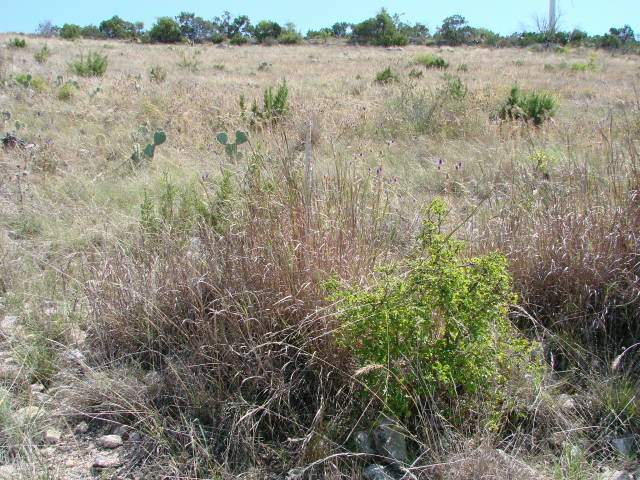
While observing young Indiangrass plants in an area dominated by Old Word Bluestems, it was noted that virtually all the young Indian plants were growing within the clumps of OWB’s which are considered a ‘bunch’ grass. The various bare ground sites surrounding the OWB’s do not show signs of Indian germination or establishment. (Bare ground it a result of the dominance of the OWB, bunch grasses do not have tillers or rhizomes.) Of note, the OWB was dying that the Indian had established itself within. MMMMmmm. What if we have found a way to reduce the population of OWB and increase the Indiangrass at the same time?

Some of you ‘professionals’ feel free to offer your thoughts. This is a new one for me, and perhaps I am miss reading it. Take the time to zoom in so you can differentiate between the Indian and OWB.

1st picture shows Indian and OWB two days after cattle were removed. Both were heavily grazed in the short time the cattle were present.

2Nd picture shows young Indian growing within the center of a OWB. Using it as a HOST plant?

3rd picture shows a developed Indian plant that has dominated the OWB, perhaps killing it?